On this page
If you’ve inherited a safe you can’t open, start by confirming who has authority to deal with the estate, usually the executor named in the will. Then search the deceased person’s papers, devices and key rings for the code or key, and identify the safe’s make and model. If nothing turns up, a professional safe technician can open it once you show proof of authority, using non-destructive methods wherever possible. Open it with a witness present and record the contents for the estate.
This guide is for executors, administrators and family members dealing with a locked safe in a deceased estate. It also covers what to do with the safe afterwards. For an overview of every service involved, see our guide to safe installation, relocation, removal and opening.
Step 1: Confirm who has authority to open an inherited safe
A safe and its contents are part of the estate, so the person entitled to deal with estate assets should be the one arranging to open it. That is usually the executor named in the will. If there is no will, or no executor able to act, a court can appoint an administrator.
In Victoria, for example, Victoria Legal Aid explains that an executor generally does not have authority to deal with the assets of the estate until the Supreme Court issues a grant of representation, such as probate, unless the estate is small. A grant is official proof that the person named is entitled to collect and distribute the estate. Other states have their own Supreme Court probate processes, which follow broadly similar principles.
In practice, finding out what the estate holds is part of the executor’s job, and a locked safe can stand in the way of that. If you are unsure whether you can arrange an opening before a grant is issued, or if family members disagree, get advice from a lawyer or your state’s probate registry before going ahead. Useful official starting points in Victoria are:
- Victoria Legal Aid: administration of an estate
- Supreme Court of Victoria: whether a grant of probate or administration is required
This article is general information, not legal advice. Probate rules differ between states and change over time, so confirm the current position with the court or a lawyer.
What if the will might be inside?
Sometimes the safe is where the original will is kept, which makes it hard to know who the executor is. In that case, speak to a lawyer or the probate registry about how to proceed, and have the safe opened in front of the people most likely to be involved, such as the likely executor and close family.
Step 2: Search for the code or key
People often record safe codes somewhere, even if they never told anyone. Before booking an opening, check:
- Desk drawers, filing cabinets and address books, including under the brand name or “S” for safe
- Key rings and key hooks. Safe keys are often longer than house keys or have an unusual shape
- Envelopes held by a solicitor, accountant or trustee company
- The safe’s manual and purchase paperwork, which may include override keys or setup details
- Phones, computers and password managers, if you can lawfully access them
- Wallets, jewellery boxes and bedside drawers
- Family members and close friends, who may have been told the code or given a spare key
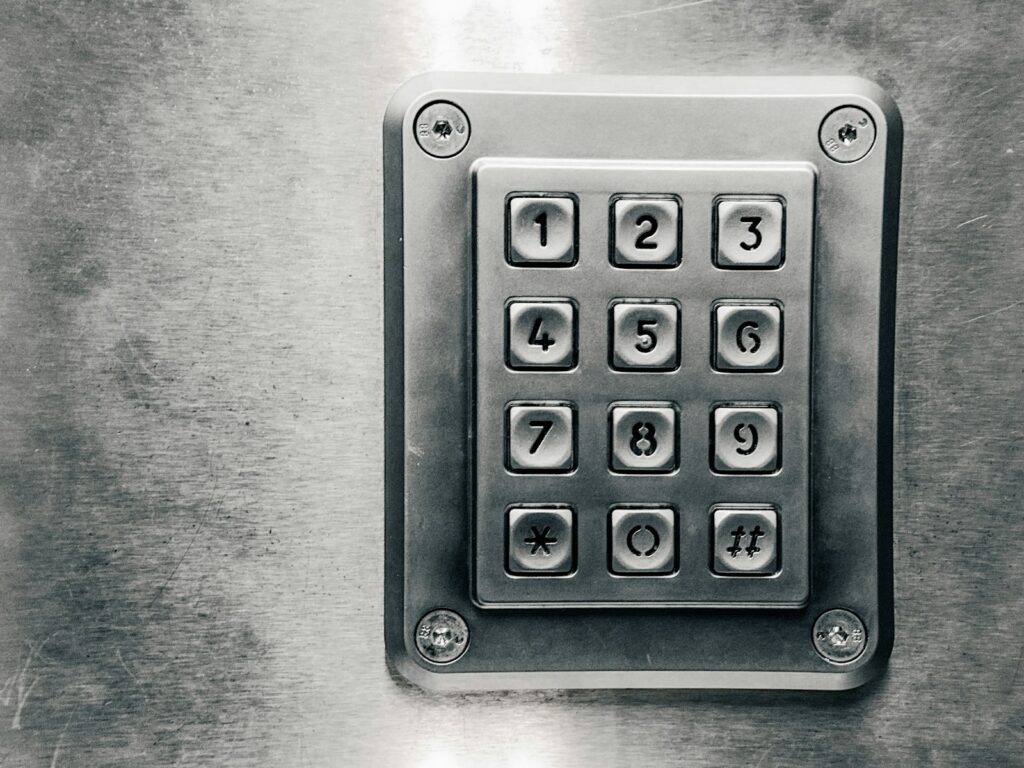
If you find a code, enter it carefully. Many electronic locks go into a timed lockout after several wrong attempts, and a keypad that doesn’t respond may simply have flat batteries.
Step 3: Identify the safe
Note the brand and model, which may be on a plate on the door, the back or the side. Take photos of the front of the safe, the lock or keypad and the safe in its position, including any stairs between it and the street. This information helps a technician understand the lock type and plan the job.
For some models, the original supplier or manufacturer may be able to help once you prove your authority, although many codes are changed after purchase and not recorded. Our article on options for lost keys and forgotten combinations explains what each lock type allows.
Step 4: Book a professional opening
If the code and key can’t be found, a specialist safe technician can open the safe. Expect to be asked for documents such as:
- The death certificate
- The will, and the grant of probate or letters of administration if one has been issued
- Your photo ID
- Something linking the safe to the estate, such as the property’s title, rates notice or lease
A careful technician will try non-destructive methods first, because they protect the safe and anything inside it. Drilling is a last resort, and the entry point should be repaired so the safe remains usable or saleable. Please don’t try to force, pry or cut a safe yourself. Apart from the risk of injury, it can damage documents, jewellery and electronics inside, and it can destroy the value of a safe the estate might otherwise sell.
Our safe opening service for estates and families covers older and discontinued models, which are common in deceased estates.
Step 5: Record the contents
Opening a safe in an estate is a moment where trust matters. To protect yourself as executor and keep things transparent:
- Have a witness present, such as a co-executor, beneficiary or the estate’s lawyer.
- Photograph the contents before anything is moved, then photograph and list each item.
- Count cash with two people and record the total.
- Keep documents together. Wills, titles, share certificates and insurance policies may be important to the administration.
- Secure valuables straight away, and check that they are insured while the estate is being administered.
- Take care with firearms or ammunition. If you find any, handle them as little as possible and contact your state police firearms registry for guidance on what to do.
Step 6: Decide what to do with the safe
Once it’s open, the safe itself becomes an estate asset to deal with. The usual options are:
| Option | Best when | What’s involved |
|---|---|---|
| Keep it in the family | A family member wants a good-quality safe | Code change or rekey, then relocation and re-anchoring at their home |
| Leave it with the property | The house is being sold and the buyer wants it | Agree it in the sale, reset the code and hand over keys at settlement |
| Sell it | The safe is sound and has resale value | Removal, then sale as a pre-used safe |
| Remove and recycle | The safe is damaged, very old or of low value | De-anchoring, extraction and recycling |
Keeping the safe
If a family member is taking the safe, have the code changed or the lock rekeyed first, since you can’t be sure who else knew the old one. Our safe moving and relocation service can move it to the new home and anchor it again. Many older safes are in upstairs rooms or tight spaces, so our guide to moving a heavy safe out of an upstairs room is worth reading first.
Leaving it with the property
If the house is being sold, decide early whether the safe stays. Our article on what to do with a safe before a property settles covers listing it in the contract, emptying it and handing over codes.
Selling or removing it
A sound older safe from a well-known maker can still be useful to someone else. Our pre-owned safes collection shows the kind of older safes that go back into use after being checked. If the safe needs to go, our safe removal team can take it away, and you can read how removed safes are resold or recycled to understand the options.
Frequently Asked Questions
Who is allowed to open a deceased person’s safe?
Usually the executor named in the will, or an administrator appointed by the court if there is no will or executor. In Victoria, an executor generally needs a grant of representation from the Supreme Court before dealing with estate assets, unless the estate is small. Rules vary by state, so if you’re unsure whether you can arrange an opening, get advice from a lawyer or your state’s probate registry.
What documents will a safe technician ask for?
Expect to show the death certificate, the will, and the grant of probate or letters of administration if one has been issued, plus your photo ID. Something linking the safe to the estate, such as the property’s title, rates notice or lease, also helps. A reputable technician asks for proof because it protects the estate from someone opening the safe without authority.
Can an inherited safe be opened without damaging it?
Often, yes. Professional safe technicians use non-destructive methods first, which leave the safe intact and usable. If drilling turns out to be necessary, a skilled technician makes a precise entry and repairs it so the safe stays secure and can still be used or sold. Forcing the safe yourself risks injury and damage to both the safe and its contents.
What should I do with the safe after it’s opened?
You can keep it in the family, leave it with the property if the buyer wants it, sell it, or have it removed and recycled. If anyone is keeping or buying it, change the code or rekey the lock first. Relocating or removing a heavy safe should be done by safe specialists with the right equipment.
Need help with an inherited safe?
We can help you open the safe, then move, remove or service it as the estate requires. Call us on 0409 860 011, visit our showroom at 38 Barrie Rd, Tullamarine, or talk to us about an estate safe.