On this page
- The general duty that applies to every firearm
- Gun safe requirements in NSW for Category A and B (Level 1 storage)
- Category C, D and H firearms (Level 2 storage)
- Ammunition storage in NSW
- Where you store your firearms matters
- What changed in 2025 and 2026
- Inspections and changing address
- Choosing and installing a compliant safe
- Frequently Asked Questions
- Need help choosing a gun safe for NSW?
Gun safe requirements in NSW depend on your licence category. Category A and B firearms must be stored in a locked receptacle of hardwood or steel that is not easily penetrable, fixed in place if it weighs under 150 kg empty, and fitted with solid metal locks of a type approved by the Commissioner. Category C, D and H firearms must be kept in a locked steel safe that is bolted to the structure of the premises, whatever it weighs. In both cases ammunition must be locked in a separate approved container.
The rules come from Part 4 of the Firearms Act 1996, the Firearms Regulation 2017 and the Commissioner’s Instruments of Approval, which since November 2024 call for a commercially manufactured safe designed for firearms. From 1 July 2026 a Permit to Acquire also depends on a passed safe storage inspection. This article walks through each requirement. For the rules in every state and territory, see our Australia-wide summary of gun safe storage rules.
The general duty that applies to every firearm
Section 39 of the Firearms Act 1996 applies to anyone who possesses a firearm in NSW. You must take all reasonable precautions to ensure the firearm is kept safely, is not stolen or lost, and does not come into the possession of someone who is not authorised to have it. The specific storage rules below sit on top of this general duty, so meeting the minimum specifications does not excuse careless habits such as leaving the key in the lock.
Gun safe requirements in NSW for Category A and B (Level 1 storage)
Section 40 of the Act sets the minimum standard for Category A and B licence holders. When the firearm is not being used or carried, it must be stored:
- in a locked receptacle of a type approved by the Commissioner, made of hardwood or steel and not easily penetrable
- fixed in place to prevent its easy removal, if the receptacle weighs less than 150 kg when empty
- with locks made of solid metal and of a type approved by the Commissioner
- with any ammunition in a separate locked container of an approved type
The Commissioner’s Instrument of Approval for section 40, signed on 25 November 2024, fills in the detail. The receptacle must be a commercially manufactured safe designed for securing firearms. Its locks must be a three-point locking system with an internal mechanism that secures the door at several points, or an alternative that is equivalent or better. If the door uses external locks such as padlocks, they must have a body at least 40 mm wide and a hardened steel shackle.
The NSW Police Level 1 fact sheet adds the fixing method. A receptacle mounted into brick, stone or concrete should be attached by at least four anchor points fitted internally through holes in the rear or base. One mounted to timber framing should be secured to the wall studs or floor joists by at least four anchor points.
Category C, D and H firearms (Level 2 storage)
Section 41 sets a higher bar for Category C, D and H licences, which includes handguns. The firearm must be stored in a locked steel safe of an approved type that cannot be easily penetrated, and the safe must be bolted to the structure of the premises where the firearm is authorised to be kept. There is no weight exemption, so even a heavy safe must be bolted down. Ammunition again goes in a separate approved locked container.
The section 41 Instrument of Approval requires a commercially manufactured steel safe designed for securing firearms, attached by at least four anchor points into brick, stone or concrete, or into wall studs or floor joists. Timber is not an option for these categories, and a gun safe that met the old Category A and B standard may not be enough if you later add a Category C, D or H firearm.
| Requirement | Category A and B | Category C, D and H |
|---|---|---|
| Container | Commercially made safe of steel or hardwood, not easily penetrable | Commercially made steel safe, not easily penetrable |
| Fixing | Fixed if under 150 kg empty (fact sheet: at least 4 anchor points) | Always bolted to the structure (at least 4 anchor points) |
| Locks | Solid metal; three-point locking or equivalent; padlocks 40 mm body minimum | Locked steel safe of a type approved by the Commissioner |
| Ammunition | Separate approved locked container | Separate approved locked container |
| Maximum penalty | 20 penalty units or 12 months’ imprisonment, or both | 50 penalty units or 2 years’ imprisonment, or both |
Ammunition storage in NSW
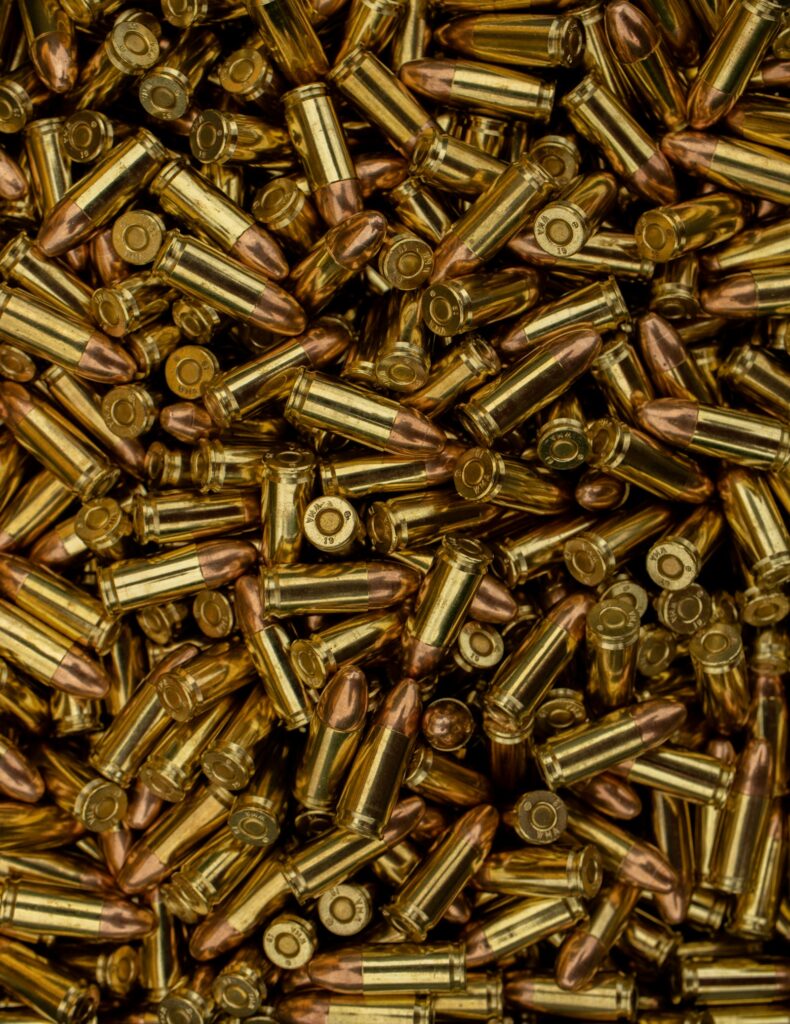
Under both sections, ammunition must be kept in a locked container separate from the firearms. The 2024 Instruments of Approval accept a locked metal container, a commercially manufactured locked container designed for ammunition, or a commercially manufactured firearm safe with an integral lockable steel compartment. The NSW Police ammunition fact sheet also says the key to the ammunition lock must not be kept inside the firearms receptacle or close to it. Our ammunition storage explainer covers the practical choices.
Where you store your firearms matters
The Level 1 and Level 2 fact sheets set out extra conditions based on location. If the safe is at your principal place of residence, or at premises that can easily be observed from an inhabited dwelling, the standard requirements above apply. If the firearms are kept anywhere else, such as a hobby farm or a shed out of sight of the house, NSW Police says you also need:
- a trigger or barrel lock on each firearm, with each firearm secured individually inside the safe
- an alarm on the safe that is monitored remotely
- an intruder alarm and duress facilities for the premises with off-site notification, including internal motion sensors that detect a breach
What changed in 2025 and 2026
NSW is rolling out the Terrorism and Other Legislation Amendment Act 2025 in stages. Two changes affect how you plan your storage:
- Firearm limits (from 24 December 2025): a Permit to Acquire will not be issued if it would take you over your limit. NSW Police lists 10 firearms for genuine reasons such as primary production, sport or target shooting and pest control, and 4 for most other licensees, with no limit for dealers and collectors.
- Safe storage before a permit (from 1 July 2026): a Permit to Acquire must not be issued unless the Commissioner is satisfied you will meet the storage requirements. The inspection must relate to your nominated storage address, have a passed outcome, and meet or exceed the storage level for the firearm you are buying.
NSW Police says you request an inspection by emailing your local Police Area Command or Police District. Its reform information page lists the details, and the law itself is on the NSW Legislation website. More provisions are still to commence, so check the current position with the Firearms Registry before you rely on this summary.
Inspections and changing address
Allowing police to inspect your storage at a mutually agreed time is a condition of every NSW licence. If you move, you must notify the Firearms Registry of the new storage address within 14 days. NSW Police says a safe that has already passed an inspection for the class of firearms you hold may continue to be accepted, unless an officer believes it now poses a risk to public safety.
Choosing and installing a compliant safe
With the firearm caps in place, it is worth sizing the safe for the number of firearms you can actually hold rather than the biggest unit on the floor. Our guide to working out what size gun safe you need helps with that, and our earlier overview of whether you need a gun safe covers the basics for new licence holders.
You can browse gun safes in our current range, from compact pistol safes to large rifle cabinets, and we deliver Australia-wide. Fixing a safe with four anchors into the right part of the structure is the step most often done badly, so read our guide to anchoring a gun safe properly or ask about our safe installation service.
Frequently Asked Questions
Can I use a timber gun cabinet in NSW?
For Category A and B firearms, the Act still allows a receptacle of hardwood or steel that is not easily penetrable, but the Commissioner’s 2024 Instrument of Approval requires a commercially manufactured safe designed for securing firearms. A homemade timber box is unlikely to pass. Category C, D and H firearms must be kept in a steel safe, so timber is not an option for those.
Does a heavy gun safe need to be bolted down in NSW?
For Category A and B firearms, a receptacle only has to be fixed in place if it weighs less than 150 kg when empty. For Category C, D and H firearms, section 41 requires the steel safe to be bolted to the structure of the premises regardless of weight. NSW Police guidance calls for at least four anchor points.
Do I need a safe storage inspection before buying a firearm in NSW?
From 1 July 2026, a Permit to Acquire must not be issued unless the Commissioner is satisfied you will meet the safe storage requirements. NSW Police says the inspection must relate to your nominated storage address, have a passed outcome and meet the storage level for the firearm being acquired. You request an inspection by emailing your local Police Area Command or District.
Can ammunition go in the same safe as my firearms in NSW?
Only if it is in a separate locked compartment. The 2024 Instruments of Approval accept a commercially manufactured firearm safe with an integral lockable steel compartment, as well as a separate locked metal container or a purpose-made locked ammunition container. Keep the key for the ammunition lock away from the firearms safe.
Need help choosing a gun safe for NSW?
Our showroom at 38 Barrie Rd, Tullamarine has over 350 new and used safes on display, and we deliver Australia-wide with installation through a national network. Call us on 0409 860 011 or contact our team online to talk through the right safe for your licence category.