


Most people assume a removed safe goes straight to landfill. It’s an understandable assumption. Safes are heavy, awkward, and built to resist exactly the kind of force needed to break them apart. But in practice, a safe that’s been removed from a Melbourne home or a business can follow several different paths depending on its condition, brand, and the type of security it was originally designed to provide.
Assessing a Safe After Removal
Before anything else happens, a removed safe needs to be assessed. This step determines whether the unit has a second life ahead of it or whether it’s reached the end of the road. Two things matter most: how well the safe has held up physically, and whether there’s still demand for what it offers.
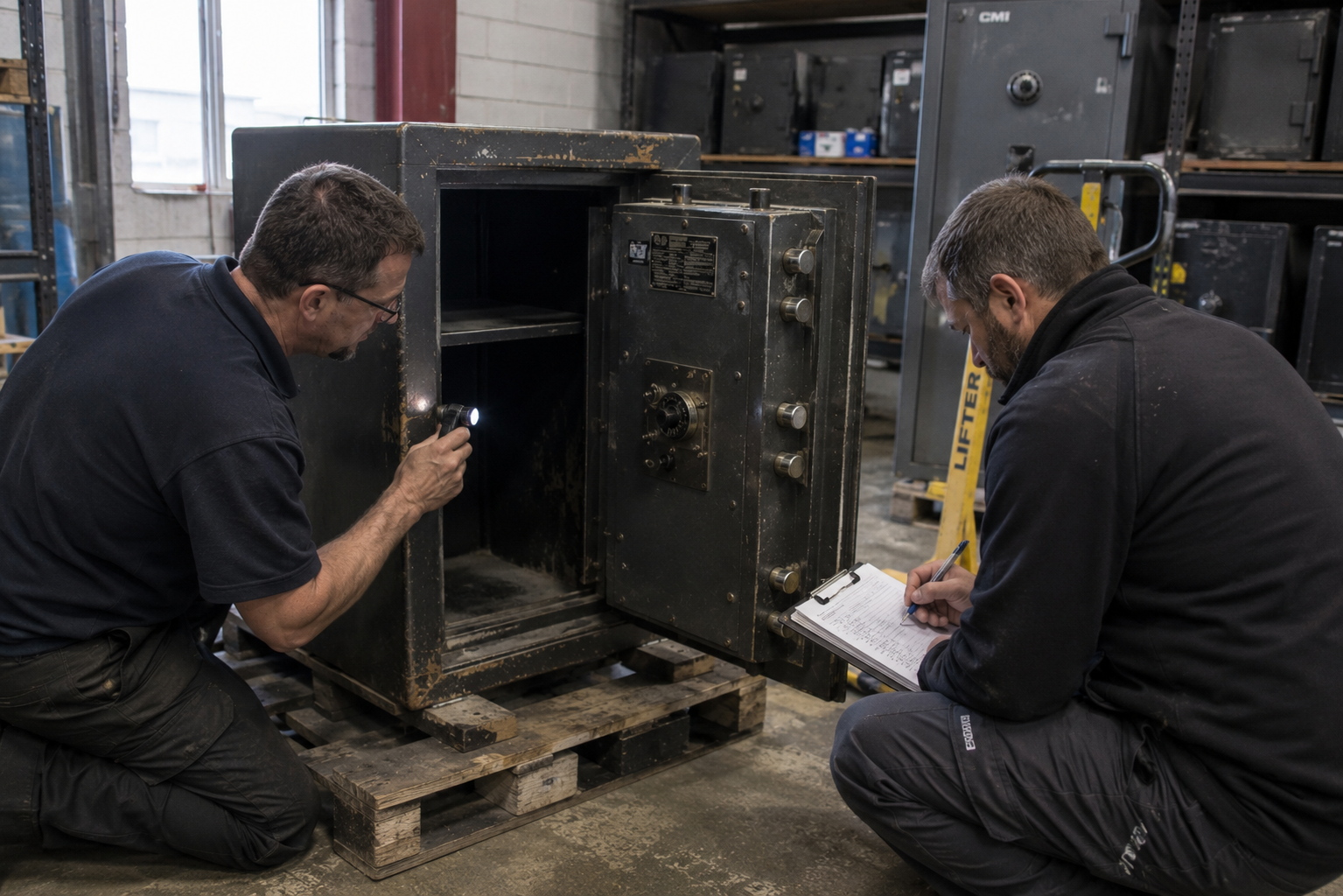
Structural Condition and Lock Integrity
The first thing a specialist looks at is the safe’s physical state. That means checking whether the door still seals properly, the bolt-work engages as designed, and the locking mechanism (whether digital, key, or combination) operates without fault. For fire-resistant safes, it also means inspecting the insulation material inside the walls and door. Fire-rated safes lose their protection if that material has been compromised by moisture, impact, or age.
Cosmetic wear like scratches or paint chips is rarely a dealbreaker. But structural issues like a warped door frame, damaged hinges, corroded bolt-work, or a lock that no longer resets correctly can take a safe out of the resale pool entirely.
Brand, Rating, and Market Demand
Even if a safe is in solid working order, it needs a buyer. That’s where brand recognition and security ratings come in. Safes from established manufacturers like CMI, Chubb, or Guardall tend to hold their value better than unbranded or imported units, largely because replacement parts are still available and buyers trust the certification behind them.
Cash ratings and fire ratings also matter. A commercial safe with a verified cash rating still has clear value to a business that needs compliant storage. A basic home safe with no formal rating and a low-security digital lock has far fewer resale options, even if it works perfectly.
The practical question is always: does someone need what this safe does, and can they trust it to do it?
Resale Opportunities for Commercial and Residential Safes
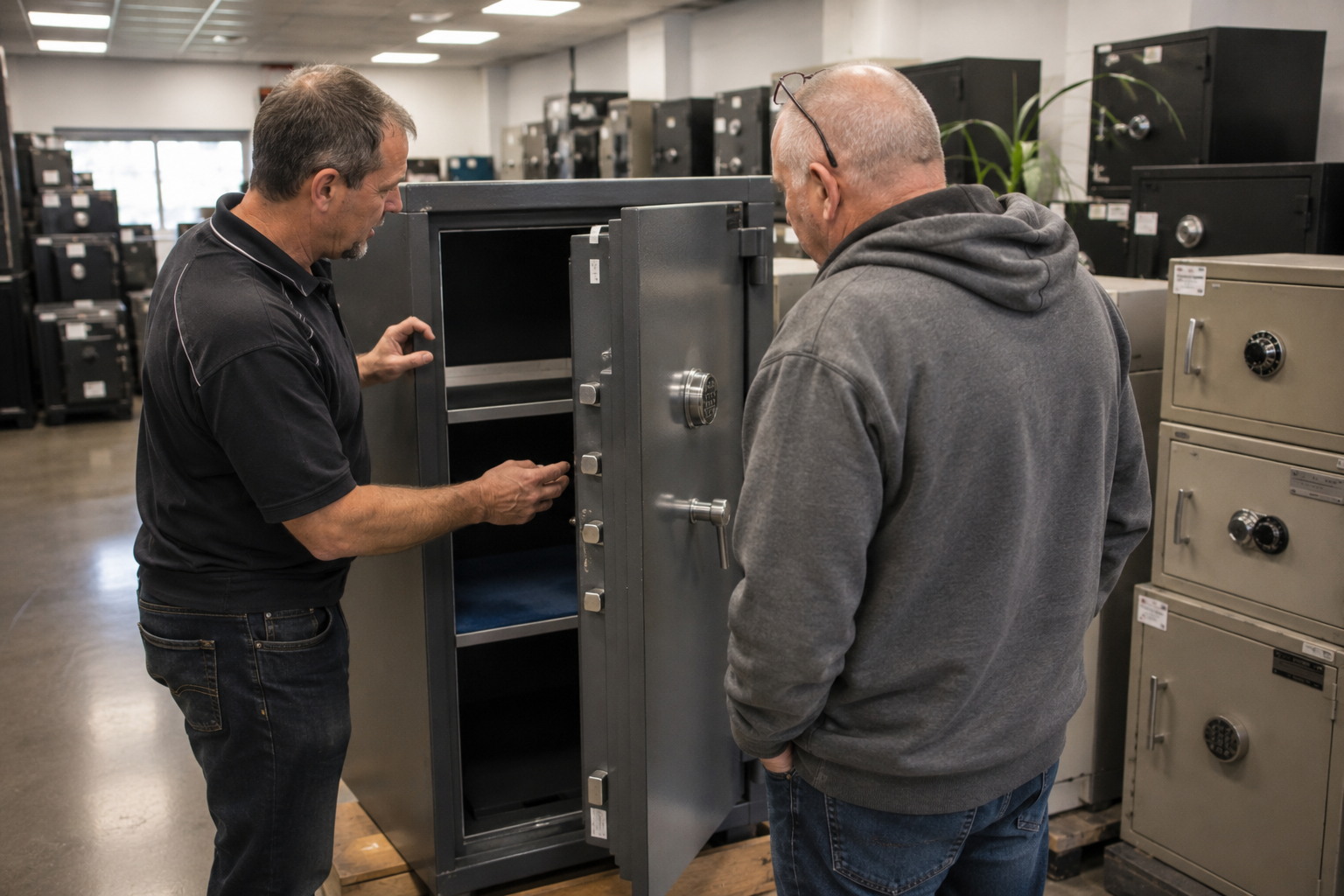
When a removed safe passes assessment, it can be refurbished and made available as a second-hand safe. This is one of the most practical outcomes. The safe stays in service, a new owner gets rated security at a lower price point, and a unit that weighs hundreds of kilograms avoids the waste stream entirely.
Refurbishment typically involves cleaning, servicing the lock, replacing batteries or worn seals, testing the bolt-work, and confirming the safe still meets its original specifications. The goal isn’t to make the safe look new. It’s to make sure it performs as intended.
Certain types of safes tend to move quickly on the second-hand market. Large home safes with fire protection are consistently in demand, as are commercial-grade deposit safes used in retail and hospitality. Firearm safes that still meet state storage compliance requirements also attract steady interest, given the cost of buying new.
For safe owners considering removal, it’s worth knowing that your old unit may have genuine resale value, particularly if it’s a recognised brand, still in working condition, and comes with its original keys or codes.
Recycling and Disposal for Safes That Cannot Be Reused
Not every safe gets a second chance. Units with significant structural damage, failed fire insulation, or obsolete locking systems that can’t be economically repaired are typically directed toward recycling or responsible disposal.
The challenge is that safes aren’t designed to be easy to dismantle. That’s the whole point. A quality safe is built from thick steel plate, hardened bolt-work, concrete or composite fill, and sometimes copper or glass relocker components. Breaking one down requires specialist cutting equipment and an understanding of how the materials are layered.
The steel body and door are the most recyclable components. Once cut apart, the steel is separated and sent to scrap metal processors where it re-enters the manufacturing supply chain. Internal insulation and fire barrier materials need to be handled and disposed of separately, as they can’t simply be melted down with the steel.
Dumping a safe in general waste or leaving it on the kerb isn’t just impractical. Many councils won’t collect items of that weight, and safes left in the open can become a liability. Professional removal ensures the unit is handled correctly from property to final destination, whether that’s a second-hand listing or a recycling facility.
For commercial premises, removal is often just one part of a larger exit process. If you’re vacating an office, warehouse, or retail space, our guide to decommissioning a safe when your business closes or downsizes covers everything from make-good obligations to deciding whether the safe should be relocated, resold, or recycled.
The Precision Safes Approach to Safe Removal and Recovery
At Precision Safes, safe removal is part of a broader service. It’s not just about getting a heavy object out of your property, but determining what happens to it afterward. With over 50 years of industry experience, the team understands which safes still have life in them and which ones don’t.
When a safe is removed, the process follows a clear path. The unit is collected using specialist equipment (trolleys, stair climbers, or vehicle-mounted lifting gear depending on the size and access) and transported to our Melbourne facility. From there, it’s assessed against the criteria outlined above: structural condition, lock function, brand, rating, and current market demand.
Safes that meet the standard are serviced, refurbished where needed, and listed in our used safe range. Those that don’t are directed to appropriate recycling or disposal. Either way, the owner doesn’t need to figure out the logistics. The removal service covers the full chain from property to outcome.
If you’re upgrading, downsizing, selling a property, or closing a business and need a safe removed, get in touch to discuss your options. In many cases, the safe you no longer need is exactly what someone else is looking for.
Not Every Removed Safe Ends Up in Landfill
A safe that’s no longer needed isn’t automatically waste. With proper assessment, many removed safes can be refurbished and resold, keeping rated security products in circulation and out of the waste stream. For units that can’t be salvaged, responsible recycling recovers the steel and disposes of specialist materials correctly.
The key is working with a team that handles both sides: the physical removal and the decision about what comes next. That’s what turns a heavy problem into a practical outcome.
