

On this page
- Why Safe Decommissioning Is Often Left Until the Last Minute
- What to Do Before Decommissioning a Commercial Safe
- Understanding Your Options for an Existing Safe
- Commercial Lease Obligations and Safe Removal Requirements
- What Professional Safe Removal Involves
- Managing Safe Decommissioning with Less Stress
Most businesses don’t think about the safe until the lease is almost up and the landlord wants the space cleared. By that point, there’s a 500 kg commercial safe bolted to the floor of a Melbourne office or warehouse, no clear plan for getting it out, and a settlement or handover date that isn’t moving.
Safe decommissioning covers everything involved in dealing with that safe before you leave, from documenting what’s inside and understanding your lease obligations to arranging professional safe removal, relocation, or resale.
Why Safe Decommissioning Is Often Left Until the Last Minute
In most business closures and downsizing situations, the safe isn’t an urgent priority. It sits in the back office or storeroom, does its job quietly, and only becomes a problem when:
- The lease is ending and the landlord wants the space returned to its original condition.
- The business has already relocated and the old premises need to be cleared.
- A property sale or settlement requires the space to be completely empty.
- The safe is too heavy or too firmly fixed to move without specialist help.
The issue is that commercial grade safes are designed not to move. They’re bolted down, often to concrete, and can weigh anywhere from 100 kg to well over a tonne. That’s the whole point. But it also means removal isn’t something you can organise at the last minute without running into delays or added costs.
Planning safe decommissioning early in the closure or downsizing process avoids the stress of dealing with it under time pressure when lease deadlines are already approaching.
What to Do Before Decommissioning a Commercial Safe
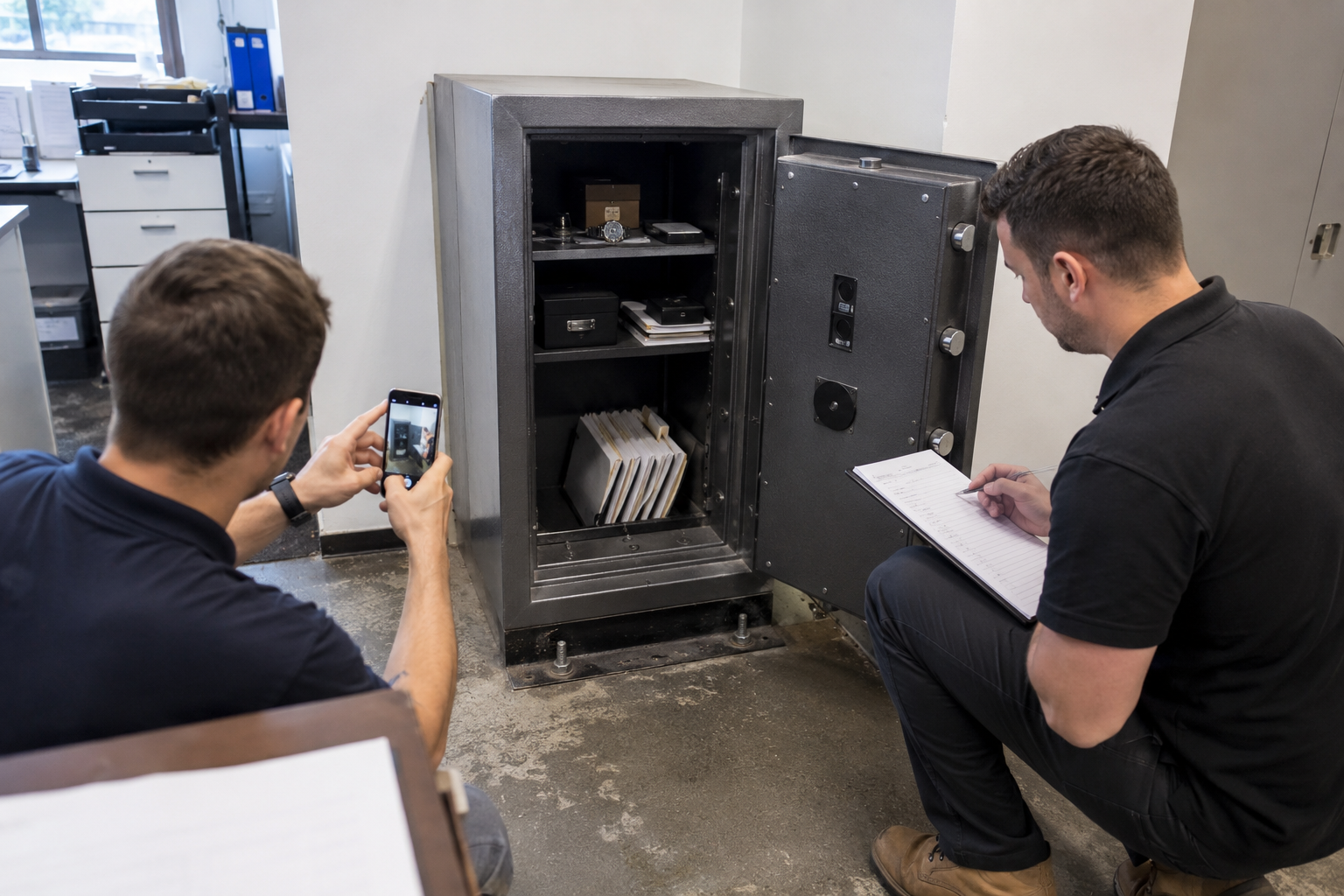
Before arranging removal, there are a few things worth sorting out first.
- Document the contents: If the safe was used for cash handling, sensitive documents, or compliance-related storage, make sure everything is accounted for and properly transferred or disposed of before the safe is opened for the last time. For regulated items, follow the relevant state-level requirements for transfer or destruction.
- Check the safe’s specifications: Knowing the make, model, cash rating, fire rating, and approximate weight helps when discussing removal logistics or exploring resale. If the safe still carries a valid cash rating or fire certification, it may hold meaningful resale value.
- Review your lease agreement: Commercial leases often include make-good clauses that require tenants to return the premises to their original condition. If the safe was installed during your tenancy, you may be responsible for removing it and repairing the floor or wall where it was fixed. More on this below.
- Photograph the installation: Before any work begins, take photos of the safe in place, including the bolting points, surrounding surfaces, and any existing damage. This protects you in disputes over bond or make-good costs.
Understanding Your Options for an Existing Safe
Once you’ve decided the safe needs to go, there are generally three paths forward.
- Relocation: If the business is moving rather than closing, taking the safe to a new premises is often the most practical option. This requires professional handling. Commercial safes need to be unbolted, transported safely, and reinstalled at the new location. Precision Safes offers a safe relocation service that covers the full process, from disconnecting the unit to resecuring it at your new site.
- Resale: A safe in good working condition with a current cash rating or fire certification can hold real value on the secondhand market. Businesses upgrading or downsizing may not need the same capacity, but someone else will. Second-hand safes are worth considering if you’d prefer to recover some of the original investment rather than disposing of the unit entirely. Precision Safes can advise on whether your safe is suitable for resale based on its condition and specifications.
- Removal and disposal: If the safe is outdated, damaged, or no longer meets current standards, professional removal and disposal is the cleanest option. This involves unbolting the safe, transporting it off-site, and arranging responsible disposal or recycling of the materials. Attempting this without proper equipment risks damage to the premises and potential injury. Once the unit is off-site, the steel is typically recycled and electronic components securely dismantled, what happens to a safe after it’s removed covers the full process.
Commercial Lease Obligations and Safe Removal Requirements
One of the most common drivers for safe decommissioning is a commercial lease ending. Most commercial tenancy agreements in Australia include a make good clause, which is a requirement that the tenant returns the premises to its original condition (or an agreed condition) when the tenancy ends.
If a safe was installed as part of your fit-out, the make-good obligation typically includes removing the safe, repairing the bolting points in the floor or wall, and restoring the surface to a reasonable standard.
It’s worth checking the specific wording of your lease early. Some landlords may agree to leave the safe in place, particularly if it adds value for the next tenant. Others will insist on full removal. Negotiating this before your final weeks of occupancy can save significant cost and stress.
If you’re unsure about your obligations, speak with your property manager or a commercial leasing advisor. Don’t assume the safe can stay just because it’s been there a long time.
What Professional Safe Removal Involves
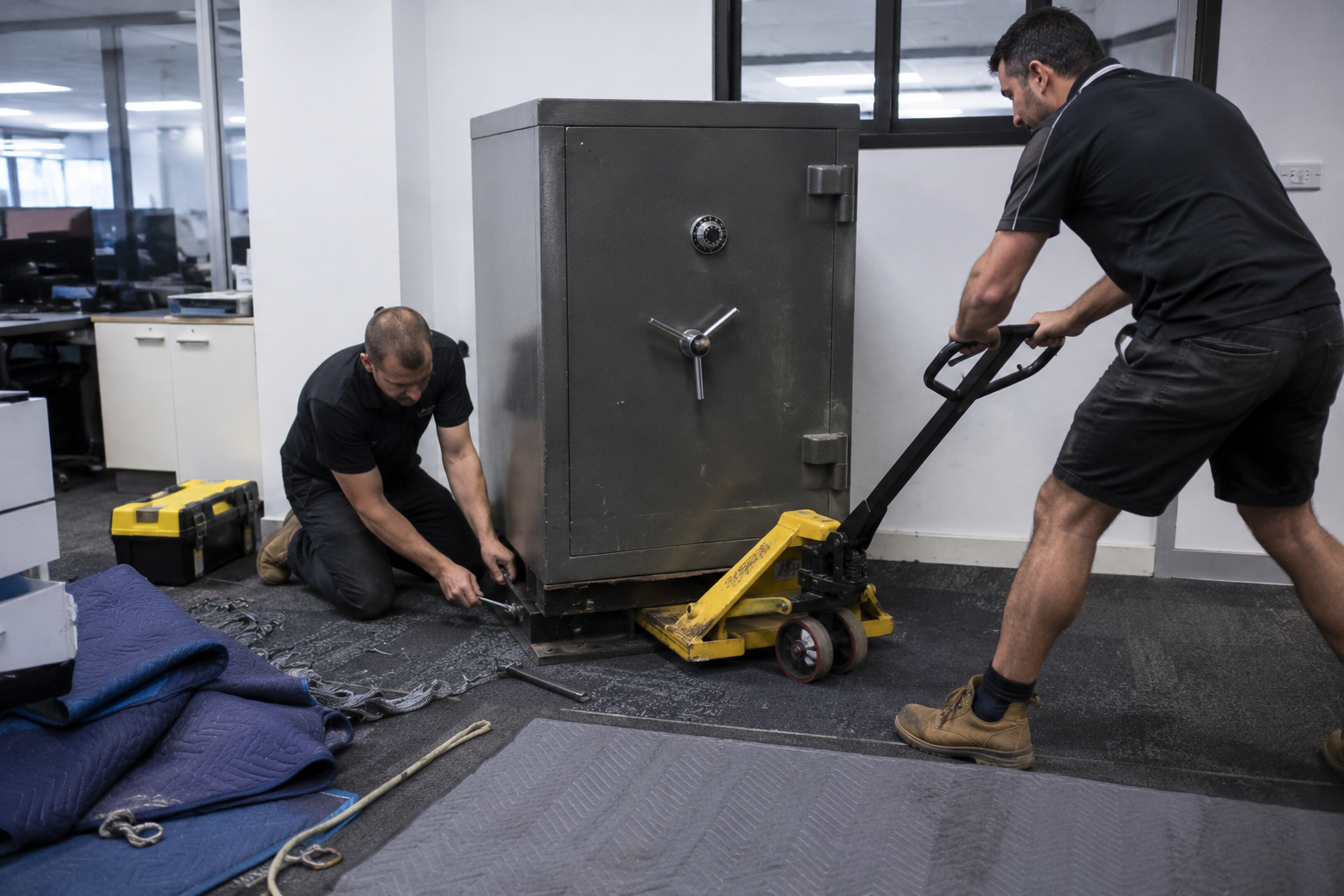
Safe removal isn’t a job for one person, and it’s not something general removalists are typically equipped for. Commercial safes are heavy, awkward to manoeuvre, and secured to the building structure. Removing them requires specialist knowledge and equipment.
A typical professional safe removal process includes:
- Site assessment: evaluating access points, floor type, bolting method, and the weight of the safe to plan the safest removal approach.
- Unbolting and disconnection: safely detaching the safe from its fixing points without damaging the surrounding structure.
- Transport: using appropriate lifting equipment such as trolleys, pallet jacks, or crane access to move the safe out of the building.
- Surface repair guidance: advising on what make-good work the floor or wall may need after the safe has been removed.
Most commercial removals are completed within a single business day, though how long safe removal takes depends on the weight, access, and how the unit is anchored.
Precision Safes handles commercial safe removals across Melbourne and surrounding areas. With over 50 years of industry experience, the team understands the logistics involved in moving heavy safes out of offices, retail spaces, pharmacies, and warehouses — including buildings with limited access, stairs, or narrow doorways.
Managing Safe Decommissioning with Less Stress
Safe decommissioning doesn’t need to be a last minute headache. The key is addressing it early in your closure or downsizing plan, ideally as soon as you know the premises will be vacated. Start by reviewing your lease, documenting the safe’s specifications, and deciding whether relocation, resale, or removal makes the most sense for your situation. Then engage a specialist who can manage the process safely and efficiently.
If you’re closing or downsizing a business in Melbourne and need a commercial safe removed, relocated, or assessed for resale, Precision Safes can help. The team operates across Melbourne and surrounding areas and regularly handles removals from offices, retail shops, pharmacies, and warehouses throughout the metro area. Get in touch for a quote or to discuss your situation.
Related guide: Safe Services Guide: Installation, Moving, Removal, Repair and Opening