AUSTRALIA'S LARGEST RANGE OF ONLINE SAFES & VAULTS

Sales - Service - Installation

Largest Selection of safes

Australia's Most Trusted Supplier

Fast Delivery

Expert Installation

Unbeatable Deals

Which Gun Safe Lock is Best: Key, Digital or Combo?


Which Gun Safe Lock is Best: Key, Digital or Combo?

When purchasing a gun or rifle safe, one of the most crucial decisions is selecting the appropriate locking mechanism. A lock is not merely a convenience feature; it is the first line of defense in ensuring firearms are stored securely, in compliance with Australian law, and protected from unauthorized access.

There are three main types of locks available for gun safes: key locks, digital locks, and combination locks. Each has unique benefits and limitations, depending on your needs, preferences, and budget. Let’s take a closer look at how each gun safe lock type performs in real-world use.

Key Locks for Gun Safes

Simplicity and Reliability

Key locks are one of the most traditional and widely trusted options for gun safes. They operate using a physical key, making them straightforward to use and easy to understand. This simplicity is a significant advantage, particularly for first-time gun safe owners or those who prefer mechanical systems over electronic ones.

Advantages of Key Locks

  • Reliability: No reliance on batteries or electronics.
  • Cost-effectiveness: Often more affordable than digital or mechanical alternatives.
  • Ease of use: Simple mechanism requiring minimal training or technical knowledge.

Limitations of Key Locks

  • Risk of lost keys: Misplaced keys can lead to lockouts or unauthorized access if found.
  • Limited access control: Anyone with the key can open the safe.
  • Maintenance: Keys and lock barrels may wear over time.

Key locks remain a trusted choice because they strike a balance between simplicity, reliability, and affordability. While they may not offer advanced features like multiple user codes or audit trails, their mechanical nature ensures that, with proper care, they can provide decades of secure firearm storage.

Digital Locks for Gun Safes

Modern Convenience and Enhanced Security

Digital locks have become increasingly popular in Australia for both rifle safes and handgun safes. These locks operate through an electronic keypad, usually powered by replaceable batteries, and allow users to unlock their safes quickly using a personal identification number (PIN). The convenience and speed of digital locks make them an attractive option for homeowners, security professionals, and firearm enthusiasts who require easy, secure access.

Advantages of Digital Locks

  • Quick access: Entering a PIN code is often faster than locating and turning a key.
  • Multiple users: Some models allow several PINs for authorised users.
  • Audit trails (advanced models): Certain safes can record access history for compliance and accountability.

Limitations of Digital Locks

  • Battery dependency: Locks require functioning batteries, and failure may result in lockouts if backup access is not available.
  • Cost: Generally more expensive than key locks.
  • Potential technical faults: Like all electronics, digital locks may occasionally malfunction.

Digital locks combine speed, convenience, and modern security, making them a smart choice for those who prioritise accessibility and control. When paired with a quality gun safe, they offer reliable protection while keeping firearms easily accessible to authorised users.

Combination Locks for Gun Safes

Traditional Mechanical Security

Combination locks, also known as mechanical dial locks, are a classic and highly reliable option for gun safes. They operate by turning a dial to input a specific sequence of numbers, which aligns internal wheels to release the lock. This purely mechanical system has been trusted for decades, especially in high-security safes where long-term durability and tamper resistance are priorities..

Advantages of Combination Locks

  • No keys or batteries required: Reduces dependency on external components.
  • Durability: Mechanical dials are known to last for decades with proper care.
  • Tamper resistance: More difficult for unauthorised users to bypass compared to simple key locks.

Limitations of Combination Locks

  • Slower access: Dialling the correct sequence takes longer than entering a PIN or using a key.
  • User error: Forgotten combinations or misdialling can cause delays.
  • Cost: Quality mechanical locks are often more expensive than key-based systems.

Combination locks are perfect for those who value durability, security, and independence from electronics. They offer a proven, long-lasting solution for safeguarding firearms, and when paired with a certified gun safe, they ensure your weapons remain secure and compliant with Australian standards.

Choosing the Right Lock for Your Gun Safe

When selecting a lock type, consider the following factors:

  • Frequency of access: Daily use may favour the speed of a digital lock.
  • Budget: Key locks are generally more economical, while digital and combination locks require higher investment.
  • User preference: Some individuals prefer the reliability of mechanical systems, while others value the convenience of modern technology.
  • Compliance: Ensure your chosen safe meets Australian gun safe standards for firearm storage.

Secure Your Firearms the Right Way

Choosing between key, digital, and combination locks for your gun safe depends on your lifestyle, access needs, and budget. Each type has strengths, but all can keep your firearms secure and compliant when paired with a quality safe.

  • A key lock offers affordability and simplicity.
  • A digital lock provides speed and modern convenience.
  • A combination lock ensures long-term durability and mechanical reliability.

At Precision Safes, we offer a wide selection of gun and rifle safes featuring all three lock types. Our range includes trusted Australian brands designed to keep firearms secure, compliant, and accessible only to authorised users.

👉 Explore our full collection today and choose the gun safe that matches your security needs with confidence.

How Often Should You Change Your Digital Safe Code? Security Best Practices

How Often Should You Change Your Digital Safe Code? Security Best Practices

How Often Should You Change Your Digital Safe Code? Security Best Practices

When was the last time you updated your safe code? Many Australians invest in high-quality home safes or office safes to protect their valuables, but often forget about one of the simplest yet most crucial security steps: changing the safe code regularly. Knowing how often to change your safe code can make a huge difference in keeping your belongings secure and preventing unauthorised access.

In this article, we’ll look at why safe code changes are essential, how often you should reset them, and the best practices for safe code security whether you’re using a digital safe at home or a high-security safe for your business.

Why Changing Your Safe Code Matters

Your safe’s lock code is like the PIN for your bank account, it’s the first line of defence. According to the Australian Bureau of Statistics (ABS), an estimated 185,300 Australian households (1.8%) experienced a break-in during the 2022–23 period. Break-ins remain one of the most common household crimes, making secure storage solutions like home safes and security safes an essential layer of protection.

Here are a few reasons to reset your safe code:

  • Prevent unauthorised access: If too many people know your code, your valuables are at risk.
  • Respond to staff or tenant changes: In workplaces, former employees might still remember old codes.
  • Protect against wear and tear: Frequent use can leave wear marks on certain digits, making it easier for someone to guess the code.
  • Stay ahead of cyber risks: For advanced electronic safes, changing the code helps prevent digital tampering.

How Often Should You Change Your Safe Code?

So, what’s the recommended frequency? While there’s no universal rule, most security experts recommend:

  • Every 6-12 months for personal safes used at home.
  • Every 3-6 months for business safes or safes in shared environments.
  • Immediately if:
    • You suspect someone has seen or guessed your code.
    • An employee leaves your company.
    • There has been a break-in attempt.

Think of it as part of your regular security maintenance, just like servicing your locks or updating passwords online.

Best Practices for Safe Code Security

1. Choose Strong, Unique Codes

Avoid simple combinations like birthdays, 1234, or repeated numbers. Instead, use longer, less predictable sequences. Many digital safes allow 6+ digits, giving you extra protection.

2. Limit Who Knows the Code

The fewer people who know your safe code, the better. For businesses, consider assigning unique user codes available on advanced security safes, so access can be tracked.

3. Watch for Warning Signs

If your safe shows signs of tampering, unusual keypad behaviour, or inconsistent locking, it may be time for a safe service or upgrade.

4. Combine with Physical Security

Even the best safe code won’t help if the safe itself isn’t built for strength. Look for fireproof safes and models with advanced locking systems to ensure comprehensive protection.

Common Mistakes to Avoid

When it comes to safe security, even small habits can weaken protection. Here are some of the most common mistakes people make:

  • Not changing the code regularly
    Many safe owners stick with the same code for years because it feels inconvenient to update. This predictability makes it easier for someone to guess or discover the code.
  • Writing the code down in obvious places
    Leaving the code on a sticky note near the safe, inside a desk drawer, or on your phone without security completely defeats the purpose. If you’re worried about forgetting, use a secure password manager instead of leaving written reminders.
  • Reusing the same code across multiple devices
    Using one code for your safe, locker, and even online accounts means that if one is compromised, they all are. Each safe should have a unique code, just like a strong password.
  • Sharing the code with too many people
    The more people who know your code, the higher the risk of misuse or accidental disclosure. Limit access to only those who absolutely need it.

By avoiding these mistakes and adopting a regular schedule of safe code changes, you’ll significantly improve your protection against theft, unauthorised access, and accidental lockouts.

Safe Code Changes for Different Types of Safes

  • Home Safes: Change the code at least once a year, especially if multiple family members use it.
  • Office Safes: Update every 3–6 months, particularly if staff turnover is high.
  • High-Security Safes: Regular changes are critical, as these often protect high-value assets.
  • Fireproof Safes: While designed for heat resistance, they also benefit from regular code resets for theft protection.

If you’re unsure how to reset, check your safe’s manual or speak to a trusted provider like Precision Safes, who offer a wide range of secure, easy-to-use safes for Australian homes and businesses.

Smart Habits for Stronger Protection

Changing your safe code regularly is a small step that makes a big difference in protecting valuables at home or work. Whether you’re using a home safe, an office safe, or a high-security safe, staying proactive with code updates reduces risks and ensures your assets remain protected.

Ready to upgrade your security? Find the perfect safe for your needs and enjoy peace of mind knowing your valuables are protected with Precision Safes

Top Places to Install a Home Safe for Maximum Security

Top Places to Install a Home Safe for Maximum Security in Australia

Top Places to Install a Home Safe for Maximum Security

Keep Your Home Safe Secure and Out of Sight

When it comes to protecting valuables at home, buying a home safe is only half the job. The other half is choosing the best place to install it. Even the toughest, fireproof safe won’t offer maximum security if it’s in plain sight or poorly installed. That’s why knowing where to hide a safe at home is just as important as the safe itself.

In this guide, we’ll cover the top places to install a safe at home in Australia, along with practical tips to make sure your valuables stay protected from burglars, fire, and even curious visitors.

Why Placement of Your Home Safe Matters

According to the Australian Bureau of Statistics (ABS) Crime Victimisation Survey 2022–23, around 185,000 Australian households (1.8%) experienced a break-in during the year. This highlights just how common home burglaries are and why investing in a secure home safe is an important step in protecting valuables such as jewellery, cash, passports, and important documents.

That’s why safe installation and smart placement are crucial. A well-hidden, securely bolted safe can make the difference between your valuables being stolen or staying protected.

Best Places to Install a Safe at Home

1. In the Bedroom – But Not in Obvious Spots

The bedroom is one of the most common locations people choose for a safe, but it’s also the first place intruders check. Instead of keeping it in the wardrobe or under the bed, consider less obvious spots such as:

  • Behind a false wall panel.
  • Inside custom-built cabinetry.
  • Beneath floorboards with secure bolting.

If you’re storing important documents like passports or wills, a fireproof safe in the bedroom can be practical for quick access while still secure.

2. The Home Office or Study

A home office often feels like a natural spot for a safe, especially if you keep sensitive files, contracts, or business backups. To maximise protection:

  • Install the safe inside a lockable cupboard or filing cabinet.
  • Use a digital home safe for easier daily access.
  • Bolt the safe securely to the floor or wall to prevent removal.

This location balances security with accessibility if you need frequent access to documents.

3. Concealed in the Living Area

Burglars don’t usually spend much time in shared living spaces like lounges or dining rooms, making these areas surprisingly good for hidden safe locations. Consider:

  • Behind entertainment units.
  • Built into walls behind bookshelves or artwork.
  • Under heavy furniture that can’t be easily moved.

This approach combines camouflage with convenience, while making it less obvious that you own a safe.

4. Garage or Basement With Caution

While the garage or basement offers space for larger fireproof safes, these areas can be riskier because they’re often easier to access during a break-in. If you do choose these locations:

  • Ensure the safe is bolted to concrete floors or walls.
  • Avoid leaving the safe in plain sight.
  • Consider using a higher security burglar-resistant safe for added protection.

This option works best for storing bulkier items you don’t need daily access to.

5. Hidden Behind Everyday Fixtures

Some of the best places to put a safe in your house are right in front of you. Disguising your safe behind everyday fixtures makes it less likely to be found, even during a thorough search. Popular options include:

  • Behind a false electrical panel or utility box.
  • Inside a kitchen pantry or under sink cabinetry.
  • Disguised behind wall-mounted mirrors or framed artwork.

When paired with a compact home safe, these hidden spots can provide excellent protection.

Safe Installation Tips for Maximum Security

Knowing where to hide a safe at home is just one step. To maximise security:

  • Bolt it down: Always secure your safe to the floor or wall. Portable safes can be easily removed by burglars.
  • Fire and water resistance: Choose a fireproof home safe for protecting documents and digital media.
  • Accessibility vs security: Strike the right balance. Everyday-use items (like jewellery or passports) should be in an accessible but discreet safe, while long-term storage items can go in harder-to-reach spots.
  • Professional installation: For the highest security, have your safe installed by professionals who understand both SCEC and Australian Standards compliance.

Protect Your Valuables with Precision Safes

Choosing the right home safe installation spot is just as important as the safe you buy. From bedrooms to hidden wall units, the goal is to stay one step ahead of burglars while keeping your valuables safe from fire and accidents.

At Precision Safes, we offer a wide selection of home safes in Australia, including fire-resistant safes and burglar-resistant safes. With expert advice and trusted products, securing your home has never been easier.

Don’t leave your security to chance – choose a trusted home safe from Precision Safes and enjoy peace of mind.

How SCEC Standards Support National Security in Australia

How SCEC Standards Support National Security in Australia

How SCEC Standards Support National Security in Australia

Introduction

When it comes to national security in Australia, every detail matters — including how sensitive files and equipment are stored. That’s where SCEC standards come in.

The Security Construction and Equipment Committee (SCEC) establishes strict guidelines to ensure that only SCEC-approved safes, cabinets, and security products are used to protect classified government information.

These standards give government agencies and contractors confidence that equipment has been rigorously tested for strength, tamper resistance, and reliability — all critical for keeping Australia’s most sensitive data secure.

What Are SCEC Standards?

SCEC standards go beyond simply approving a product; they represent a rigorous evaluation process set by the Australian Government to ensure only the highest levels of protection are used in secure environments.

The Security Construction and Equipment Committee works closely with government agencies and security experts to assess safes, cabinets, and related equipment against strict performance criteria.

Every SCEC-endorsed product is tested for:

  • Resistance to tampering and forced entry
  • Environmental stress
  • Long-term durability and compliance

Products are then categorised into different SCEC security levels, making it easier for agencies and contractors to select the right safe or cabinet for their clearance requirements.

👉 In short, SCEC certification isn’t just a label — it’s an assurance that a product has been engineered and tested to meet the most demanding security standards in Australia.

Why SCEC Certification Matters

Protecting Classified Information

SCEC-approved products are specifically designed to safeguard classified government documents and secure data. Whether in a government office or contractor site, these products ensure compliance with the Australian Signals Directorate (ASD) requirements.

Supporting National Security

Every layer of protection counts in maintaining national security in Australia. By enforcing SCEC standards, the government ensures that only rigorously tested security products are used. From SCEC government safes to SCEC security cabinets, these measures protect against espionage, data leaks, and theft.

Compliance for Government Contractors

It’s not just government agencies that need to meet compliance. Contractors working with classified information must also use SCEC-certified security products.

⚠️ Choosing a non-certified safe could mean breaching regulations and facing penalties.

At Precision Safes, we supply a trusted range of SCEC approved security cabinets, helping contractors and government agencies remain fully compliant.

Types of SCEC-Certified Safes and Cabinets

The SCEC classification system categorises security products into three levels:

  • Class A – Highest Protection
    Designed for Top Secret classification, with the most stringent testing for forced entry and tampering. Best for high-security government facilities.
  • Class B – Medium Protection
    Commonly used in government and contractor settings requiring Protected or Secret level storage. Balances strong resistance with practicality.
  • Class C – Standard Compliance
    Suitable for lower-risk environments or less sensitive materials. Provides baseline SCEC compliance with simpler access control.

👉 Browse our SCEC government safes to see which class is right for your needs.

Choosing the Right SCEC Approved Product

Selecting the right SCEC-approved safe or security cabinet isn’t just about ticking a compliance box, it’s about ensuring your organisation has the right level of protection for the information you handle every day. Here are some key considerations to guide your decision:

1. Classification Level of Information

Different SCEC products are designed for varying levels of classified information. For example, documents marked Protected may only require a lower-security unit, while Secret or Top Secret materials must be stored in higher-level SCEC-approved safes. Always match the safe or cabinet to the classification level specified in your security requirements to remain compliant.

2. Storage Size and Capacity

Think about how much material you need to store now and in the future. Smaller SCEC safes are ideal for compact offices or securing a limited number of documents, while larger four-drawer filing cabinets are suited for government departments or contractors managing high volumes of classified files. Overestimating capacity can save you from needing multiple safes later on.

3. Location and Usage

Where will the safe or cabinet be installed? For high-traffic offices, a durable and tamper-resistant unit that can handle frequent access is essential. For secure rooms or restricted areas, you may prioritise maximum protection over convenience. Consider whether the unit needs to be bolted to the floor, wall-mounted, or free-standing, as installation may affect compliance.

4. Access Control and User Needs

Some organisations require multiple staff to access the safe daily, while others may limit access to just a few authorised personnel. In these cases, consider additional locking mechanisms such as digital locks or combination locks that provide ease of access without compromising security.

5. Future-Proofing and Compliance

SCEC standards are updated periodically, so choosing a product from a trusted supplier ensures your investment remains compliant as requirements evolve. Working with an experienced provider also gives you confidence that your safe will be installed and maintained correctly.

SCEC Standards Keep Australia Secure

In an era where information is one of our most valuable assets, SCEC certification plays a vital role in protecting national security in Australia.

By choosing SCEC approved safes and cabinets, you’re not only meeting compliance, you’re also ensuring the highest level of protection for sensitive government and contractor data.

Ready to secure your workplace?

 Explore the full range of SCEC approved government safes at Precision Safes and make compliance simple while protecting Australia’s most valuable information.


Are Hotel Safes Really Safe? What Every Traveller Should Know

Are Hotel Safes Really Safe? What Every Traveller Should Know

When checking into a hotel, most travellers are relieved to see a hotel safe in their room. It feels reassuring to lock away passports, jewellery, or cash while heading out to explore. But many travellers still ask: Are hotel safes really safe?

The truth is, while hotel room safes do provide a valuable layer of protection, they are not all created equal. Some offer only basic security, while others feature advanced electronic locking systems that give guests genuine peace of mind. In this guide, we’ll look at how secure hotel safes really are, the risks involved, and how both Australian travellers and hotels can make smarter choices when it comes to protecting valuables.

Are Hotel Safes Actually Safe?

Hotel safes are designed to provide convenience and security for guests. Most modern properties now install digital hotel safes that open with a user-set PIN. This system is quick and easy to use, ensuring travellers can keep personal items safe while they’re away from the room.

However, it’s important to understand that not all safes are built to the same standard. Some older hotel room safes still rely on outdated technology and can be accessed with a master override code or even a universal key. In rare cases, professional thieves have been known to tamper with low-quality hotel safe boxes that don’t have strong steel construction.

That said, modern hotel electronic safes such as those in the Precision Safes Hotel Safes range are far more advanced. These safes feature solid steel doors, reliable locking mechanisms, and emergency key access designed for genuine situations only. When installed and managed properly, they provide a much higher level of security.

Common Risks with Hotel Room Safes

While hotel safes add peace of mind, there are some risks to consider:

1. Master Codes and Keys

Hotels often keep a master override code or backup key in case a guest forgets their PIN. In reputable hotels, these are tightly controlled, but in some cases, poor internal security can make them a weak point.

2. Outdated Models

Older hotel safe boxes may not meet today’s standards. Thin metal, outdated locks, and worn mechanisms are much easier to manipulate. Upgrading to a digital hotel safe with a modern electronic lock significantly reduces these risks.

3. False Sense of Security

A hotel in-room safe is safer than leaving valuables out in the open, but travellers shouldn’t assume it’s impenetrable. For high-value items like luxury watches, large sums of cash, or heirloom jewellery, additional measures should be taken. Reception safe deposit boxes or personal portable travel safes can provide added peace of mind.

How Hotel Safes Work (Digital vs Mechanical)

Digital Hotel Safes

Most modern hotel electronic safes rely on a digital keypad system. Guests create their own PIN during their stay, and the safe can be reset once they check out. They are convenient, user-friendly, and much harder to tamper with than mechanical models.

Mechanical Safes

Some older hotels still use mechanical safes with a key lock. While simple to operate, these are less secure because keys can be misplaced, copied, or misused.

For hotels looking to upgrade their rooms, the range of digital hotel safes from Precision Safes offers the perfect balance of convenience, durability, and guest confidence.

Tips for Travellers: Using Hotel Safes Wisely

Even the best hotel room safe can only provide so much protection. Here are some smart ways travellers can maximise safety:

  • Use the safe for essentials. Keep passports, travel documents, and moderate amounts of cash in the safe rather than high-value jewellery.
  • Check the lock carefully. Always test the safe after locking to make sure the door is secure.
  • Avoid storing irreplaceable items. If something is extremely valuable or sentimental, consider keeping it with you or using the hotel’s reception safe.
  • Be discreet. Don’t access your safe when hotel staff are in the room, as this can draw unnecessary attention.

Why Hotels Should Invest in Quality Safes

For hotels, providing reliable hotel safes in rooms is more than just a convenience, it’s a trust factor. Guests want reassurance that their belongings will be safe, and a sturdy hotel electronic safe helps build that trust.

Hotels in Australia can choose from a variety of models, including compact hotel lock boxes for budget rooms and larger digital hotel safes for premium suites. The Precision Safes Hotel Safes collection includes durable models designed for heavy daily use. Investing in quality safes not only improves security but also boosts guest satisfaction and loyalty.

Are Hotel Safes Safe Enough?

So, are hotel safes really safe? For most travellers, the answer is yes as long as you’re using a modern, well-maintained safe. They provide much stronger protection than leaving valuables unsecured in your luggage or bedside table.

For Australian hotels, the key is choosing the right product. By upgrading to reliable hotel electronic safes, hotels demonstrate a genuine commitment to guest security. This not only reduces the risk of theft but also gives guests greater confidence in returning for future stays.

Where to Find Reliable Hotel Safes in Australia

Looking for reliable hotel safes in Australia? At Precision Safes, we supply a wide range of hotel room safes designed to protect guests’ valuables while giving hotels complete peace of mind. Whether you’re after a compact hotel safe box or a larger digital hotel safe, our products deliver the security and ease-of-use that modern travellers expect.

Wall Safes vs Floor Safes – Which is Right for Your Home or Business?

Wall Safes vs Floor Safes - Which is Right for Your Home or Business?

Wall Safes vs Floor Safes – Which is Right for Your Home or Business?

When it comes to securing your valuables, two popular choices stand out: wall safes and floor safes. Deciding between a wall safe vs floor safe can feel overwhelming, both offer excellent security, but each has its own advantages.

Whether you’re protecting jewellery, important documents, or emergency cash, knowing the strengths and limitations of each type will help you choose the best fit for your needs.

At Precision Safes, we supply and install high-quality wall safes and durable floor safes for homes and businesses across Australia. Our expert team is here to guide you through the decision-making process so you can protect what matters most.

Wall Safes vs Floor Safes – Quick Comparison Table

Feature Wall Safe Floor Safe
Installation Location Built into the wall cavity, often hidden behind a picture, mirror, or cabinet Installed into concrete flooring, usually hidden under a rug or furniture
Security Level Good security, depending on wall strength Very high security due to reinforced concrete, extremely difficult to remove
Concealment Easy to disguise and keep out of sight Fully hidden and almost undetectable if covered well
Storage Capacity Limited by wall depth, best for smaller items Larger capacity, ideal for bulky or high-value possessions
Ease of Access Convenient, at chest or eye level for quick use Requires bending down or moving furniture to access
Installation Cost Generally lower, quicker to install Higher cost due to cutting/drilling into flooring and concrete work
Best For Everyday items like cash, documents, and small jewellery High-value or rarely accessed items such as gold, diamonds, important files


Which is Safer – Wall or Floor Safe?

When comparing wall safes vs floor safes, security levels depend largely on how the safe is installed and what it’s used for.

  • Floor safes generally offer the highest level of physical protection. Embedded into concrete, they’re extremely difficult for thieves to remove.
  • Wall safes, while still secure, are more about convenience and accessibility, making them a great choice for valuables you need often.

Many Australian homeowners and businesses choose to have both, a wall safe for regular items and a floor safe for long-term, high-value storage. This combination provides the perfect balance between convenience and maximum security.

Installation Considerations in Australia

Professional safe installation in Australia is essential to get the full security benefits of your safe. Incorrectly fitted safes, whether wall or floor can compromise their effectiveness. Licensed technicians know how to:

  • Position safes for maximum concealment.
  • Secure them to studs or concrete for tamper resistance.
  • Ensure the installation meets Australian safety and building standards.

For wall safes, this means anchoring them to solid wall studs and ensuring they sit flush for easy concealment behind artwork or cabinets. For floor safes, it involves cutting into concrete and creating a reinforced cavity that blends seamlessly with your flooring.

Cost Comparison

In general, wall safes cost less to install because they require less structural modification. However, the trade-off is reduced storage capacity and, in some cases, slightly less security.

Floor safes, while more expensive due to the labour-intensive installation, offer superior theft protection and larger storage. When protecting high-value assets such as gold, rare coins, or legal documents, the extra investment in a floor safe can be well worth it.

Everyday Use Cases

  • Wall Safe: Ideal for passports, cash, jewellery, and important documents you need regular access to. They’re also a great option for keeping valuables safe from curious visitors or employees in a business setting.
  • Floor Safe: Best for high-value items you only need occasionally, such as gold bars, rare collectibles, or sensitive legal papers. They’re also well-suited to commercial settings that store large amounts of cash overnight.

Extra Benefits of Concealed Safes

Both wall safes and floor safes are types of concealed safes, meaning they can be hidden in plain sight. This adds an extra layer of protection; thieves can’t steal what they can’t find.

  • Wall safes can be hidden behind mirrors, wardrobes, or even inside panelling.
  • Floor safes can disappear under a rug, piece of furniture, or even within a cupboard.

Maintenance and Longevity

Both wall and floor safes are built to last, but like any security equipment, they benefit from occasional maintenance. This might include:

  • Checking and lubricating locks.
  • Ensuring hinges and doors operate smoothly.
  • Inspecting seals (especially for fire-resistant models).

Ready to Choose Your Safe?

Both wall safes and floor safes offer excellent security, but the right choice will depend on your available space, the types of items you’re protecting, and how often you need to access them.

  • Choose a wall safe if you want easy, daily access and straightforward concealment.
  • Opt for a floor safe if you prioritise maximum protection for high-value or rarely used items.

If you’re still unsure, our friendly experts at Precision Safes are ready to help. We can walk you through the options, recommend the best safe for your needs, and provide professional safe installation in Australia so your valuables are secure for years to come.

Contact us today to get started on securing your home or business with a safe that fits your lifestyle and security goals.

Is Your Safe Compliant with Australian Safe Standards?

When you invest in a safe, you expect it to do one job – protect your valuables. But did you know not all safes sold in Australia meet Australian safe standards? Whether you’re a homeowner storing jewellery or a business securing documents and cash, compliance isn’t just a bonus – it’s a necessity.

In this article, we’ll explain what safe compliance actually means, how to check if your current safe meets regulations, and why it matters for insurance, safety, and peace of mind.

What Are the Australian Safe Standards?

Australian safe standards refer primarily to AS/NZS 3809, the national benchmark that outlines how safes are tested for burglary and fire resistance. This standard ensures the product you’re relying on has been independently assessed to withstand attacks, break-ins, and in some cases, extreme heat.

At Precision Safes, we ensure that every home safe or business safe we offer clearly states its level of security – whether it’s cash rating, fire rating, or burglary resistance. Not all safes are created equal, so knowing how yours measures up to national standards is critical.

Why Does Compliance Matter?

Insurance coverage – Many insurance companies will only honour claims if your safe meets Australian safe standards.

Legal obligations – Especially for gun safes, non-compliance can result in fines or legal trouble.

Peace of mind – Knowing your valuables are protected by a tested product adds a layer of confidence that generic safes can’t offer.

Types of Safes That Require Compliance

Different safe types have varying compliance needs. Below are some examples:

Fireproof Safes for Documents and Data

If you’re storing legal documents, backup drives or passports, a fireproof safe is essential. Look for ones tested to AS/NZS 3809 or with a fire rating up to 1–2 hours for maximum protection.

Gun Safes

Gun ownership in Australia comes with strict regulation. All gun safes must meet local requirements depending on your state, including bolt-down features and minimum steel thickness. Browse our range of gun safes to ensure you’re staying compliant.

Commercial Grade Safes

For businesses dealing with cash, stock, or sensitive records, commercial grade safes are a must. Our cash-rated safes offer extra protection and clearly state compliance with Australian safe standards.

How to Know If Your Safe Is Compliant

You don’t need to be a security expert to figure out whether your safe meets Australian safe standards – but there are a few key things to look for. Whether you’re using your safe at home, in an office, or for legal firearm storage, compliance is essential for safety, insurance coverage, and peace of mind.

Here’s how you can tell if your current safe is up to standard:

1. Check the Certification or Compliance Label

Most compliant safes will have a certification plate or sticker either on the inside of the door or discreetly placed elsewhere on the unit. This label usually includes:

  • A reference to AS/NZS 3809, which is the key benchmark for burglary- and fire-resistant safes in Australia and New Zealand
  • The manufacturer’s name and model number
  • Fire rating (e.g., 1-hour fireproof) or burglary rating (e.g., cash rating or resistance classification)

If the safe doesn’t mention any standard at all, or it only claims to be “heavy-duty” or “fire-resistant” without proof, that’s a red flag.

2. Review the Product Specs or Manual

If you still have the instruction manual or can access the product online, look through the technical specifications. A safe that meets Australian safe standards will usually advertise it proudly in the specs section. You’ll also want to check:

  • Wall and door thickness (e.g., 6mm body, 12mm door for burglary protection)
  • Type of lock (e.g., digital keypad, mechanical dial, or biometric with compliance features)
  • Whether it’s bolt-down capable – especially important for gun safe regulations Australia requires

On Precision Safes, all listings include technical details so you can easily verify if the safe meets your personal or business compliance needs.

3. Ask the Supplier or Manufacturer Directly

Still unsure? Reach out to the company that sold you the safe or check their website. They will be transparent about whether their models are compliant with Australian safe standards and what certifications they carry. 

4. Consider the Installation Quality

Even the most secure safe won’t do much if it’s not installed properly. Insurance companies often require that your safe be bolted into a floor or wall, especially in the case of commercial grade safes or gun safes. Improper installation could void your warranty or your coverage.

That’s why we always recommend using a professional service – our team can install your safe securely and in compliance with national standards.

Common Risks of Non-Compliant Safes

If your current safe doesn’t meet Australian safe standards, you may be facing the following risks:

Insurance Refusal – Claims could be rejected after theft or fire.

Legal Issues – Especially if storing firearms or sensitive materials.

Increased Theft Risk – Basic safes are easier to break into and tamper with.

Misleading Security – Just because it’s heavy doesn’t mean it’s compliant.

Stay Safe, Stay Compliant

In today’s world, it’s not enough to just buy a safe – you need to make sure it actually works in a crisis and ticks all the boxes under Australian safe standards. Whether you’re protecting family heirlooms or business assets, choosing a compliant safe is one of the smartest investments you can make.

Ready to upgrade or check your current model?
Browse our compliant safes now or speak to a Precision Safes expert today.

The Best Commercial Safes for Retail Stores & Offices

If you own a business — whether it’s a busy retail store, a boutique agency, or a medical practice — you know just how critical security is. But while alarms and cameras are important, there’s one unsung hero that protects your most valuable assets: a commercial safe.

Let’s break down how to choose the right one — and the best options available for Australian businesses today.

Why Every Business Needs a Commercial Safe

It only takes one break-in, flood, or fire to cost your business thousands. A commercial safe does more than store cash. It secures sensitive documents, hard drives, expensive equipment, and even restricted medications — especially for industries like healthcare and hospitality.

Unlike standard home safes, commercial safes for offices are designed for higher usage, more secure locking, and in many cases, compliance with insurance requirements.

What to Look for in a Commercial Safe

Fire Resistance

Look for a fireproof commercial safe that can withstand at least 1 hour of heat. This is essential for protecting paper documents, USB drives, and sensitive electronics. You’ll find excellent options in our range of fireproof safes.

High-Security Locking

Whether it’s a digital keypad, key and dial combo, or even biometric access — choose a lock style that fits how your team works. If you’re handling high-value goods or need compliance-grade security, check out our high security safes.

For any business that handles large volumes of cash, sensitive customer data, or restricted stock, investing in a high security safe for business is non-negotiable. These safes come with certified locking mechanisms, anti-pry reinforcement, and are often required by insurers.

Cash Rating

This number tells you the maximum amount of cash the safe is rated to protect under test conditions. Some insurers require a minimum rating for business coverage — particularly if you’re using a high security safe for business in a high-risk environment.

Internal Layout

Need multiple shelves, hidden compartments, or adjustable space? Think about how you’ll actually use the safe day to day. 

Our Top Picks for Australian Businesses

1. Platinum Safes Commander Series

Great for: high-risk retail (jewellery, pharmacy, electronics)

  • Fire-resistant 105 mins
  • Cash rating up to $50,000

View more commercial safes

2. Homeguard HG30 Commercial Safe

Great for: salons, boutiques, offices

  • Affordable, compact
  • Fire-rated
  • Digital keypad with override

3. Guardall BFG Series

Great for: law firms, finance, medical

  • Anti-pry design
  • Adjustable interior
  • High fire rating and lock grade

This model is ideal if you’re after a high security safe for business that combines fire and theft resistance in one solid unit.

Where Should You Install It?

  • Place it somewhere discreet (not visible from entry points)
  • Bolt it to the floor or wall
  • Avoid areas prone to humidity (e.g., near bathrooms or laundry)

Need help deciding on placement or delivery? Our team can help you assess options for secure and practical installation.

Keep Your Business Insurance Happy

Many insurance providers require:

  • Fireproof rating
  • Lock type certifications
  • Proof of installation

Choosing the right safe — especially a high security safe for business — could help you lower your premiums and reduce claim issues later. Our team regularly assists businesses in meeting these criteria.

Ready to Protect What Matters?

A quality commercial safe isn’t just a box — it’s business-critical infrastructure. Whether you need to guard the day’s cash, keep HR records secure, or comply with fire safety standards, there’s a safe built for you.

Explore our trusted range of commercial safes today — and make security one less thing to worry about.

What to Check Before You Buy a Used Safe in Australia

Looking to buy a used safe without compromising on security? Whether you’re protecting personal documents or business cash flow, a used safe is often a cost-effective and practical solution for Australians who want high security without the high price.

But how do you know if a second-hand safe is really worth your investment? Let’s walk through what you need to check before you purchase, and where to find certified used safes in Australia that you can truly trust.

Why Choose a Used or Refurbished Safe?

There are several reasons Australians choose to buy used safes over new ones, and it’s not just about the savings.

1. Better Value for Money

Refurbished safes can cost up to 50% less than brand-new models while offering the same level of protection. This makes them ideal for home and business owners on a budget.

2. Commercial-Grade Quality

Many used safes originally came from banks, retail stores, and offices, meaning they were built to a higher commercial standard. That often includes superior steel construction, advanced locking systems, and tested fire resistance.

3. Environmentally Friendly

Choosing a refurbished safe supports sustainable practices by extending the life of high-quality materials that would otherwise go to waste.

What to Check Before Buying a Used Safe

Not all second-hand safes are created equal. Here’s what to look for before you commit:

1. Condition & Certification

Make sure the safe has been professionally inspected. A certified safe should have:

  • Fully functional locking system
  • No internal rust or damage
  • Intact seals, hinges, and bolts

Avoid any units missing keys, codes, or basic functionality.

2. Fire and Burglary Ratings

Fire resistance and burglary protection ratings are crucial indicators of a safe’s quality. Check how long the safe can withstand high temperatures, typically 30 or 60 minutes, and whether it’s built to resist drills, crowbars, or other break-in tools.

If your goal is to store paper documents, passports, or cash, a fireproof used safe is a great option. Browse our fireproof safes for tested models that combine affordability and heat resistance.

3. Locking Mechanism Type

Used safes come with a variety of locking systems:

  • Digital keypads
  • Mechanical dials
  • Key-operated locks

There’s no one-size-fits-all. Some prefer the speed of digital, while others value the longevity of mechanical dials. Regardless of type, the locking mechanism should be tested, reset, and include any override keys or access codes.

At Precision Safes, each refurbished safe undergoes lock testing before resale, so you know you’re getting secure, working hardware.

4. Size, Interior Layout, and Accessibility

Before you buy a used safe, make sure it suits your space and storage needs.

📏 Check:

  • Will it fit in your desired room or office?
  • Does it have shelves or compartments for organising documents, cash, or valuables?
  • Can it be bolted down for extra security?
  • Is it easy to access for daily use?

We stock second-hand home safes and larger commercial models to suit all applications.

5. Delivery and Installation

Larger safes are heavy and difficult to move safely. That’s why Precision Safes offers safe delivery and installation services across Melbourne and regional Victoria.

When you order a used safe in Australia from us, you’ll get expert setup to ensure your safe is mounted securely and ready to use.

Red Flags to Avoid

Not all second-hand deals are worth it. Watch out for:

  • Sellers with no documented service history
  • Safes that lack original keys, codes, or mounting bolts
  • Obvious rust, warping, or cracked fireproof insulation
  • No return policy or warranty

These are signs that the safe hasn’t been professionally refurbished and may not offer the security you expect.

Where to Buy Trusted Used Safes in Australia

If you’re asking where to find used safes in Australia, look no further than Precision Safes. We are one of the country’s most trusted suppliers of:

  • Second-hand deposit safes
  • Refurbished commercial safes
  • Gun safes and rifle lockers
  • Fireproof and high-security units

Each product is:

  • Fully inspected and refurbished
  • Offered at competitive pricing
  • Backed by a local support team that provides advice, delivery, and professional installation

Buy Smart, Stay Secure

If you’re still unsure which safe is right for you, head over to our Buying Advice page for expert guidance on size, lock types, and key features. Or simply contact us for expert advice from our Melbourne-based team. Whether for your home or business, we’ll help you secure what matters most, with confidence.

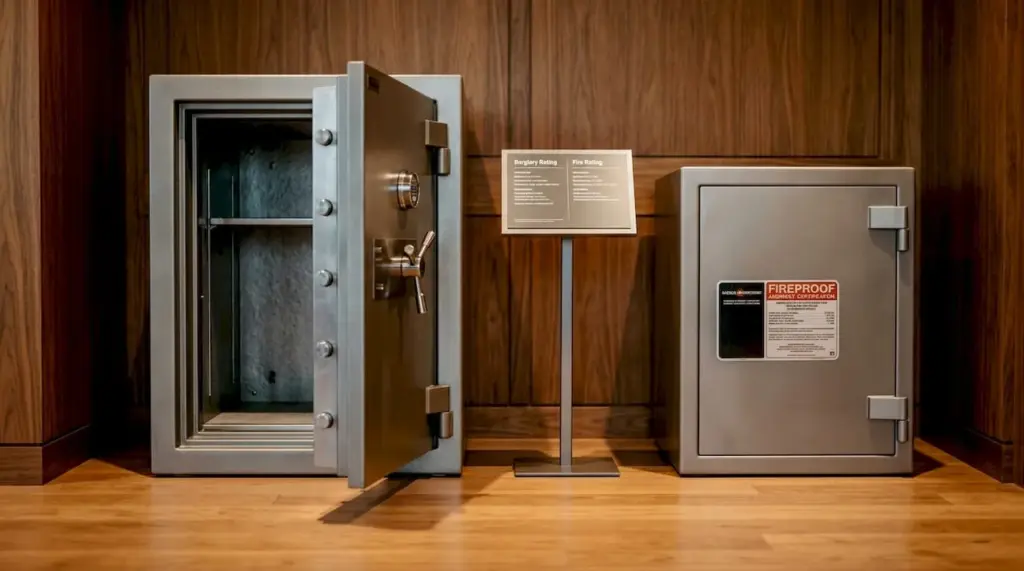
How to Choose Between Fireproof and High Security Safes

When it comes to protecting your valuables, choosing the right type of safe is critical. Many Australians wonder whether a fireproof safe or a high security safe is the better option — and the truth is, it depends on what you’re protecting and what risks you’re facing.

In this guide, we’ll walk you through the key differences, ideal use cases, and how to make a confident purchase for your home or business.

Why Choosing the Right Safe Matters

Not all safes are created equal. Some are built to resist flames for hours, while others are reinforced to withstand professional burglary attempts. Picking the wrong type might leave your valuables exposed to the exact danger you’re trying to prevent.

Whether you’re storing cash, jewellery, sensitive documents or digital files, knowing the capabilities of each safe type ensures you’re not only protected — but also investing wisely.

Fireproof Safe vs High Security Safe: Key Differences Made Simple

Still torn between the two? Here’s a simple breakdown to help you decide:

Fireproof Safe

  • Built for fire protection, not theft deterrence.
  • Uses insulated fire-rated walls instead of reinforced steel.
  • Protects paper documents, cash, and digital media.
  • Comes with basic locks — typically key or combination.
  • Perfect for homes in bushfire-prone areas or offices with paper-based records.

High Security Safe

  • Designed to prevent burglary and tampering.
  • Made from solid steel, with anti-drill, anti-pry construction.
  • Features advanced locking systems like digital, dual-key, or biometric.
  • Ideal for jewellery, firearms, and commercial cash storage.
  • Offers limited fire resistance (unless it’s a hybrid model).

When to Choose a Fireproof Safe

A fireproof safe is the smart choice if:

  • Your main concern is protecting documents, cash or backups from fire.
  • You live in a bushfire-prone region.
  • You don’t store high-value items that might attract burglars.
  • You need a lightweight safe that’s easier to install inside homes or apartments.

Explore our Fireproof Safes — certified and rated to withstand up to 1050°C for 1–2 hours.

When to Choose a High Security Safe

A high security safe is better suited if:

  • You’re storing high-value assets like gold, firearms, or sensitive data.
  • Your business handles cash on-site, like retail or hospitality.
  • You want 24/7 protection against forced entry.
  • Insurance providers require a specific cash or security rating.

Browse our High Security Safes with drill-proof design, bolt-down features and premium locking systems.

What About Fire + Theft Protection?

If you want both fire resistance and burglary protection, look for hybrid safes that are both fire-rated and built to security standards. These safes are ideal for:

  • Professional offices storing sensitive records
  • Homeowners needing protection during holidays or evacuations
  • Commercial spaces with cash + document storage requirements

Final Thoughts: Match the Safe to the Risk

Choosing between a fireproof safe and a high security safe shouldn’t be a guessing game. Think about the threats most relevant to you — fire, theft, or both — and choose accordingly.

At Precision Safes, we offer a full range of certified fireproof safes and high security safes built to meet Australian standards.

Need help deciding? Our team is here to help you find the perfect fit — whether you’re protecting personal records or commercial assets.