


If you have never had a safe removed from a property before, the process can feel like a mystery. How long will the team need? Will there be damage to your floor or wall? What should you do beforehand? Safe removal in Melbourne typically takes between one and four hours depending on the type of safe, how it was installed, and where it sits in the property. This guide covers the full process from arrival to completion so you know exactly what to expect.
What Happens During a Typical Safe Removal Appointment
A professional safe removal follows a consistent sequence regardless of the safe type. The team arrives and inspects the safe, its anchoring method, the surrounding area, and the exit path. This assessment determines what equipment is needed and whether any obstacles like doorways, stairs, or narrow hallways require extra planning.
Next, the safe is disconnected from its anchoring. For bolt-down safes, this means removing concrete anchors or coach screws. For wall-mounted units, it involves detaching brackets and carefully extracting the safe from its recess. Floor safes embedded in concrete require cutting or breaking out the surrounding slab.
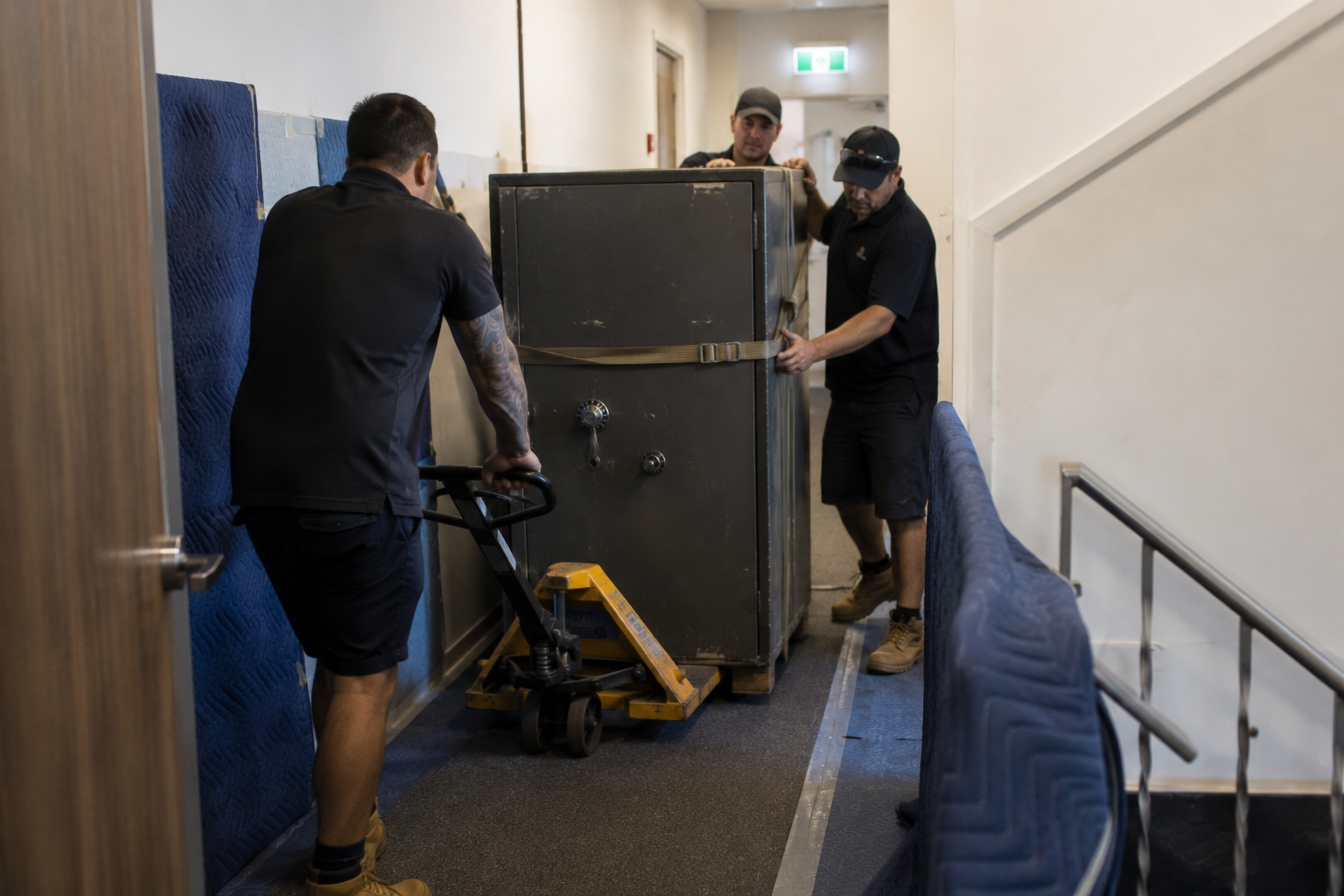
Once freed, the safe is secured onto a trolley, dolly, or skid plate and moved out of the property. Heavier units, particularly commercial safes and vault doors, may require a crane or hydraulic lifting equipment. The team then loads the safe onto a vehicle for transport.
Before leaving, the crew inspects the removal area and cleans up any debris from the disconnection process.
Factors That Affect Safe Removal Time
No two removals are identical. Four main variables determine how long yours will take.
Safe Size and Weight
A small home safe under 100 kilograms can often be disconnected and removed within an hour. A large commercial safe weighing 500 kilograms or more requires specialist equipment and additional crew, which naturally extends the timeframe. Vault doors are among the heaviest items and can weigh over a tonne.
Anchoring and Installation Method
Bolt-down safes secured with concrete anchors are faster to disconnect than floor safes set into a concrete slab. Wall safes built into brick or block require careful extraction to avoid structural damage. The more integrated the installation, the more time the disconnection stage takes.
Location and Access Within the Property
A safe sitting in a ground-floor garage with direct vehicle access is a straightforward job. A safe on a second storey, behind narrow corridors, or down a flight of stairs requires more handling time and sometimes temporary protection of floors, walls, and door frames along the exit route.
Whether Disposal or Transport Is Included
If the safe is being relocated to another property, the team needs to plan loading and transport logistics. If you are disposing of the safe, the crew may arrange recycling or scrap collection. Either option adds time beyond the removal itself. For more detail on what happens once a safe leaves your property, see our guide on [safe disposal, resale, and recycling options].
Typical Timeframes for Different Types of Safe Removals
These are general estimates based on standard residential and commercial jobs in Melbourne. Actual times vary based on the factors above.
- Freestanding home safes (under 150 kg): 1 to 1.5 hours. These are often the simplest jobs, especially when the safe sits on a hard floor with clear access.
- Bolt-down home or office safes (150 to 300 kg): 1.5 to 2.5 hours. Anchor removal and safe weight add moderate complexity.
- Wall-mounted or in-wall safes: 1.5 to 3 hours. Extraction from a wall cavity is slower and requires more care to limit damage to the surrounding structure.
- Floor safes embedded in concrete: 2 to 4 hours. Concrete cutting or breaking is the most time-intensive disconnection method.
- Large commercial safes and vault doors (500 kg+): 3 to 5+ hours. These jobs often involve crane hire, multiple crew members, and detailed access planning.
If your safe falls into one of the heavier categories and you are unsure what is involved, requesting an on-site assessment beforehand helps avoid surprises on the day.
What Happens to the Floor, Wall, or Installation Area Afterwards
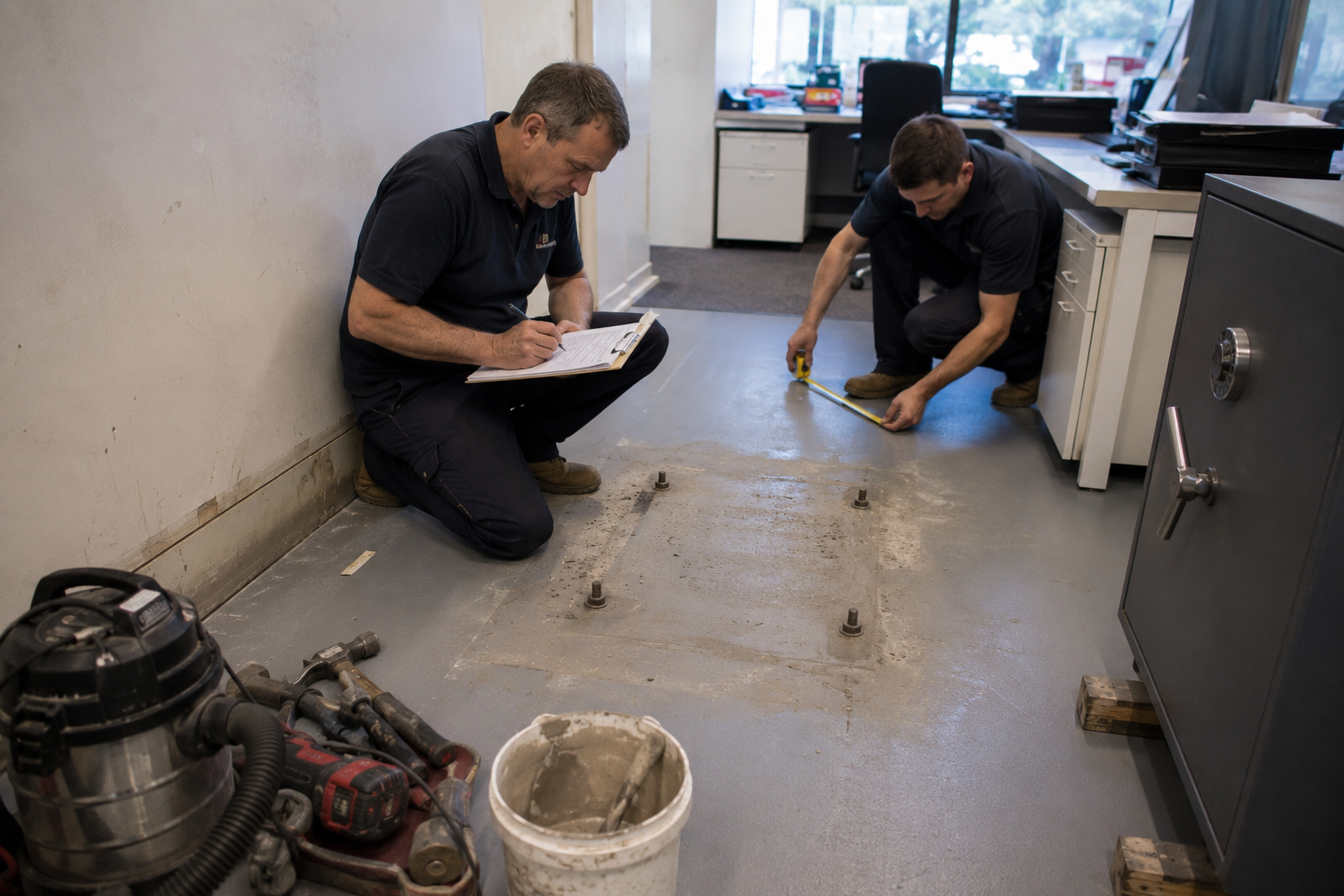
This is one of the most common concerns, and the answer depends on how the safe was originally installed.
- Bolt-down safes leave behind anchor holes in the concrete or timber floor. These are typically small and can be filled with a concrete patching compound or timber filler. The surface will show where the safe sat, but the repair is minor.
- Wall safes leave a cavity in the wall. Depending on the wall material, this may need patching with plaster, cement render, or a combination of framing and sheeting. The removal team does not typically perform wall repairs, so you may need a plasterer or handyman to finish the area.
- Floor safes leave the largest footprint. Once the safe and surrounding concrete are removed, you are left with a hole in the slab that needs to be filled and re-poured. This is a separate trade job and should be factored into your planning.
In all cases, the removal team clears debris from the disconnection. Cosmetic restoration of the area is generally the property owner’s responsibility unless otherwise arranged.
If you are replacing an old safe with a new one, the safe installation team can often assess whether the existing location is suitable for the replacement unit, which may reduce or eliminate the need for repairs.
How to Prepare for Safe Removal Day
A small amount of preparation on your end helps the job run smoothly and on time.
- Empty the safe completely: Remove all contents including documents, cash, firearms, medications, and any shelving or internal fittings that are not permanently attached.
- Clear the exit path: Move furniture, rugs, and anything else between the safe and the nearest vehicle-accessible door. The team will bring equipment through this path and needs unobstructed space.
- Confirm vehicle access: If the property has a driveway, ensure there is space for a truck or van. For units or apartments, check whether loading dock access or lift booking is required.
- Let the team know about stairs, tight corners, or heritage surfaces: Flagging these in advance means the crew can bring protective materials and plan the route before arrival.
- Check strata or body corporate requirements: Some apartment buildings and commercial complexes require advance notice or insurance certificates before removal work can take place.
If your safe removal is part of a property sale, our guide on what to do with a safe before settlement covers the timing and logistics in more detail.
Schedule a Safe Removal in Melbourne
Precision Safes provides professional safe removal across Melbourne and surrounding areas. Whether you are clearing out a freestanding home safe or decommissioning a heavy commercial unit, the team has the equipment and experience to handle the job safely and efficiently.
Call us to discuss your safe removal or request an on-site assessment for larger or more complex jobs.
