On this page
- What is happening to bank safe deposit boxes in Australia?
- Your box is closing: what to do now
- Safe deposit box alternatives in Australia compared
- Private vaults: questions to ask before you sign
- A home safe as your safe deposit box
- What to store where
- Frequently Asked Questions
- Replacing a Bank Box? Talk to Us About a Home Safe
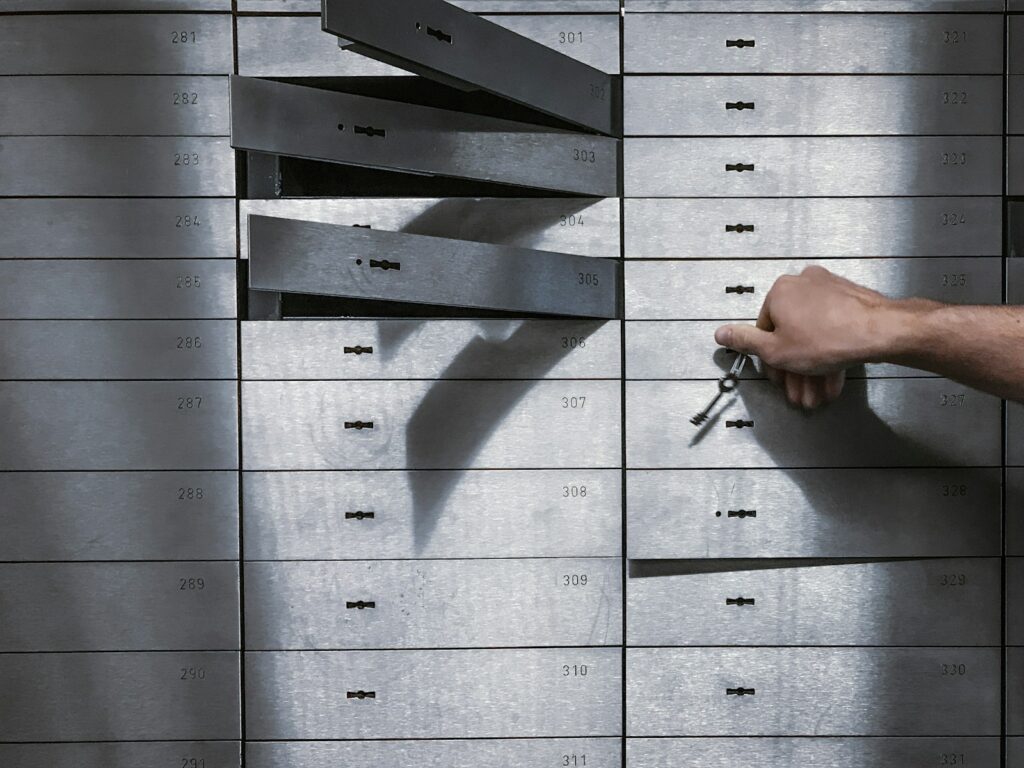
Several major Australian banks have stepped back from safe deposit boxes. NAB has closed its Safe Custody Service, and Westpac and BankSA no longer offer new safe custody and are closing their branch services during 2026, with vault customers offered a move to a specialist provider. The main safe deposit box alternatives in Australia are a private vault, a bank that still offers boxes where one is available, a solicitor or trustee for original wills, and a properly rated home safe.
The right answer is often a mix of these. Below we set out what the banks have announced, what to do if your box is closing, and how to decide what to store where. If a home safe is part of your plan, our guide to buying a home safe covers ratings, size, locks and installation in detail.
What is happening to bank safe deposit boxes in Australia?
This is the position as published on the banks’ own websites in October 2026. Banks update these arrangements, so always confirm with your bank directly.
NAB
NAB states on its website that it has closed its Safe Custody Service, and that its Safe Custody Centres in Adelaide, Brisbane, Perth, Melbourne and Sydney are closed. NAB lists 13 22 65 for enquiries.
Westpac and BankSA
Westpac says it paused sales of safe custody in August 2022 and no longer offers new safe custody services. According to its security storage page:
- Branch safe custody is closing during 2026. Customers receive a letter with the date for their branch and need to collect their items and close the facility by then. Westpac says facilities not closed and collected by the deadline will be treated as unclaimed under its Safe Custody Terms and Conditions.
- Vault services are moving to Guardian Vaults. The vaults at 360 Collins Street Melbourne, 341 George Street Sydney, 97 King William Street Adelaide, 260 Queen Street Brisbane and 109 St Georges Terrace Perth are transitioning progressively through 2026. Customers can either close their arrangement and remove their items, or set up a new arrangement directly with Guardian Vaults.
BankSA’s safe custody page carries the same information for South Australian customers.
Commonwealth Bank
CommBank still lists Safe Custody vaults and packets on its website. Vault availability varies by branch, and its published availability list shows some branches with no vaults available. CommBank also notes it is upgrading the technology behind its safe custody facilities, with new terms and conditions for customers.
Other banks and credit unions
We could not confirm the current position of every other bank, so ask yours directly. Even where a service still exists, waiting lists, limited branches and fees can make it impractical.
Your box is closing: what to do now
- Read the letter carefully. Note the closure date, the appointment process and what ID you need. Westpac, for example, asks customers to book an appointment through their branch.
- Do not leave it late. Appointment slots fill up close to deadlines, and unclaimed facilities are dealt with under the bank’s terms.
- Inventory the contents. Photograph each item and list documents before you leave the bank. This record matters for insurance and for your family.
- Decide where each item is going before you collect it. Have the new home ready, whether that is a vault, a solicitor or a safe that is already installed.
- Plan the trip home. Avoid carrying everything in one obvious bag, and go straight to where it will be stored.
- Tell your insurer. Moving valuables from a bank to your home can change your cover. Ask before the move, not after.
Safe deposit box alternatives in Australia compared
| Option | Best for | Access | Ongoing cost | Watch-outs |
|---|---|---|---|---|
| Private vault or safe deposit provider | High-value jewellery, bullion, items you rarely need | During the provider’s hours, by appointment for some | Annual rental fees | Check who insures contents, the provider’s security, and what happens if it closes |
| Bank box (where still offered) | Items you rarely need | Branch hours only | Annual fees | Limited availability, possible future closure |
| Solicitor or trustee will storage | Original wills and powers of attorney | Released to you or your executor on request | Varies by provider | Keep the details where your executor will find them |
| Home safe | Documents, passports, everyday jewellery, cash, backups | Any time | One-off purchase and installation | Must be rated for the value inside and properly anchored |
| Digital copies | Copies of documents and photos of valuables | Any time | Low | Copies are not originals; protect the account |
Private vaults: questions to ask before you sign
Private vault businesses have grown as banks have withdrawn, and Westpac has chosen one to take over its vaults. A good provider will happily answer these questions in writing:
- Are the contents insured, by whom and up to what limit? Or do you need your own cover?
- What security is in place: vault construction, alarms, monitoring, access control?
- What are the access hours, and do you need an appointment?
- Who can be an authorised person on the box, and what happens on your death?
- What happens to your box if the business is sold or closes?
- What are the fees, including key replacement and early closure?
A home safe as your safe deposit box
For many households, the simplest replacement is a quality safe at home. You get access any time, there are no rental fees, and you control who can open it. The trade-off is that the risk now sits in your house, so the safe has to be chosen properly.
- Match the cash rating to the value. A safe’s approximate cash rating is a guide insurers use. In our range of home and residential safes, rated models start from around $270 for a safe in the $0 to $5,000 cash band, while the Stronghold Home Safe HD1, in the $40,001 to $60,000 band, starts from around $1,099. Prices change, so check the product page.
- Add fire resistance for paper. Documents that sat in a bank vault were protected from house fires. At home, choose a safe with a fire rating. Our guide to fire-resistant safes explains the minutes and what they protect.
- Bolt it down and keep it discreet. An anchored safe in a sensible location is far harder to remove. An in-floor safe set into concrete is one of the most discreet options for valuables you rarely touch. Our team can handle safe delivery and installation.
- Check your insurance. Our article on how insurance and safes work together covers what to ask your insurer.
If you travel often or are away for long periods, also read our advice on keeping valuables safe at home while you are away.
What to store where
Splitting items between two or three places spreads the risk. As a starting point:
- Original will and powers of attorney: with your solicitor or a trustee service, or in a fire-resistant home safe your executor knows about. Our guide on storing passports, wills and property papers at home goes into more detail.
- Passports, certificates and property documents: a fire-resistant home safe, with scanned copies stored securely online.
- Everyday and mid-value jewellery: a rated, anchored home safe. See how to pick the right jewellery safe.
- High-value pieces, bullion and heirlooms you rarely use: a higher-rated home safe or a private vault, depending on value and your insurer’s requirements.
- Backup drives: one copy at home in a fire-resistant safe and another copy off-site or in the cloud.
For a fuller household list, our guide to what belongs in a home safe works through each category.
Bank closures and service changes happen with little notice, so treat the bank information above as a snapshot and confirm the details with your bank.
Frequently Asked Questions
Do Australian banks still offer safe deposit boxes?
Some do, but fewer than before. NAB has closed its Safe Custody Service, and Westpac and BankSA stopped selling new safe custody in 2022 and are closing branch services in 2026, moving vault customers to Guardian Vaults. CommBank still lists safe custody vaults and packets, with availability varying by branch. Check with your own bank for current details.
What happens if I don’t collect my items from a closing bank box?
It depends on the bank’s terms. Westpac, for example, says facilities not closed and collected by the date in the customer’s letter will be treated as unclaimed under its Safe Custody Terms and Conditions. Read your letter, book an appointment early and contact the bank if you are overseas or cannot attend in person.
Is a home safe as secure as a bank safe deposit box?
A bank or private vault offers layers of security a house cannot match. A properly rated home safe, bolted down and kept discreet, is suitable for documents, passports, cash and much jewellery, and gives you access any time. For very high-value items, compare a higher-rated safe with a private vault and ask your insurer what it requires.
Where should I keep my original will if my bank box closes?
Common options are your solicitor, a trustee service or a fire-resistant safe at home. In Victoria, State Trustees offers free will storage for Victorian residents through the Victorian Will and Powers of Attorney Registry. Wherever you store it, make sure your executor knows where the original is and how to access it.
Replacing a Bank Box? Talk to Us About a Home Safe
If your bank box is closing, we can help you choose a rated safe that suits what you are bringing home, then deliver and install it. Visit our showroom at 38 Barrie Rd, Tullamarine to see over 350 new and used safes, call 0409 860 011 (Monday to Friday, 9am to 5pm) or get in touch through our contact page.