

On this page
DIY Safe Installation vs Professional Installation: What the Real Risks Are
Fitting a safe yourself looks like an easy way to save a few hundred dollars. You buy the unit, grab a drill, and bolt it down over a weekend. The trouble is that most people only discover the limitations of a do-it-yourself job after something has gone wrong, whether that is a burglary, a rejected insurance claim, or a warranty that no longer applies.
The gap between a DIY install and a professional one is not about effort. It is about the technical detail that determines whether your safe actually resists an attack when it matters most.
What DIY Installation Typically Gets Wrong
The mistakes in a home installation are rarely visible once the job is finished. The safe sits flush, the bolts are tight, and everything looks secure. The weaknesses only reveal themselves under the sort of force a determined thief is willing to apply.
Substrate and sub-floor assessment
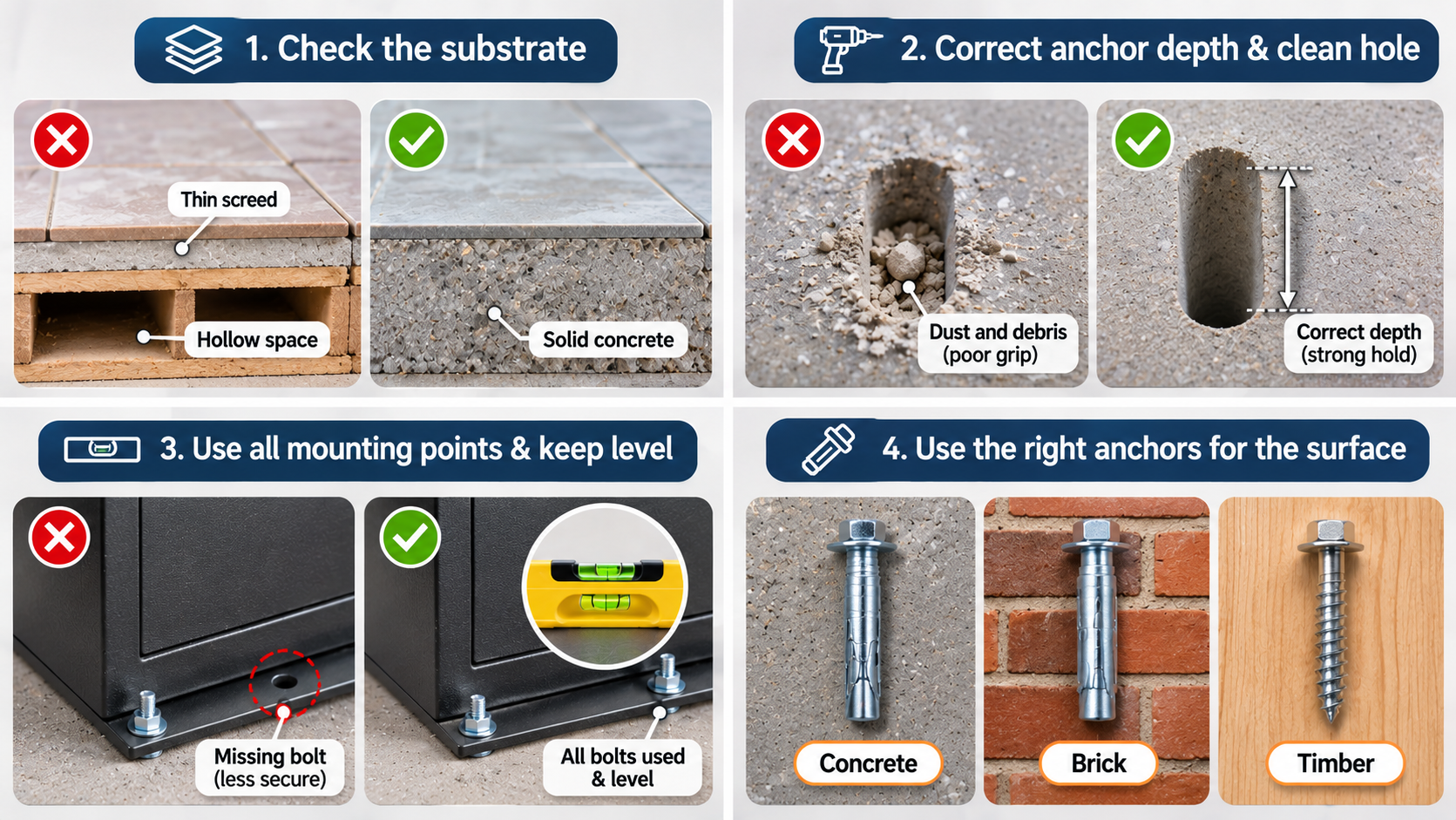
Before a single hole is drilled, the surface underneath needs to be understood. A tiled bathroom floor, a timber sub-floor, and a poured concrete slab all behave very differently under load, and each demands a different fixing approach.
Homeowners often assume that any solid-feeling floor is suitable, when in reality a thin screed over a hollow cavity offers almost nothing to anchor into. Getting this assessment wrong at the start undermines everything that follows.
Anchor depth and hole preparation
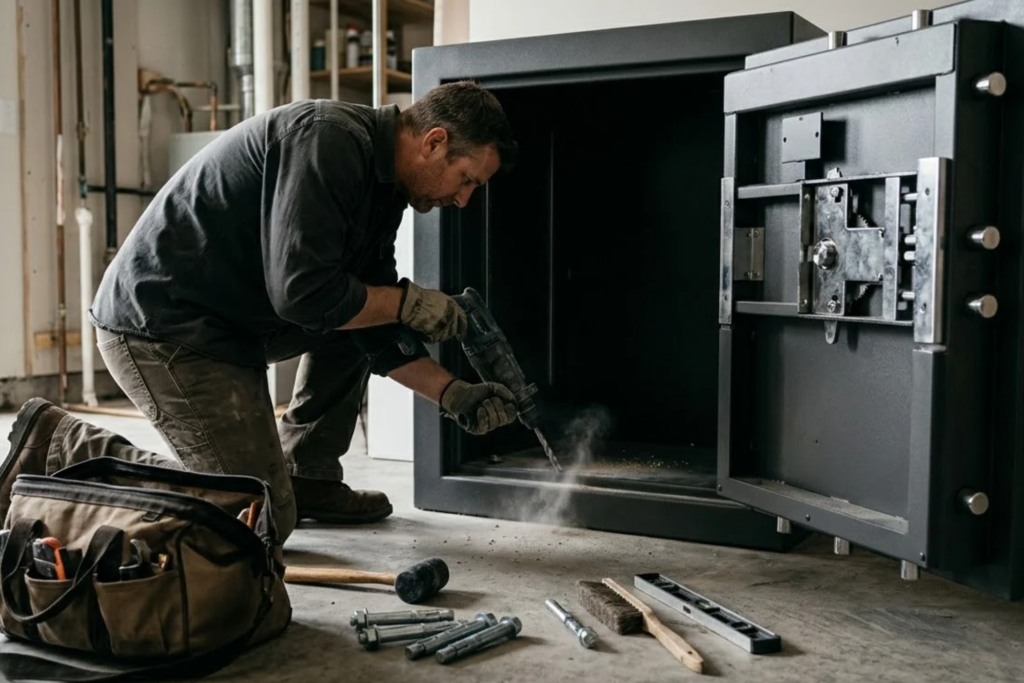
Anchors only hold if they reach the depth the fixing was designed for, and if the hole is cleaned of dust before the bolt goes in. Drilling too shallow or leaving a hole packed with debris dramatically reduces the grip an anchor can achieve. Many DIY installs fail here quietly, with bolts that feel firm on the day but pull free under sustained leverage.
Bolt pattern and levelling
A safe needs to be fixed through the correct mounting points and sit level once it is down. Skipping one of the manufacturer’s bolt holes to avoid a difficult drilling angle leaves the unit able to twist or lift at a corner. A safe that is not level can also strain its boltwork over time, making the door harder to operate and the locking mechanism less reliable.
Wrong anchors for the surface
Using the same masonry bolt for every surface is one of the most common errors. Concrete, brick, and timber each call for a specific type of anchor rated for that material. The wrong choice might tighten up neatly during installation yet offer a fraction of the holding strength required, which is precisely the weakness an experienced burglar knows how to exploit.
The Real Consequences of a Poor Install
A flawed installation does not just weaken the safe. It exposes you to losses that reach well beyond the value of the unit itself.
Safe removal by a determined burglar
The single biggest risk is that a thief simply takes the whole safe away to open it elsewhere at their leisure. A poorly anchored unit can often be levered off its fixings in minutes, and once it leaves your property, the security rating of the steel becomes irrelevant. Correct anchoring is what forces an intruder to attack the safe in place, where time and noise work against them.
Insurance claim refusal
Many policies require valuables to be stored in a safe that is properly installed, and some specify professional installation outright. When an assessor finds that a safe was removed because it was inadequately fixed, that finding can be enough to decline the claim. Understanding how cash rated safes and insurance payouts work together makes it clear why the installation is treated as part of the cover rather than a separate detail.
Voided warranty and compromised rating
Safe manufacturers set out how their products must be installed, and departing from those instructions can void the warranty entirely. Worse, a safe’s cash rating assumes it has been fitted as intended. An incorrect install can effectively strip away the protection that rating was supposed to guarantee, leaving you with a unit that no longer performs to the standard you paid for.
What Professional Installation Guarantees
A professional installer removes the guesswork that sits behind every one of those risks. Rather than hoping a weekend job holds up, you get a fit built around the specifics of your building and your safe:
- Substrate assessment first. The job begins with an evaluation of your floor or wall, so the fixing method suits the actual surface instead of an assumption about it.
- The right anchors, set correctly. Anchors are chosen for the substrate, drilled to the proper depth, and fixed into clean, prepared holes, with every mounting point used and the unit checked for level.
- Compliance that protects you. The work follows both the manufacturer’s specifications and the relevant AS/NZS standards, which keeps your warranty intact and your cash rating meaningful.
- A record for your insurer. A booking through the safe installation service at Precision Safes leaves you with clear evidence of how and where the safe was fixed, ready if you ever need to make a claim.
What you are really buying is certainty that the safe will do its job under pressure.
Matching Installation to Your Type of Safe
No single method suits every safe. The right approach depends on what you are securing and where it needs to go, and this is another area where professional experience shows its value.
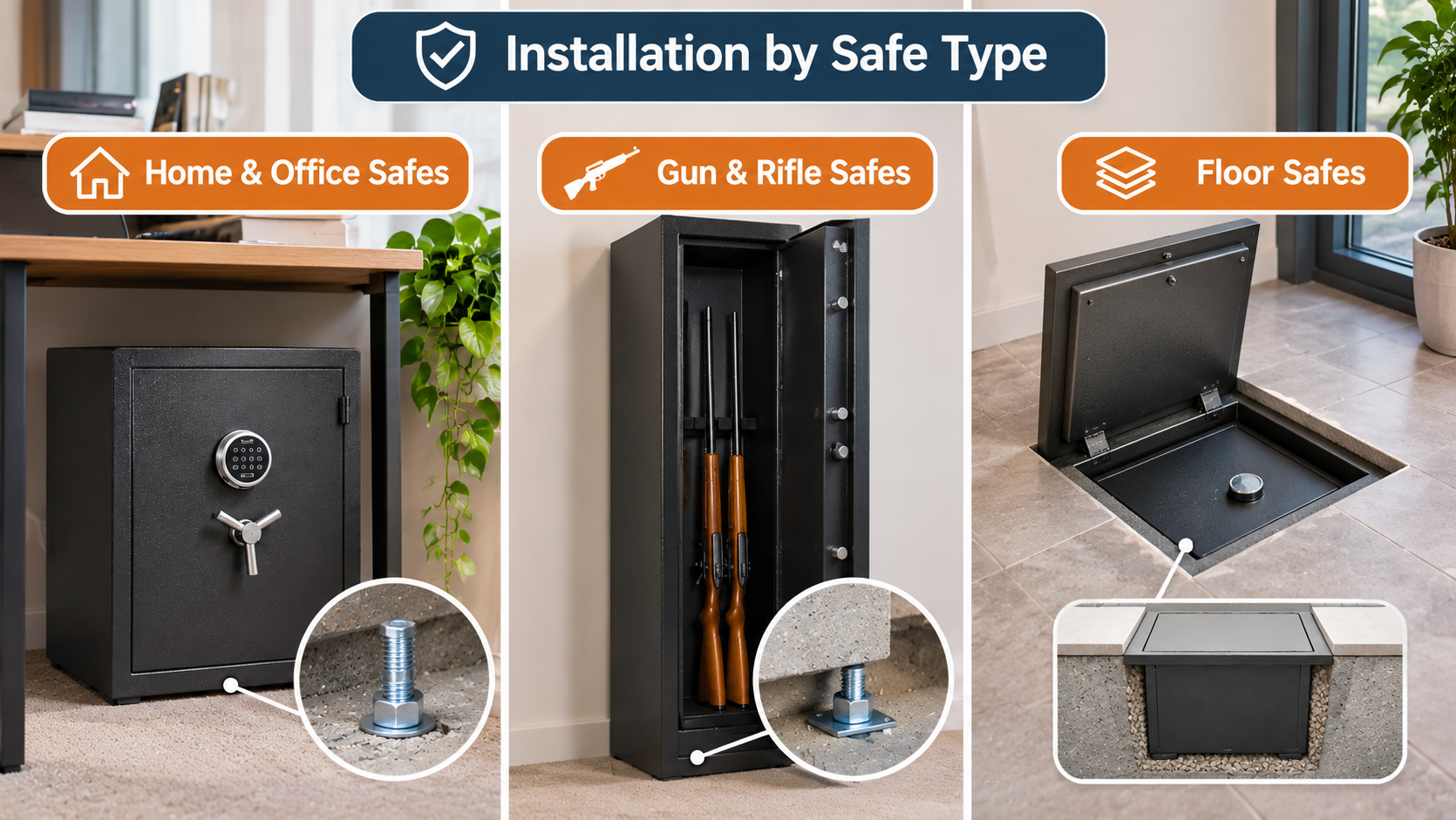
Home and office safes
Compact units for the home or office are usually bolted to a floor or into a wall cavity, and the challenge lies in finding solid anchoring within a domestic building. A safe hidden in a wardrobe or under a desk still needs a structural fixing point, not just plasterboard or floating floorboards.
The range of home safes suits a variety of rooms, but each one relies on being anchored correctly to deliver its rated protection.
Gun and rifle safes
Firearm storage carries legal obligations as well as security ones, and the anchoring requirements are strict for good reason. Long, heavy gun and rifle safes need to be bolted to a structure that can hold their weight and resist attempts to tip or drag them, which makes correct fixing essential rather than optional. A professional install ensures the safe meets storage requirements and cannot be easily removed.
Floor safes set into concrete
A floor safe offers exceptional security precisely because it is concealed and encased, but only if the concrete work is done properly. Setting a unit into a slab involves cutting, positioning, and pouring so the safe is locked into the surrounding material. Done well, floor safes become almost impossible to remove; done poorly, gaps and weak points give a thief exactly the purchase they need.
Making the Right Call for Your Safe
The appeal of a DIY installation is understandable, but the saving is small next to what is at stake. A safe that is fixed with the wrong anchor, at the wrong depth, into an unsuitable surface may look perfectly secure right up until the day it fails.
Professional installation protects the value inside the safe, keeps your warranty and cash rating intact, and gives your insurer no reason to question the claim. If you want your safe fitted to a standard you can rely on, get in touch with Precision Safes and we will make sure it is installed to do exactly what you bought it for.