

On this page
Relocating a Safe After a Renovation: What Changes and What Doesn’t
A renovation reshapes how you live in your home, and it can quietly undo something you’ve taken for granted: the secure spot where your safe has sat for years. Once walls come down or a spare room becomes something new, the position you chose so carefully often stops making sense. Relocating a safe after building work is straightforward when it’s handled properly.
The real question is knowing what needs to change and what stays the same, so you don’t compromise the protection you paid for.
How a Renovation Compromises a Safe’s Existing Position
Most safes are installed to suit a specific room, surface, and anchoring point. When a renovation changes any of those three, the original setup can stop doing its job, even if the safe itself looks perfectly fine where it stands.
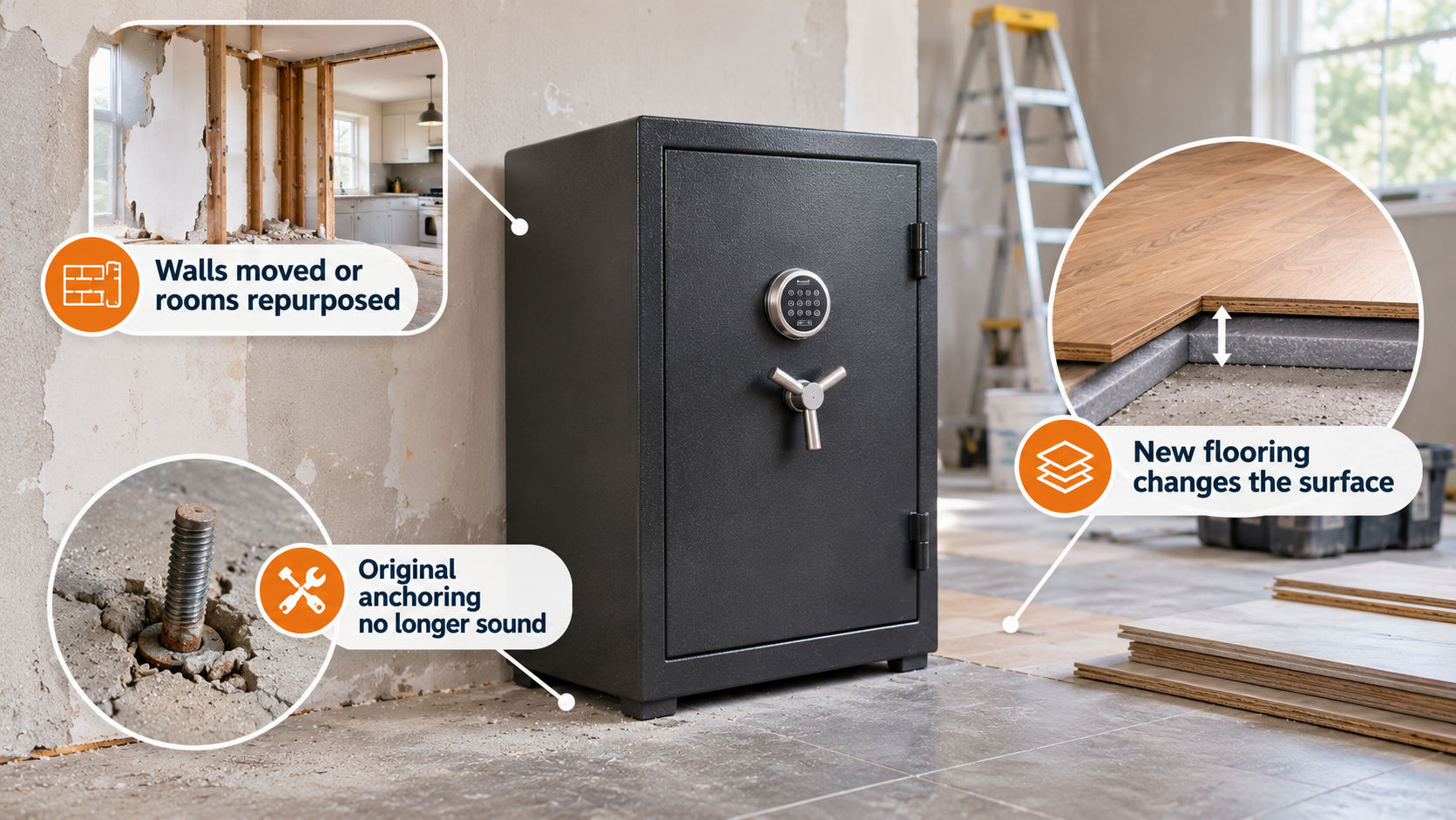
Walls moved or rooms repurposed
A safe tucked into the corner of a study makes little sense once that study becomes an open-plan kitchen. Knocking out a wall can leave a once-concealed safe sitting in plain view, which undermines one of its quiet advantages: not being obvious.
Repurposing a room can also expose the safe to foot traffic, moisture, or heat it was never meant to sit near. A safe that was discreet and well protected can become both visible and vulnerable without anyone touching it.
New flooring changes the surface and anchoring point
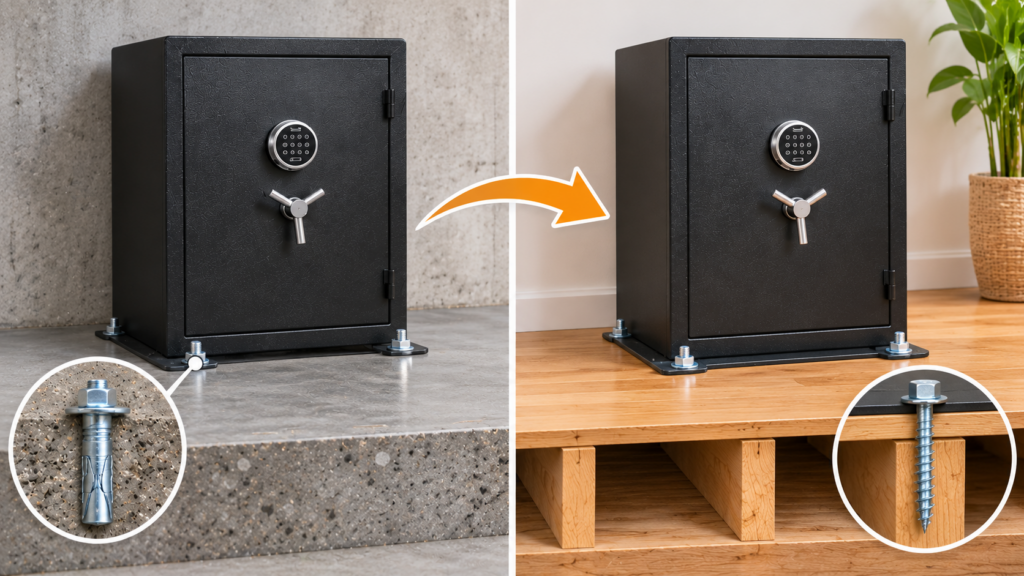
Anchoring depends heavily on what sits beneath the safe. A unit bolted into a concrete slab behaves very differently once that slab is covered with floating timber, tiles, or a thick underlay. New flooring can raise the surface level, hide the original bolt holes, or add a soft layer between the safe and the structural floor it was meant to grip.
The existing fixings may no longer reach solid material, leaving the safe far easier to shift than before, the specifics of anchoring across different floor types are worth understanding before reinstallation begins.
When the original anchoring is no longer sound
Sometimes a renovation removes the anchoring point altogether. Cutting into a slab, replacing a timber subfloor, or relocating a wall cavity can leave the old bolts holding onto nothing of substance, which gives a false sense of security.
Correct anchoring is the difference between a safe that resists removal and one that can be carried off, so this is the detail most worth getting right after building work.
What Changes and What Stays the Same
It helps to separate the parts of your setup that travel with the safe from the parts that have to be rebuilt around it. This makes planning simpler and stops you worrying about things that haven’t actually changed.
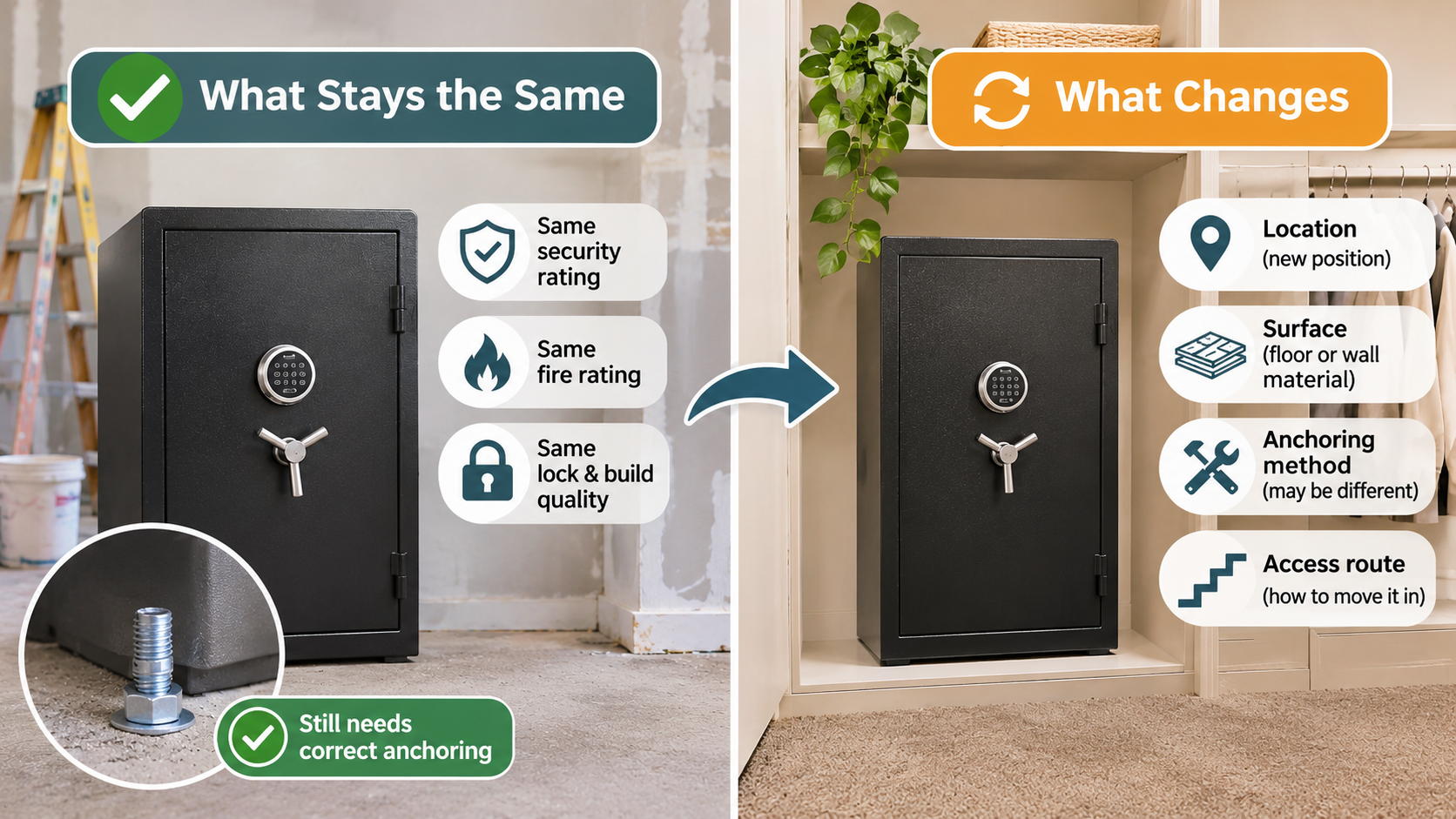
What doesn’t change: the safe, its security rating and the need for correct anchoring
Your safe is the same safe. Its cash rating, fire rating, lock, and build quality stay exactly as they were, and so does the basic requirement that it be anchored correctly to be effective. A quality unit doesn’t lose its value because it’s been moved, and the principle behind installing it never shifts.
Why a strong unit matters in the first place is covered well in the difference between cheap and quality safes, and that logic applies just as much to a relocated safe as a brand-new one.
What changes: location, anchoring method, floor or wall surface, and access route
What does change is everything surrounding the safe. The new position, the surface it sits on, and the way it’s fixed down all need fresh assessment. A safe moving from a tiled laundry to a carpeted wardrobe may need a different anchoring approach entirely.
The access route matters too, since the path used to bring the safe in originally may no longer exist after walls have moved. These are practical changes, not security failures, but they need the same care as the first installation.
Removing the Safe Before the Work Begins
The most useful decision you can make is to plan the timing of removal early, ideally before the first tradesperson arrives.
Why it’s better to remove the safe first
Leaving a safe in place during a renovation invites trouble. It sits exposed to dust, paint, and the risk of being knocked or scratched, and tradespeople have to work around it.
More importantly, a safe left on site during open building work is far more vulnerable than usual, with doors propped open and unfamiliar people coming and going. Removing it first protects both the safe and its contents, and clears the space so the work runs smoothly.
Timing removal and reinstallation around your renovation
Coordinating the schedule is mostly a matter of bookending the work. The safe comes out before demolition or flooring begins and goes back in once the new surfaces are finished and cured.
Concrete and screed in particular need time to set before anything is bolted into them, so reinstallation usually sits near the end of the project. Talking to your builder early about these two windows keeps everyone aligned.
What professional removal involves
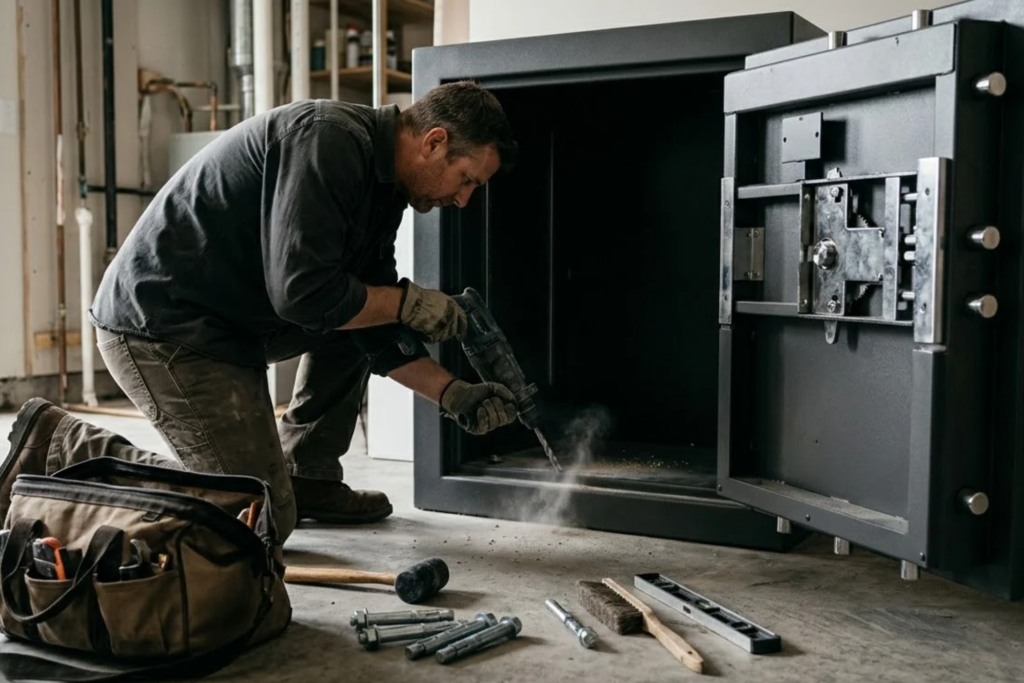
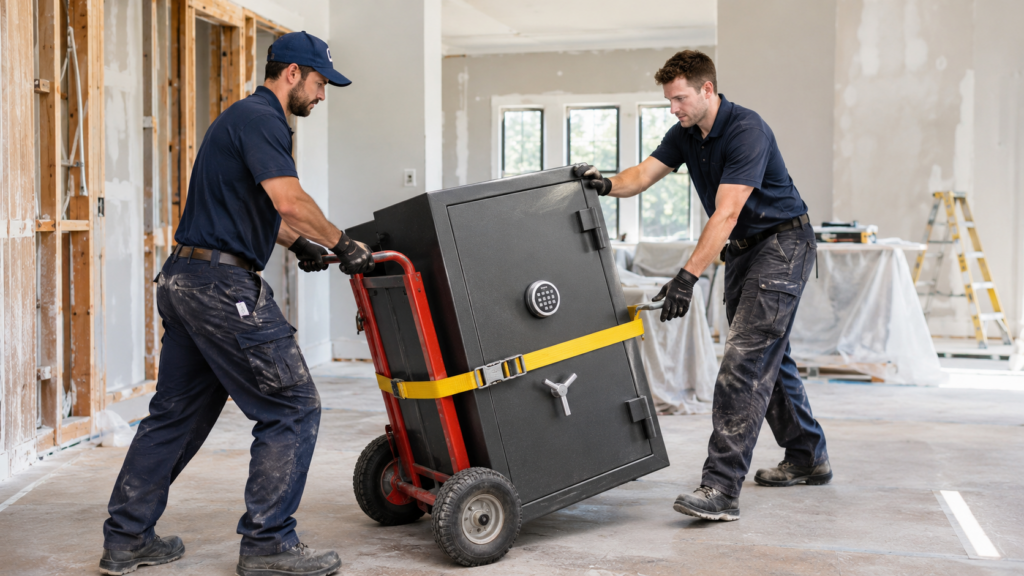
Safes are deceptively heavy, and shifting one without the right gear risks injury, damaged flooring, and a dropped unit. A professional safe removal service brings specialised lifting and trolley equipment, releases the existing anchoring cleanly, and transports the safe without damaging it or your home. The safe can then be stored until the renovated space is finished, which removes the pressure of timing everything to a single day.
Re-Installing the Safe in the Renovated Space
Putting the safe back is not a reversal of removal. It’s a fresh installation that treats the renovated room as a blank slate.
Starting the installation from scratch
A renovated space deserves to be assessed on its own terms. That means choosing the best new position, checking what lies beneath the finished floor or behind the wall, and selecting an anchoring method suited to those materials.
Picking a good spot, away from obvious sightlines and onto solid structure, mirrors a first-time safe installation rather than a quick drop-back into the old hole. Doing it properly is what preserves the safe’s resistance to theft.
Re-levelling, lock testing and insurance documentation
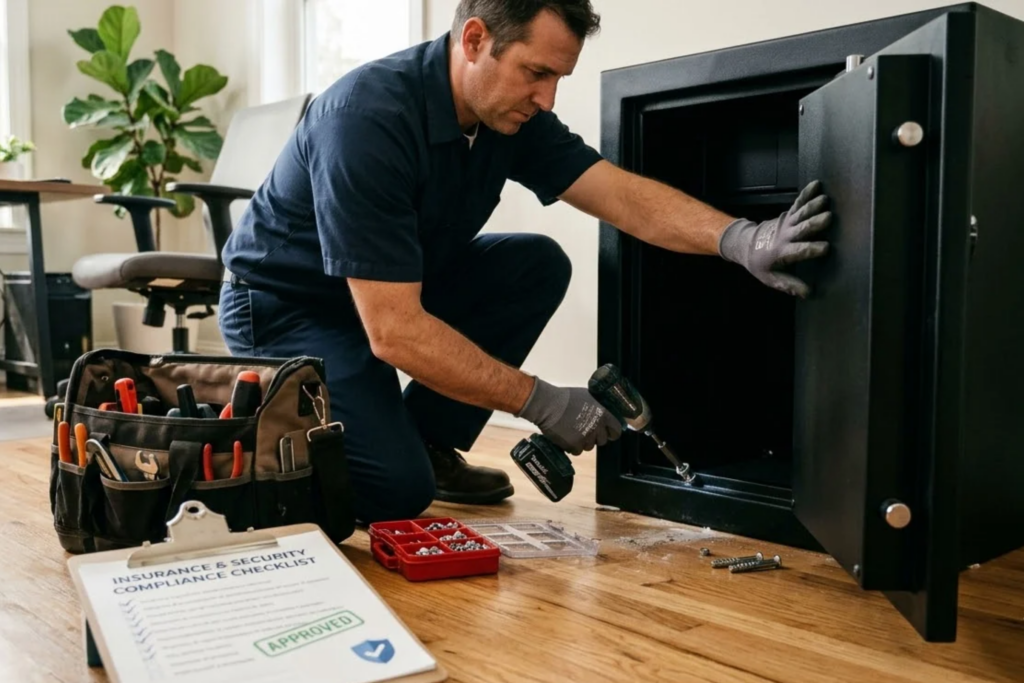
Once anchored, the safe needs to sit level so the door swings and seals correctly, and the lock should be tested to confirm it works smoothly after the move. It’s also worth updating your records. Some insurers ask for proof of correct installation, so documenting the new anchoring and position protects any future claim.
A full safe relocation handled end to end keeps these final checks from being overlooked, which is where DIY moves tend to fall short. For ongoing security after the move, reviewing how often you should change your safe code is a sensible next step.
Get Your Safe Relocated the Right Way
A renovation changes your home, but it shouldn’t weaken the protection your safe provides. With the safe removed before the work starts and reinstalled properly once the space is finished, you keep every bit of the security you originally paid for.
The team at Precision Safes coordinates removal, storage, and reinstallation around your building schedule across Melbourne, so the whole process is handled cleanly from start to finish. Call 0409 860 011 or Contact us to plan your relocation around your renovation.