

On this page
Can a Safe Be Relocated to a Different Floor Type? Concrete vs Timber Subfloor
A safe is only as secure as the surface it’s bolted to, which is why floor type becomes the deciding factor the moment you move one. Plenty of relocations run into the same snag: the safe was anchored into a solid concrete slab, but its new home sits on a timber subfloor.
This is one of the most common complications that comes up when moving house with a safe, the origin and destination floors don’t match. Treating a timber floor like a slab, or assuming the old bolts will do the job, is where a relocation quietly goes wrong.
Why Floor Type Changes the Way a Safe Is Anchored
Anchoring isn’t one fixed method. It depends entirely on what the safe is being fixed into, and concrete and timber behave nothing alike under load.
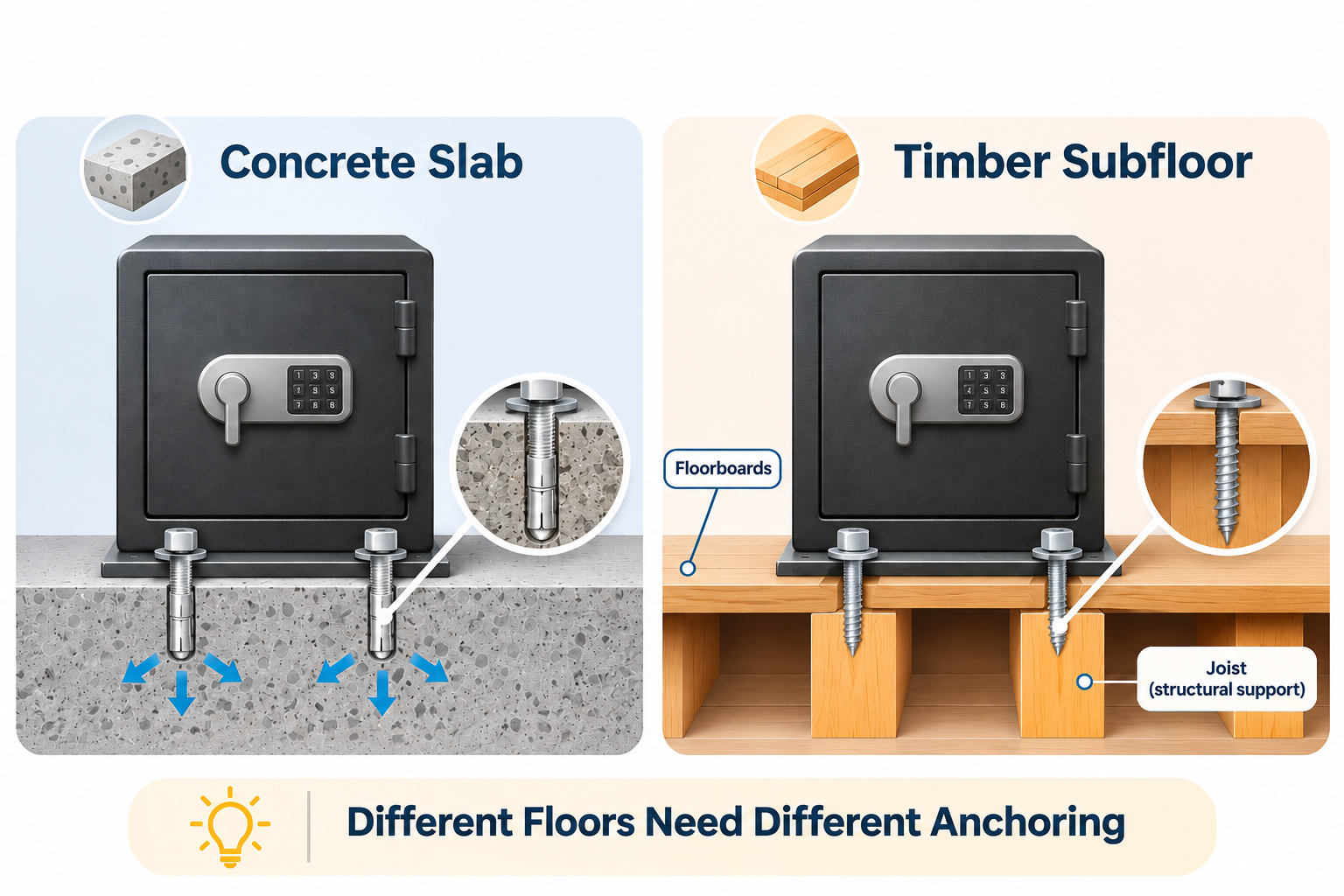
How a safe is anchored to a concrete slab
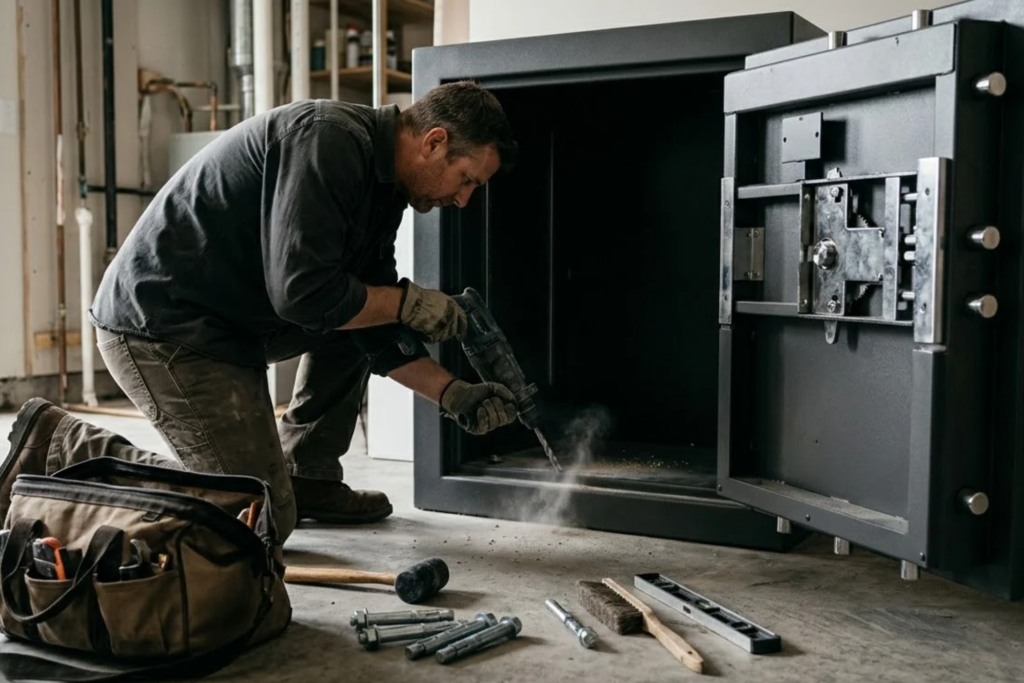
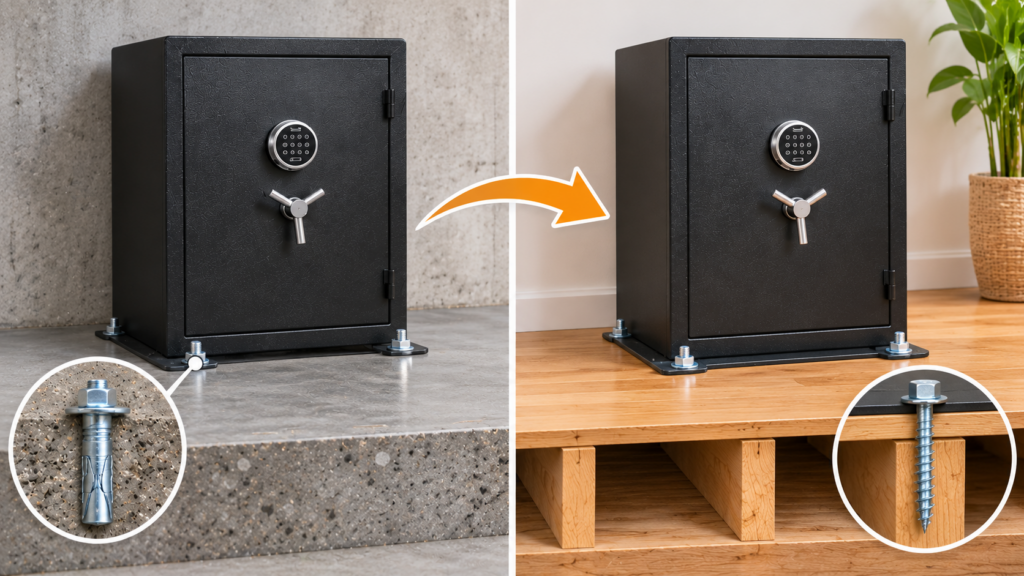
A concrete slab is the ideal surface for a safe. Masonry anchors or chemical bolts are drilled directly into the slab, gripping a dense, solid mass that resists pulling and prying.
Because the slab spreads weight evenly and offers consistent holding strength across its whole surface, the safe can sit almost anywhere on it and still anchor securely. This is the setup most safes are originally installed onto, and it’s the benchmark every other floor type is measured against.
How a safe is anchored to a timber subfloor
A timber subfloor is a different proposition. The fixings have to bite into a structural timber member, usually a joist, rather than the thin floorboards or sheeting on top. Bolting only into the surface boards holds almost nothing, since the boards can split or pull free under force.
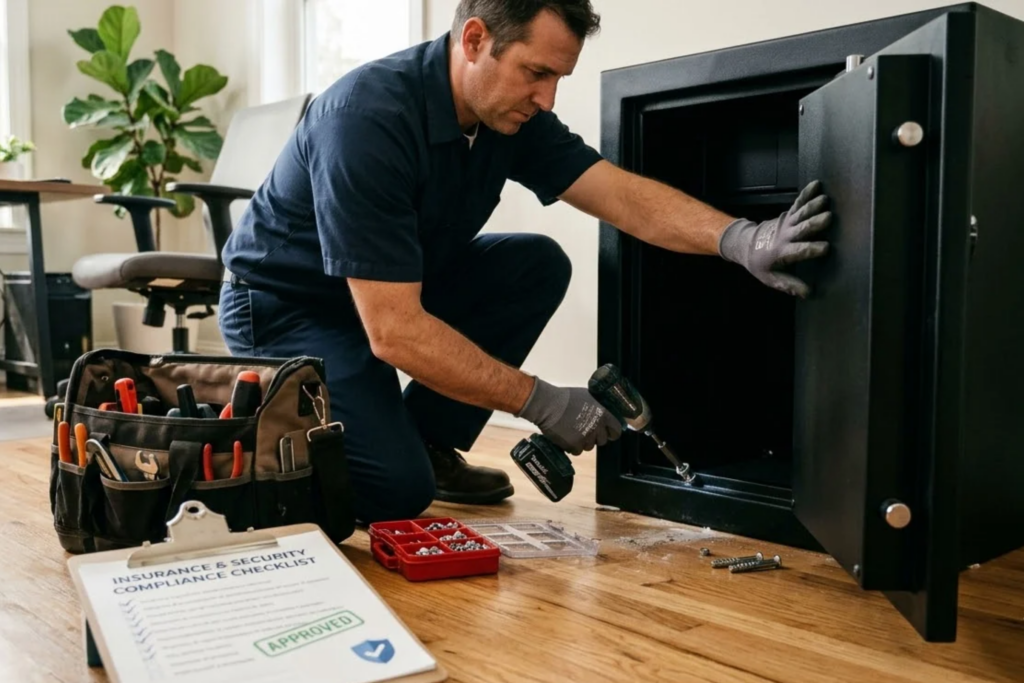
Done properly, anchoring to timber means locating the joists, fixing through to them with appropriate coach screws or bolts, and often adding a base plate to spread the load. It’s achievable and secure, but it takes more planning than drilling into a slab.
Why the same bolts and method can’t simply carry over
The bolts that gripped a concrete slab are designed for masonry, not timber, and the holes drilled for them won’t line up with joists in a new floor. Reusing the old hardware on timber gives the appearance of a fixed safe without the holding strength behind it, which is one of the most common pitfalls in a DIY move.
Just as a renovation can compromise a safe’s anchoring, so can moving it onto a surface the original fixings were never meant for. Correct anchoring has to be designed around the destination floor, not inherited from the old one.
What a Floor Type Assessment Involves
Before any safe is moved, the destination floor needs a proper look. A few key checks determine whether the new spot can hold a safe securely.
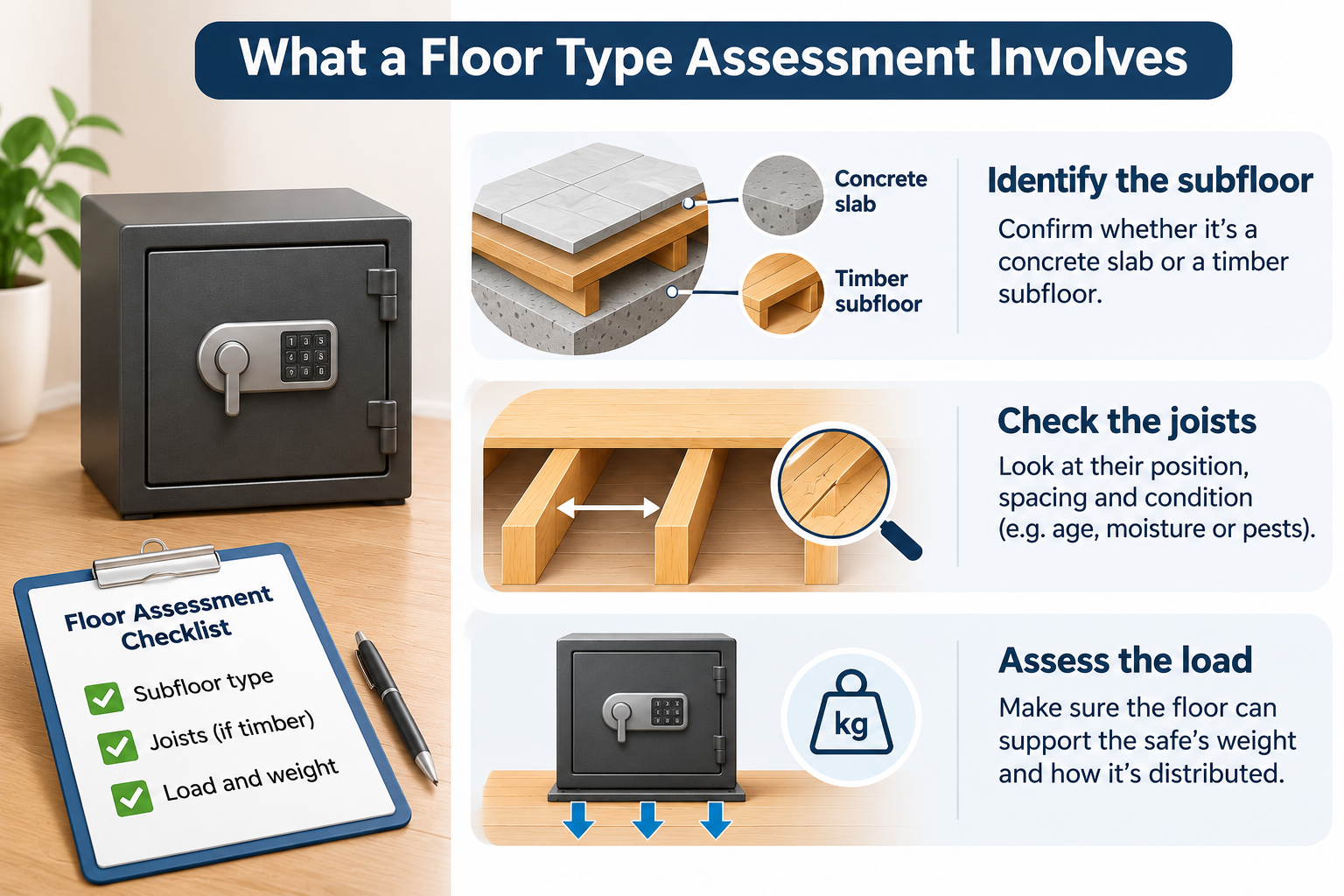
Identifying the subfloor beneath the finished surface
The finished floor rarely tells you what’s underneath. Tiles, carpet, or timber overlay can all sit on top of either a concrete slab or a timber subfloor, so the first step is confirming the actual structure beneath. This single detail dictates the entire anchoring approach, and getting it wrong undermines everything that follows.
Checking joist position, spacing and condition
On a timber floor, the joists are what matter. Their position determines where the safe can be anchored, their spacing affects how the load is distributed, and their condition decides whether they can take the weight at all. Joists weakened by age, moisture, or pest damage can’t be relied on, so they’re checked before anything is bolted down.
Assessing floor load and the safe’s weight footprint
Safes concentrate a lot of weight onto a small footprint. A heavy unit that sits comfortably on a slab might place real strain on a timber floor, particularly if the load lands between joists rather than over them. The assessment weighs the safe against what the floor can carry, making sure the destination can support both the weight and the way it’s distributed.
When the Destination Floor Can’t Support the Same Anchoring
Sometimes the new floor won’t take the original anchoring configuration. That doesn’t rule out the move, but it does call for an adjusted approach.
Repositioning to anchor over a joist or stronger point
Often the simplest fix is to shift the safe slightly so its fixings land over a joist or a stronger structural point rather than a weak span. A small change in position can be the difference between a solid anchor and one fixed into thin air between supports.
Adding reinforcement or a load-spreading base plate
Where repositioning isn’t enough, a steel base plate can spread the safe’s weight across several joists instead of loading one spot, and additional timber bracing can reinforce the floor beneath. These measures let a timber floor safely hold a unit it couldn’t otherwise support, and they’re decided based on the assessment rather than guesswork, which is also what keeps the final cost transparent.
Choosing an alternative location with a suitable floor
If a particular room simply can’t be made suitable, the best option is choosing a different location with a stronger floor, ideally a ground-floor slab. The right spot balances security, discretion, and a floor that can be anchored into properly. Many of the same principles that guide a first-time safe installation apply here, since picking the new location is effectively installing from scratch.
How Precision Safes Confirms Feasibility Before the Job
Guesswork has no place in anchoring a safe, so feasibility is confirmed before the move rather than discovered halfway through it.
On-site inspection of both the origin and destination floor
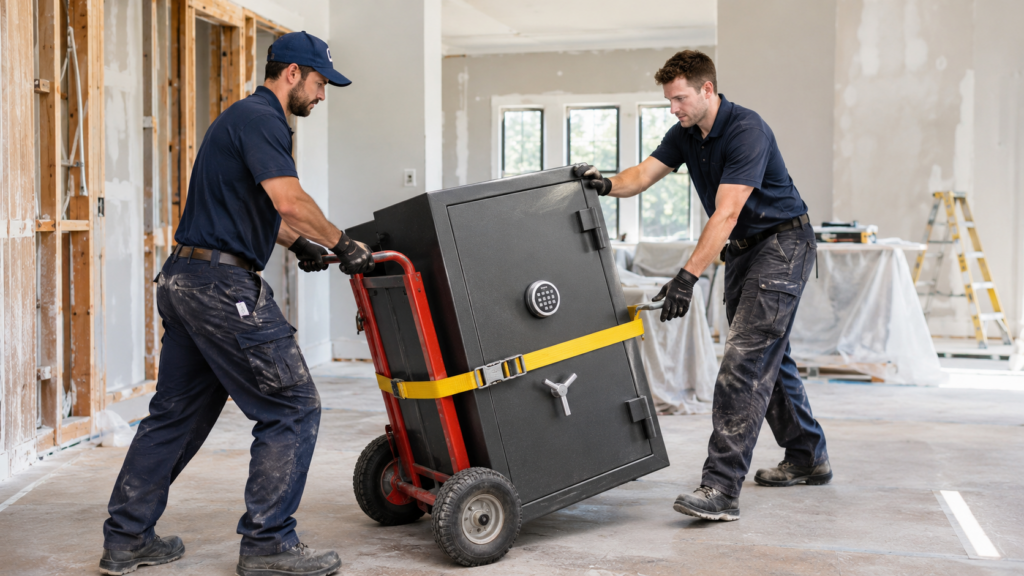
The team inspects both floors in person, checking how the safe is currently anchored and what the destination floor can actually support. Seeing both surfaces firsthand means the right method is planned in advance, with no surprises on moving day and no scramble to improvise once the safe is already off the truck.
Re-anchoring to suit the new floor type
Once the destination is confirmed, the safe is re-anchored using the method that suits it, whether that’s masonry bolts into a slab or properly fixed coach screws and a base plate over timber joists. Handling the move and the re-anchoring as one job through a professional safe relocation is what keeps the safe as secure in its new home as it was in the old one.
If you’re still weighing up whether to relocate or replace a unit, comparing cheap and quality safes is a useful starting point.
Relocating a safe between floor types is entirely doable when the anchoring is matched to the destination rather than copied from the origin. The team at Precision Safes assesses both floors, plans the right method, and re-anchors your safe securely wherever it’s going. Call 0409 860 011 or get in touch wherever it’s going in Melbourne to arrange an on-site assessment before your move.