


Selling a home comes with a long list of jobs, and somewhere on that list sits a heavy steel box you may not have given much thought until now. Whether your safe is a compact unit tucked into a wardrobe or a floor safe bolted into the slab, it raises a question that needs answering before settlement: does it stay with the property or come with you?
Getting it wrong can lead to awkward disputes or a buyer who expected a working safe and found an empty cavity in the floorboards, so this guide walks through both options, from safe removal and relocation to handing it over properly, and how to sort it out before the keys change hands. If you’re selling in Melbourne, the same steps apply whether you’re in the inner suburbs or outer metro and how to sort it out before the keys change hands.
First, Decide Whether the Safe Stays or Goes
The decision is genuinely binary, and it pays to make it early rather than in the final week before settlement. If you leave the safe behind, you need to hand it over in a usable state, which means resetting the lock and disclosing its condition to the buyer. If you take it with you, you need to arrange professional removal, repair whatever the safe leaves behind, and possibly organise transport to your new address.
Your choice also shapes your timeline. A safe that is staying needs almost nothing done to it, but a safe that is leaving needs a booking, an access plan, and time set aside for the floor or wall to be made good afterwards. Deciding now gives you room to organise everything without pressure.
Is a Safe a Fixture or a Chattel? It’s Not Always Obvious
Before you decide anything, it helps to understand how the law treats your safe, because that determines what happens by default if you say nothing at all. Chattels are movable possessions that rest on their own weight and can be carried out without leaving a mark, such as a fridge or a freestanding bookshelf.
Fixtures are items attached to the property in a way that makes them part of the land, like built-in wardrobes or a wall-mounted oven. The standard Victorian contract assumes fixtures stay and chattels go unless the contract says otherwise, which is why every contract of sale lists inclusions and exclusions.
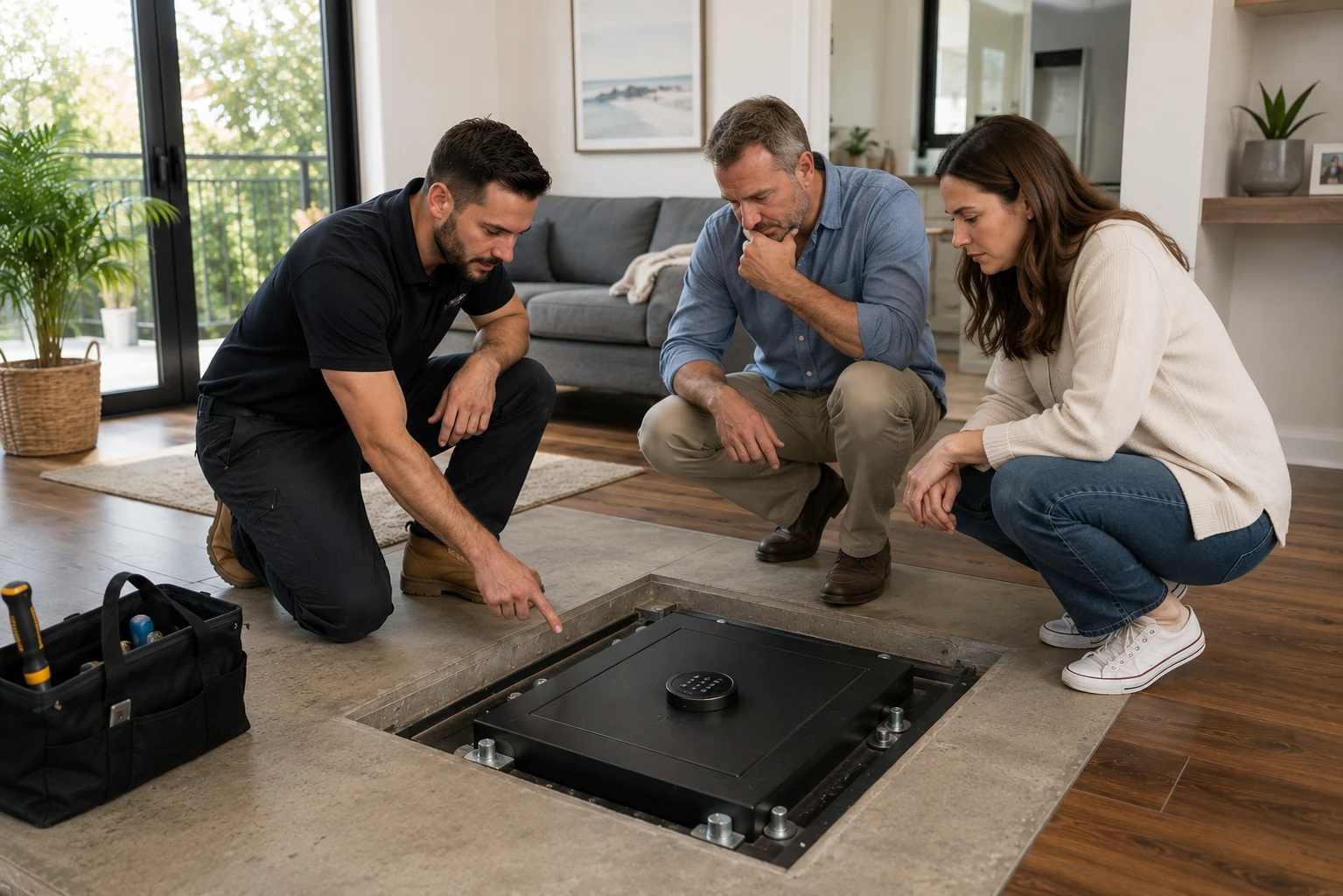
A bolted-down safe can sit in the grey area
A safe is where this neat division starts to blur. A small home safe sitting on a shelf is clearly a chattel and goes with you without a second thought. A heavy floor safe set into the concrete, or an in-wall safe built into the brickwork, looks a lot more like a fixture because it is physically attached to the building.
Australian courts apply two tests to work out which is which: how firmly the item is attached, and why it was attached in the first place. Attachment alone is not decisive, as courts have found that even items bolted to the floor, such as theatre seating, can remain chattels if they were installed for their intended use rather than to permanently enhance the building. The point is that a bolted-down safe genuinely can be argued either way, and that ambiguity is what causes trouble at settlement.
Why you need to list it as an inclusion or exclusion
Because the category is not always clear-cut, the safest approach is to remove the guesswork. Name the safe explicitly in the contract of sale, either as an inclusion if it is staying or an exclusion if you intend to take it. A few minutes of clarity here prevents the kind of dispute that can sour a settlement or even delay it. Speak to your conveyancer or solicitor, have the safe written into the contract in plain terms, and both parties will know exactly where they stand.
Leaving the Safe Behind? Hand It Over Properly
Plenty of sellers decide the safe is more trouble than it is worth to move, particularly if it is large or heavily anchored. Leaving it for the buyer is a sensible choice, but handing it over properly takes a little care.
Reset the lock and pass on the combination
The most important step is making sure the buyer can actually open and control the safe. If your safe has a digital lock, clear your personal code and reset it to a temporary setting, then let the buyer know to set their own. It is good practice for any new owner to do this straight away, and our guide on how often you should change your digital safe code is worth passing along. For a key-operated safe, leave all keys in an obvious place. If the safe has a mechanical dial and you have lost the code, have it professionally opened and reset before settlement rather than leaving the buyer with a box they cannot use.
Disclose its condition and leave it clean and working
Honesty here protects you as much as the buyer. Let them know the make and model if you have it, and whether the lock is in good working order. Before handover, clear the safe out completely and double-check for documents, jewellery or spare keys tucked into corners, because once settlement passes, anything left inside belongs to the new owner. Make sure the door swings and latches cleanly, and leave it in a state you would be happy to receive yourself.
Taking It With You? Plan the Removal Before Settlement Day
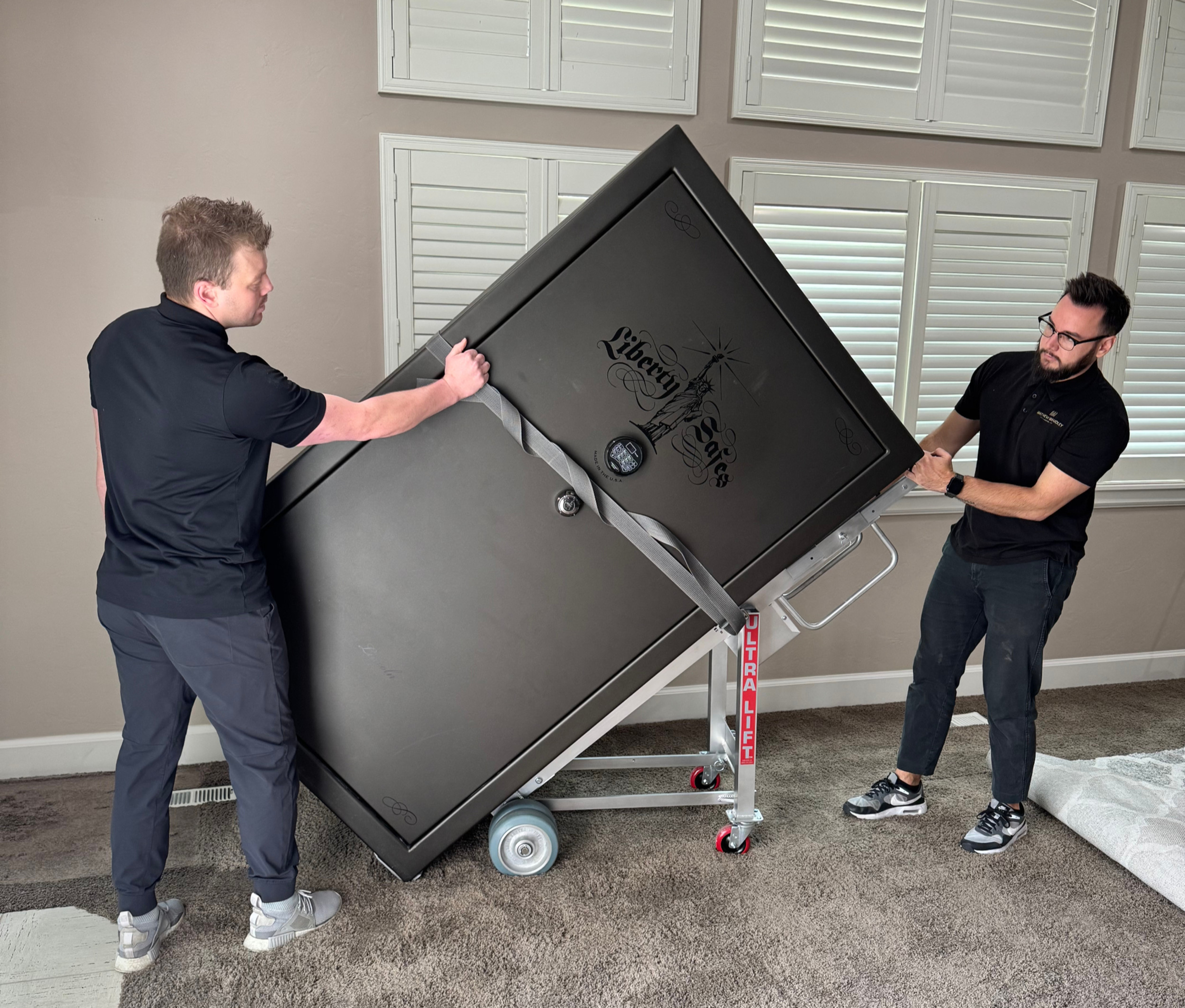
If your safe is staying with you, the key word is planning. Most safes weigh between 100kg and 500kg, and some commercial units exceed 1,000kg, with that weight concentrated in a small footprint and often locked into the structure of the home. This is why professional safe removal exists as a specialist service rather than a job for a general removalist. Booking it ahead of settlement means the work happens on your terms, not in a panic during the final week.
What’s involved in de-anchoring and extraction
Removing an anchored safe is a methodical process, not brute force. A technician first assesses the safe’s weight, how it is fixed, and the access route, then selects the right lifting equipment. The safe is then carefully detached from its fixing points, whether bolted to a timber floor or anchored into a concrete slab, with walls and floors protected throughout.
Done correctly, the whole job is usually completed within a single business day, with no damage to the home you are leaving behind. If you’re planning ahead, it’s worth understanding how long safe removal takes so you can prepare for each stage of the process.
Repairing the floor or wall the safe leaves behind
Here is the part many sellers overlook. Once an anchored safe comes out, it almost always leaves something behind, such as bolt holes in the slab or a gap in the wall where an in-wall unit used to sit. Under most contracts, you are handing the property over in a reasonable condition, so plan for the space to be made good after extraction, whether that means patching a floor or finishing a wall recess. Factoring this in before settlement, rather than discovering it on moving day, saves a lot of stress.
Moving the Safe to Your New Home Is a Job for Specialists
If the safe is coming with you, getting it to your new home is a separate challenge from simply removing it, and the two are best handled together. Standard removalists are equipped for furniture and boxes, not for a half-tonne safe that can crack tiles or strain floor supports if mishandled.
A dedicated safe relocation service covers the full journey, from de-anchoring at the old address through protected transport to professional reinstallation and re-anchoring at the new one, with the locks tested on completion. Coordinating it all through one experienced team keeps things simple, especially if access at either property is tricky.
What’s Your Used Safe Actually Worth?
Before committing to move a heavy safe across the city, it is worth asking whether keeping it is the right call at all. Sometimes the cost of relocation outweighs the value of the safe itself.
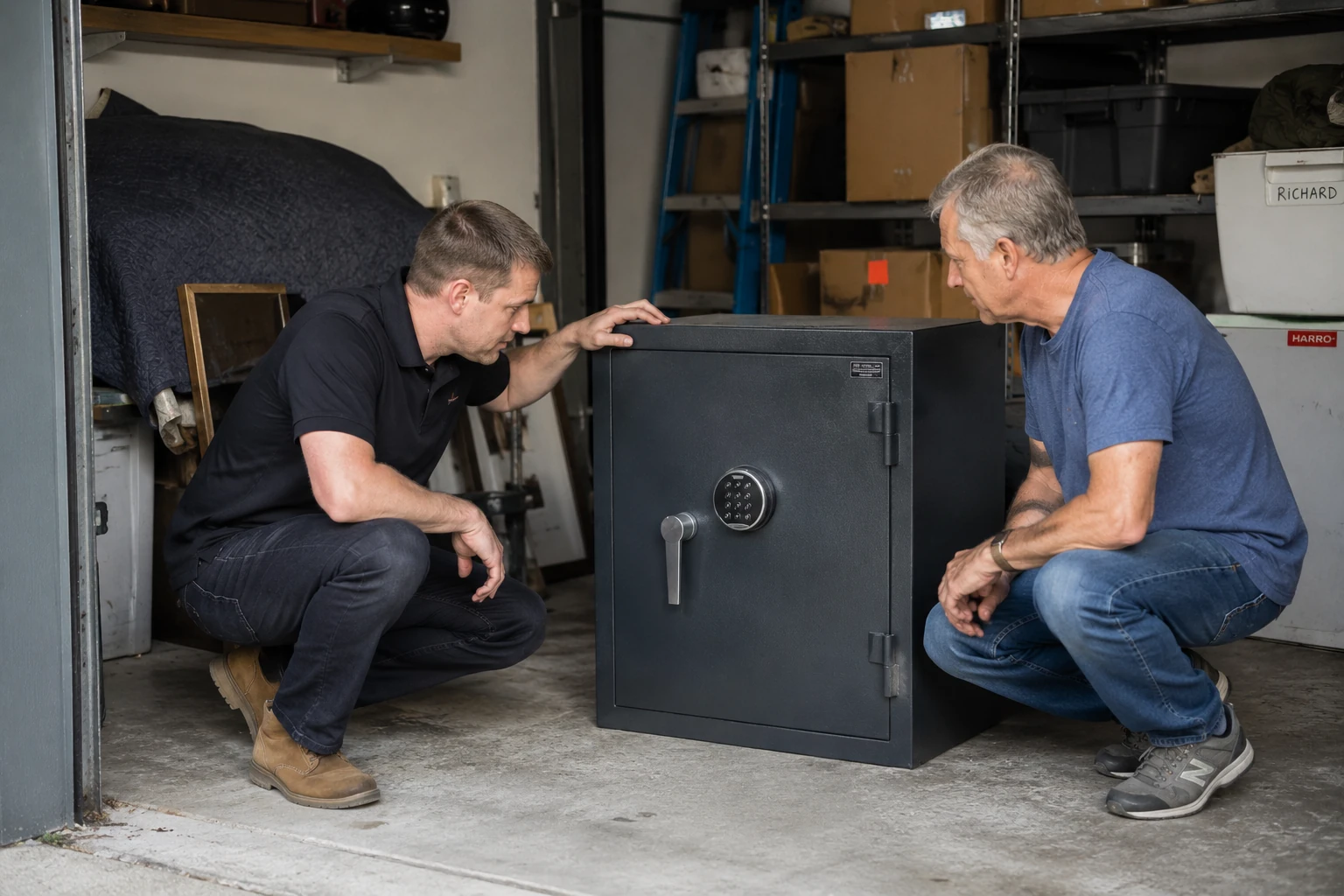
The factors that decide resale value
A used safe holds its value based on a handful of things. The brand and security rating matter most, with recognised manufacturers and units carrying a cash or fire rating commanding more. Age, condition and the type of lock count too. A well-kept, branded fire-resistant safe will fetch considerably more than a dated, unbranded box, and our overview of top-rated security safes in Australia gives a sense of where the better brands sit.
Sell it, trade it in, or dispose of it responsibly
If the safe is not coming with you and the buyer does not want it, you can sell it privately, as there is a steady market for quality used safes. Alternatively, if it is old or non-compliant, a professional removal service can take it away and send it to an approved facility, where the steel is recycled and electronic components are securely dismantled in line with Australian environmental regulations. If you’re unsure what comes next, here’s what happens to a safe after it’s removed, including disposal, recycling, and resale options.
Get the Timing Right Around Settlement
Whatever you decide, timing ties the whole thing together. The ideal window for removing or relocating a safe is after the contract has gone unconditional but before the handover date, so the work is done while the property is still yours but the sale is locked in.
Booking early is the single best thing you can do, as settlement weeks are busy and a specialist team may not fit you in at a day’s notice.
If you would rather hand the whole job to someone who does this every day, the team at Precision Safes has over 50 years of industry experience and can sort it on a timeline that suits your settlement. Get in touch with our team for a fast, no-obligation quote well before the keys change hands.
