On this page
- Step 1: List and measure what you will store
- Step 2: Use internal dimensions, not external
- Step 3: Convert to litres so you can compare
- Real size bands from our range
- Why two safes of the same size can weigh very differently
- Door swing, shelves and day-to-day access
- Weight, floors and getting it into the house
- Common sizing mistakes
- What size safe do I need? A quick guide by household
- Frequently Asked Questions
- Not Sure Which Size Fits? Come and See Them in Person
The right size safe is the smallest one whose internal dimensions fit everything you plan to store today, with about half as much space again for what you will add over the next few years. To answer “what size safe do I need”, gather the items, measure them, convert to litres and then check that the safe’s weight, door swing and footprint suit the room it is going into.
This guide walks through the method we use with customers, with real sizes from our range. If you are still deciding on ratings, locks and location as well, start with our complete home safe buying guide and come back here for sizing.
Step 1: List and measure what you will store
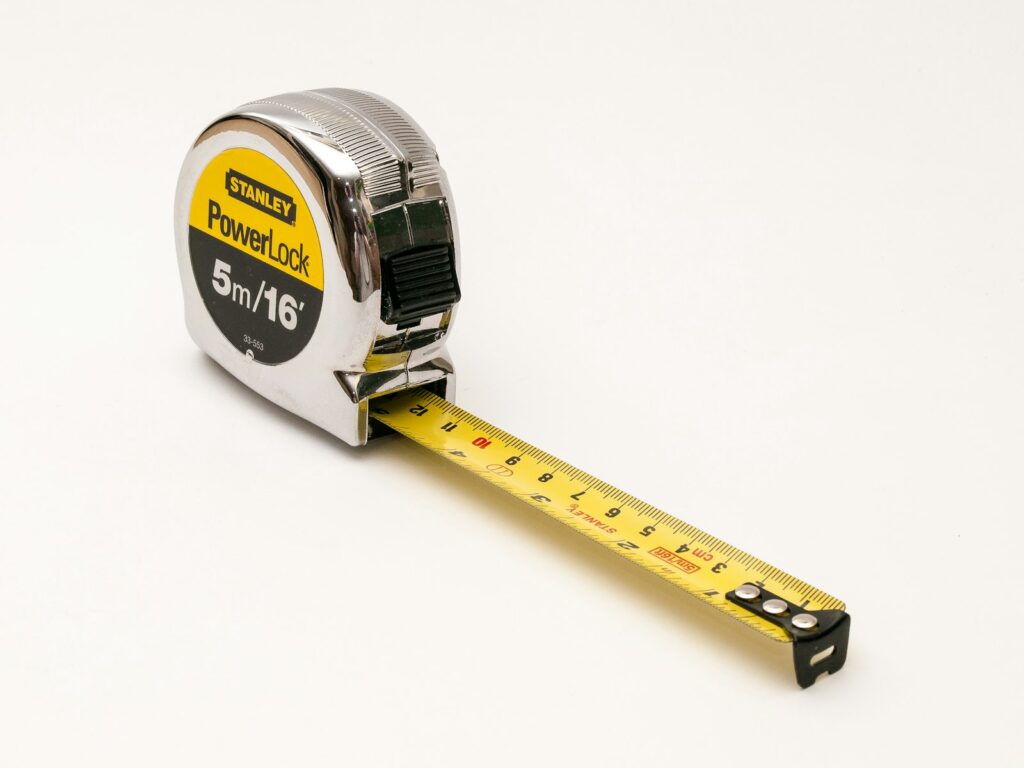
Put everything that will go in the safe on the kitchen table. If you are not sure what belongs there, our household checklist of what to keep in a safe is a good starting point. Then measure the bulky items, not just the small ones.
- Documents: A4 paper is 210 x 297 mm. If you want to store documents flat in a folder or document wallet, the safe needs an internal width or depth of at least 300 mm or so, plus room for the folder itself.
- Passports and certificates: small, but they add up in a family. A document wallet for four passports and birth certificates takes more room than you expect.
- Laptops and tablets: measure your device. Laptops are the item most likely to rule out a compact safe.
- Jewellery and watches: measure the boxes you want to keep, or decide now to move pieces into trays or drawers.
- Backup drives, USBs and cameras: small, but often stored with chargers and cables.
- Cash, coins and bullion: compact, but heavy. Weight matters more than volume for coin collections.
Stack the items the way they would sit in the safe and measure the height, width and depth of the pile.
Step 2: Use internal dimensions, not external
A safe’s walls and door take up a lot of room, especially on rated and fire-resistant models. The external size tells you whether it fits in the robe. The internal size tells you whether your things fit in the safe. Two examples from our range show the gap:
- The Stronghold Home Safe HD1 measures 355 x 355 x 355 mm outside and 310 x 300 x 235 mm inside.
- The Platinum Safes The Bond BO2 measures 685 x 508 x 524 mm outside but 540 x 363 x 327 mm inside, because its thick composite walls and door are built for a higher rating and 60 minutes of fire resistance.
Also allow for the handle and keypad. Several of our product listings note that you should allow about 55 mm of handle projection on top of the stated depth. That can be the difference between a door that closes in a wardrobe and one that does not.
Step 3: Convert to litres so you can compare
Manufacturers describe capacity in different ways, so litres are the easiest way to compare. Multiply the internal height, width and depth in millimetres and divide by 1,000,000. A safe with an internal size of 400 x 325 x 250 mm holds about 32.5 litres.
Remember that shelves, drawers, the lock housing and the bolt mechanism reduce usable space. Treat the litre figure as a ceiling, not a promise.
Real size bands from our range
Here is how common home safe sizes compare. Litres are calculated from the internal dimensions shown on each product page (or quoted directly where the manufacturer lists them), and weights are as listed. Prices change, so check the product page for the current figure.
| Size band | Example from our range | Internal size (H x W x D) | Approx. capacity | Weight | Typically suits |
|---|---|---|---|---|---|
| Compact (under 25 L) | Guardall GS18E | 244 x 344 x 130 mm | 11 L | 16 kg | Passports, cash, a few jewellery pieces |
| Compact (under 25 L) | Platinum Safes Nova NV1 | 250 x 325 x 250 mm | 20 L | 47 kg | Documents in a wallet, jewellery boxes, a backup drive |
| Medium (25 to 50 L) | CMI HomeGuard HG1+ | 530 x 319 x 225 mm | 38 L | 104 kg | Family documents, laptop, jewellery |
| Medium (25 to 50 L) | Stronghold Home Safe HD2 | 460 x 370 x 260 mm | 46 L (listed) | 100 kg | A household’s documents and valuables with room to grow |
| Large (50 to 100 L) | Stronghold Home Safe HD3 | 635 x 445 x 260 mm | 73.5 L (listed) | 140 kg | Larger collections, files and electronics |
| Extra large (100 L plus) | Stronghold Home Safe HD4 | 850 x 500 x 430 mm | 183 L (listed) | 220 kg | Whole-of-house storage, bulky items, archives |
For most households, the medium band is the sweet spot. A safe such as the Stronghold HD2 home safe holds folders, passports, a laptop and jewellery without everything being jammed in. You can compare more sizes across our full range of safes for the home.
Why two safes of the same size can weigh very differently
Capacity tells you nothing about security. The Platinum Safes Nova NV1 holds about 20 litres and weighs 47 kg. The Guardall BFG100 S3 holds about 19 litres but weighs 100 kg, because it has a 12 mm solid steel door, a grinder-resistant filled body and 60 minutes of fire resistance. The extra weight is mostly wall and door, and it shows up in the BFG100’s higher approximate cash rating.
So decide on the rating you need first, then pick the size within that rating. A bigger, lightly built safe is not a substitute for a smaller, properly rated one. If you are protecting jewellery in particular, our guide to choosing a safe for jewellery and watches covers how value and insurer requirements affect the rating.
Door swing, shelves and day-to-day access
A safe that fits the space can still be awkward to use. Before you buy, check:
- Door swing: the door needs room to open fully. In a walk-in robe or cupboard, check which side the hinges are on and whether the door will hit a wall, shelf or bed.
- Shelf layout: adjustable shelves make a safe far more usable. A single tall cavity often ends up as one messy pile.
- Interior fit-out: drawers and lined trays reduce usable litres but make jewellery and small items much easier to organise.
Weight, floors and getting it into the house
Bigger safes are heavier, and weight brings practical questions. A 220 kg safe is a two-person job with proper equipment, and the path from the truck to the room matters as much as the room itself: steps, narrow halls, tight corners and stairs all need planning.
Floors matter too. A concrete slab gives the best fixing for anchor bolts. Timber floors and upper-storey apartments need more thought about where the load sits and how the safe is fixed. If you rent or live in an apartment, read our guide on putting a safe into a rental or apartment before you choose a heavy model.
Whatever size you choose, it should be fixed down. A small safe that is not anchored can simply be carried out. We explain why in our article on bolting a safe down, and our team can handle delivery and professional safe installation across Melbourne and through our national network.
Common sizing mistakes
- Buying for today only. Documents, jewellery and electronics accumulate. Planning for about 50 percent spare room is our rule of thumb.
- Measuring the outside. Always compare internal dimensions with the items you measured.
- Forgetting the handle and keypad. Allow for projection when measuring a cupboard or alcove.
- Ignoring fire insulation. Fire-resistant safes have thicker walls, so they hold less for the same outside size.
- Choosing size over rating. A large, lightly built safe is easier to attack than a smaller rated one.
- Not thinking about access. If it will not fit through the door or up the stairs, it does not matter how good it looks on paper.
Size also drives price. Our article on what a home safe costs in Australia explains how size, rating and fire protection combine.
What size safe do I need? A quick guide by household
- Single person or couple, documents and some jewellery: 20 to 30 litres.
- Family with passports, certificates, a laptop and jewellery: 35 to 50 litres.
- Collectors, home businesses or large document archives: 70 litres and up, or two safes with different jobs.
Firearms are a separate decision. They must go in a safe that meets your state’s firearm storage rules, sized for the number and length of the guns, and should not share a safe with household valuables.
Frequently Asked Questions
How many litres should a home safe be?
Most households are well served by 35 to 50 litres of internal space, which fits passports, certificates in a document wallet, a laptop and jewellery. Smaller homes with only documents and a few valuables can use 20 to 30 litres. Measure what you will store, convert to litres, then add about half again for growth.
Should I measure the inside or outside of a safe?
Both, for different reasons. The internal dimensions tell you whether your items fit, and they can be much smaller than the outside because of thick walls, fire insulation and the door. The external dimensions, plus handle projection, tell you whether the safe fits the cupboard or alcove and whether it can get through doors and up stairs.
Is it better to buy one big safe or two smaller ones?
One larger safe is usually simpler and better value. Two safes make sense when they do different jobs, for example a fire-resistant safe for documents and a higher cash-rated safe for jewellery, or when floor loading and access make one very heavy safe impractical. Each safe should still be bolted down.
Can a small safe be secure?
Yes, if it is properly rated and anchored. A compact safe with a solid door, relocking device and good bolt work, fixed to a concrete floor, can be far harder to attack than a bigger, lightly built cabinet. Weight and anchoring are what stop a small safe from being carried away.
Not Sure Which Size Fits? Come and See Them in Person
Seeing safes side by side is the fastest way to get the size right. Our showroom at 38 Barrie Rd, Tullamarine has over 350 new and used safes on display, and you are welcome to bring a list of what you plan to store. Call us on 0409 860 011 (Monday to Friday, 9am to 5pm) or send our team an enquiry and we will help you narrow it down.