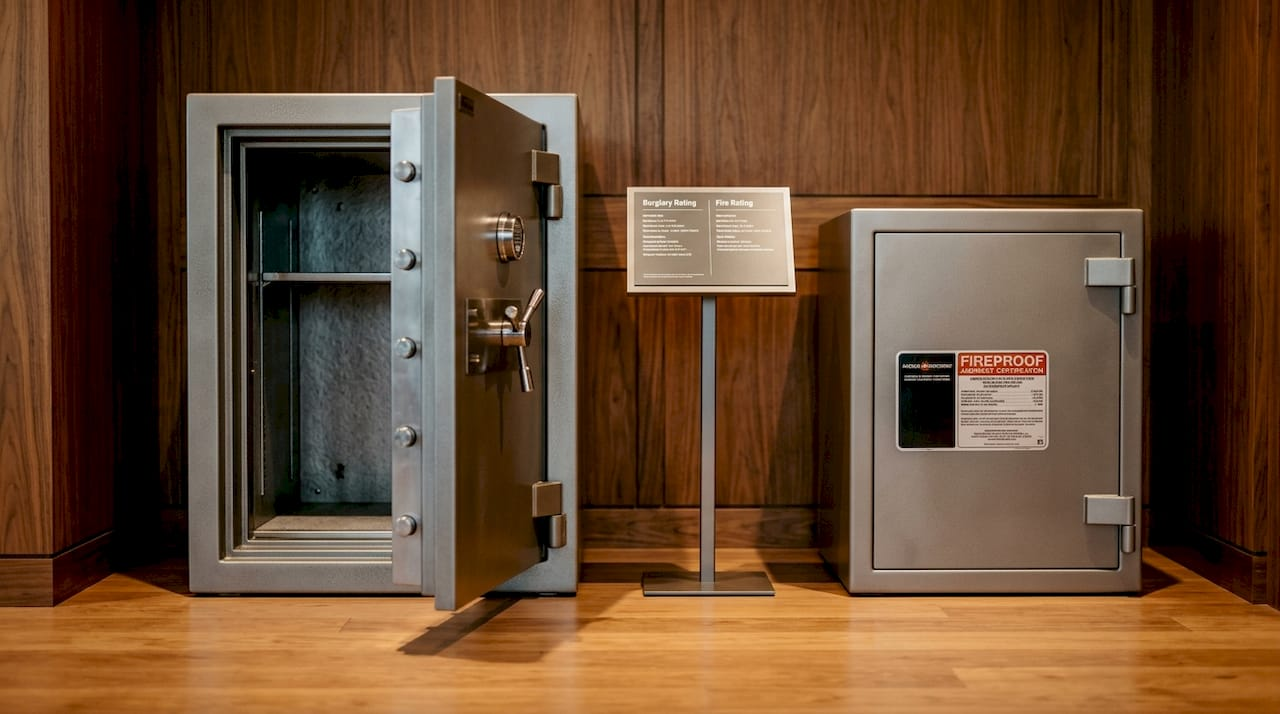


Buying the right safe is only half the job. Where you put it, and how it is fixed in place, has just as much bearing on how well it protects your valuables. A well-chosen safe in a poor spot is easy to overlook, awkward to reach, or simple for an intruder to carry off, while the same unit installed thoughtfully becomes a genuine deterrent. This guide walks through the best rooms for a home safe, what professional installers weigh up, and why the way a safe is anchored often decides whether your insurer will pay out on a claim.
Choosing the Right Spot for Your Safe
The best location for a safe balances two things that can pull in opposite directions: easy access for you and concealment from anyone who should not know it is there. A safe you can reach quickly is far more likely to be used day to day, yet one left in plain view is the first thing a burglar heads for. The goal is a spot that feels convenient in daily life while staying out of sight of visitors and casual passers-by.
Practical factors matter just as much as secrecy. A solid floor that can bear the weight and anchoring, a location away from damp or heat, and enough clearance to open the door fully all shape how well a safe performs. Heavier and cash-rated units in particular need a surface strong enough to hold them securely, which is why the room you choose and the way the safe is fixed go hand in hand.
The Best Rooms for a Home Safe
Every home is laid out differently, so the ideal position varies from one property to the next. That said, a handful of rooms tend to suit home safes better than others, each offering its own mix of convenience and discretion.
The Bedroom and Wardrobe for Everyday Access
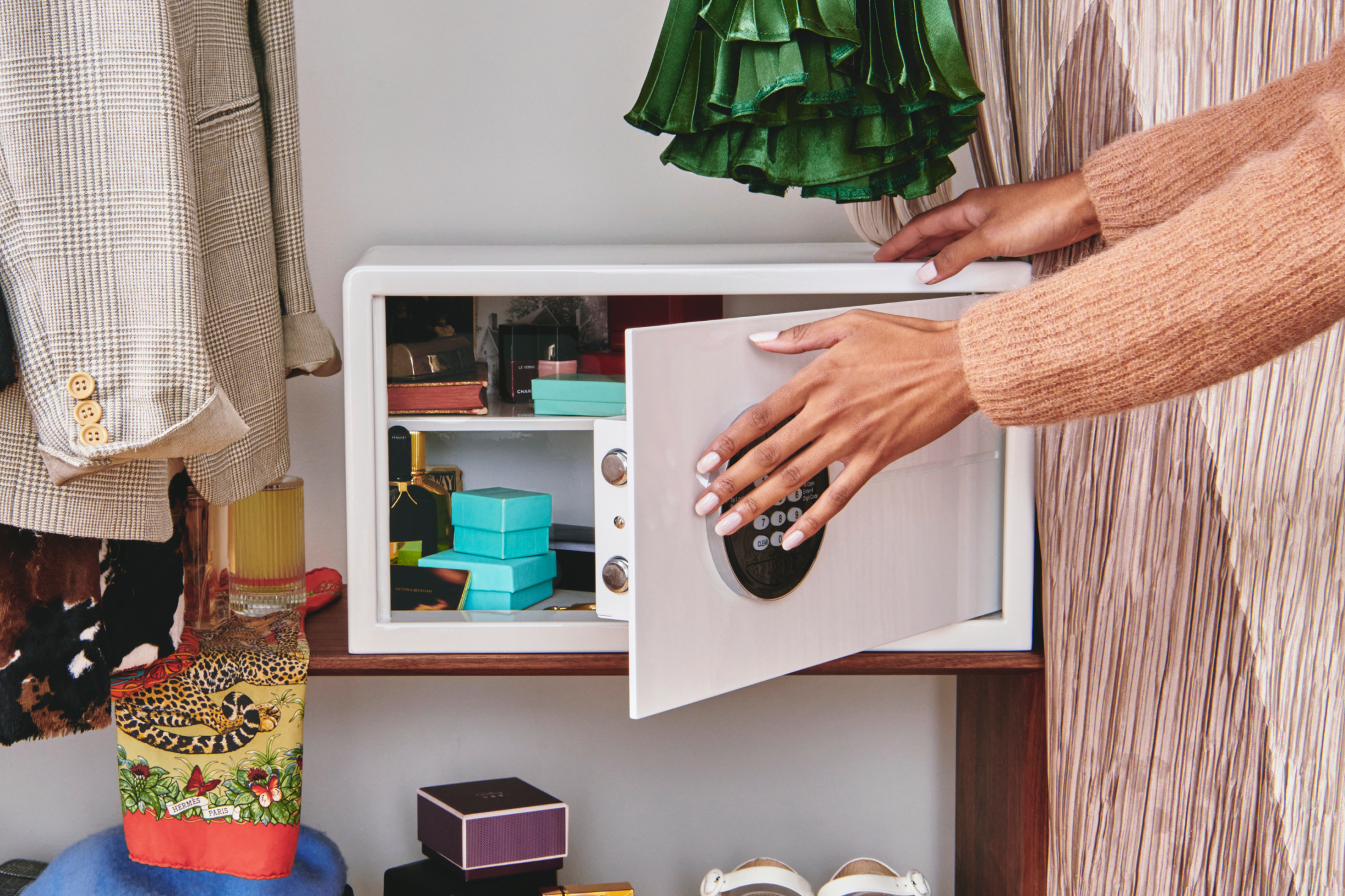
The main bedroom is one of the most popular choices, and for good reason. It keeps jewellery, cash, passports and other frequently handled items close to hand, while a built-in wardrobe offers natural concealment behind clothing or shelving. A compact safe bolted to the floor of a wardrobe stays discreet and remains easy to reach when you need it. It is worth avoiding the obvious bedside drawer, though, as that is one of the first places an intruder will check.
The Study or Home Office for Documents and Valuables
A study or home office suits households that mainly need to protect documents, hard drives, contracts and business records. Placing a safe here keeps important paperwork organised and close to where you actually work. This room often lends itself to a slightly larger unit, and a quality home safe with a fire rating is well worth considering where irreplaceable records are involved, since a fire-resistant model helps protect paper and digital media from heat as well as theft.
The Garage and Why It Suits Heavier Safes
The garage comes into its own for larger and heavier safes that would be difficult to position elsewhere. A concrete slab provides an ideal anchoring surface, and the space easily accommodates a bulkier unit without disrupting the living areas of the home. Because garages can be prone to damp and temperature swings, it is sensible to keep the safe off the bare floor where possible and choose a model suited to the conditions, so moisture does not become an issue over time.
Floor and Wall Placements for Concealment
For maximum concealment, in-floor and in-wall safes are hard to beat. A floor safe sinks into the slab and sits flush with the ground, hidden under a rug or furniture and almost impossible to remove. An in-wall safe fits neatly into a wall cavity and disappears behind a picture or inside a cupboard. Both options take up no usable space and stay completely out of sight, though they require careful, professional installation to sit cleanly within the structure.
What Professional Installers Look For
A professional installer assesses far more than where a safe looks tidy. The first consideration is the anchoring surface, as a concrete floor offers the strongest and most reliable fixing, while timber floors need bolts driven into a joist or bearer to hold securely. The installer also checks the strength of the slab or subfloor beneath heavier units, confirming it can carry the weight without issue.
Clearances are the next priority, since the door needs room to open fully and the anchoring points must line up correctly with the surface below. For fire-rated safes, careful positioning matters even more, because drilling in the wrong place can compromise the fire seal and undermine the very protection the safe was bought for. A safe that’s actually compliant with Australian safe standards is only as good as the installation that keeps its rating intact. Get that positioning wrong, and the installation itself can undo the rating you paid for.
Bolting Down Versus Leaving a Safe Freestanding
The single most important decision after choosing a location is whether to anchor the safe or leave it standing free. A freestanding safe, however heavy, can be tipped, wheeled or carried away by a determined thief who would rather break into it somewhere out of sight. Bolting the unit to the floor or wall removes that option and adds a real layer of protection, as an intruder faced with a fixed safe will usually give up and move on.
This is also where do-it-yourself installation tends to fall short. Most insurers require a home safe to be professionally fitted or fixed in place before they will cover the contents, so a safe that is simply set on the floor may leave a claim unpaid regardless of how strong the unit is. Anchoring correctly protects both your valuables and your ability to recover their value, which is closely tied to the cash rating and insurance cover your safe carries. Renters can still anchor a safe in most cases, though it is wise to seek a landlord’s permission before drilling and to plan ahead for how the unit will be moved at the end of a tenancy.
Getting Your Safe Installed the Right Way
Fitting a safe properly takes the right tools, a sound understanding of anchoring surfaces, and care to preserve the unit’s fire and security ratings. Precision Safes’ professional safe installation service handles the positioning, lifting, and bolting down to manufacturer specifications, so your safe is secure from the day it arrives. If you are moving house or rearranging a room, the team also manages safe relocation with the specialised equipment needed to shift heavy units without damage. Professional fitting gives you confidence that the safe meets insurer expectations and performs exactly as it was designed to.
Finding a Home Safe That Fits Your Space
Location and safe should be chosen together, not one after the other. A compact wardrobe unit, a fire-rated model for the study, and a floor safe set into the slab each call for a different size, weight, and fixing, so settling on the room first narrows the field and saves you the cost of shifting a poorly placed safe down the track. Precision Safes stocks a broad range to suit every corner of the home, backed by nationwide delivery and expert fitting. To talk through the options or book an installation, get in touch with Precision Safes and we will point you towards the right unit for your space.