On this page
- Start with value: matching the cash rating to your jewellery
- Ask your insurer before you buy
- Burglary protection or fire protection?
- Choose an interior that protects your pieces
- Watches: consider a watch winder safe
- Get the size right
- Pick a lock you will actually use
- Location and anchoring
- One safe or two?
- Frequently Asked Questions
- See Jewellery Safes in Our Tullamarine Showroom
A good jewellery safe has a cash rating that suits what your jewellery is worth and what your insurer requires, is bolted down in a discreet spot, and has a lined or drawer interior so pieces are protected and easy to find. Fire resistance, size and lock type come next. Get the rating and anchoring right first, because a beautiful interior does not help if the whole safe can be carried away.
This guide covers how we help customers choose a jewellery safe at our Tullamarine showroom. For the wider picture on home safes, including locks, location and budget, see the Precision Safes home safe buying guide.
Start with value: matching the cash rating to your jewellery
Most safes sold in Australia carry an approximate cash rating. It is a guide to how much cash an insurer may be comfortable with you keeping in the safe overnight, and it reflects how well the safe resists attack. Insurers set their own rules for jewellery, which can differ from their cash limits, so the rating is a starting point for the conversation with your insurer rather than the final answer.
Begin by adding up the replacement value of what will go in the safe. Recent valuations help here. Then look at safes whose rating sits comfortably above that figure, leaving room for pieces you may add. Our article on cash ratings compared with fire ratings explains how the two kinds of rating differ.
Here is how cash bands map to real safes in our range. Prices are current at the time of writing and do change.
| Approximate cash rating band | Example from our range | Starting price | Suits |
|---|---|---|---|
| $0 to $5,000 | Secuguard Home Safe SHS range | From around $270 | A few everyday pieces |
| $10,001 to $20,000 | Platinum Safes Nova and CMI HomeGuard ranges | From around $920 | A modest collection |
| $40,001 to $60,000 | Stronghold Home Safe HD and Guardall BFG S3 ranges | From around $1,100 | Significant jewellery and watches |
| $100,001 to $200,000 | Stronghold LS range and Stronghold watch winder safes | From around $1,810 | High-value collections |
If you want to understand the standards behind these numbers, our explainer on safe ratings and standards covers cash ratings, fire ratings and AS/NZS 3809.
Ask your insurer before you buy
Insurance is often what decides the rating you need. A short phone call before you buy can save you from replacing the safe later. Ask:
- What is the limit for jewellery and watches under my contents policy, and do any pieces need to be listed as specified items?
- Is there a minimum safe rating for my sum insured?
- Does the safe need to be anchored, and in what way?
- Do you require a monitored alarm at this level of cover?
- What paperwork do you need: valuations, receipts, the safe’s rating documentation?
Keep the answers in writing and keep valuations up to date, as jewellery values move over time.
Burglary protection or fire protection?
For jewellery, theft is usually the main risk, so the burglary rating comes first. Fire resistance still matters for most households, because the jewellery safe often ends up holding other things as well: valuation certificates, receipts, photos, passports and watch papers. Those are far more vulnerable to heat than gold or gemstones.
Many safes in our range combine both. The Guardall BFG S3 series, for example, has an approximate cash rating in the $40,001 to $60,000 band and 60 minutes of fire resistance. If you mainly store documents, a dedicated fire safe may suit better. If you mainly store jewellery, prioritise the cash rating and treat the fire rating as a bonus.
Choose an interior that protects your pieces
A bare steel box with one shelf leads to tangled chains and scratched stones. Look for:
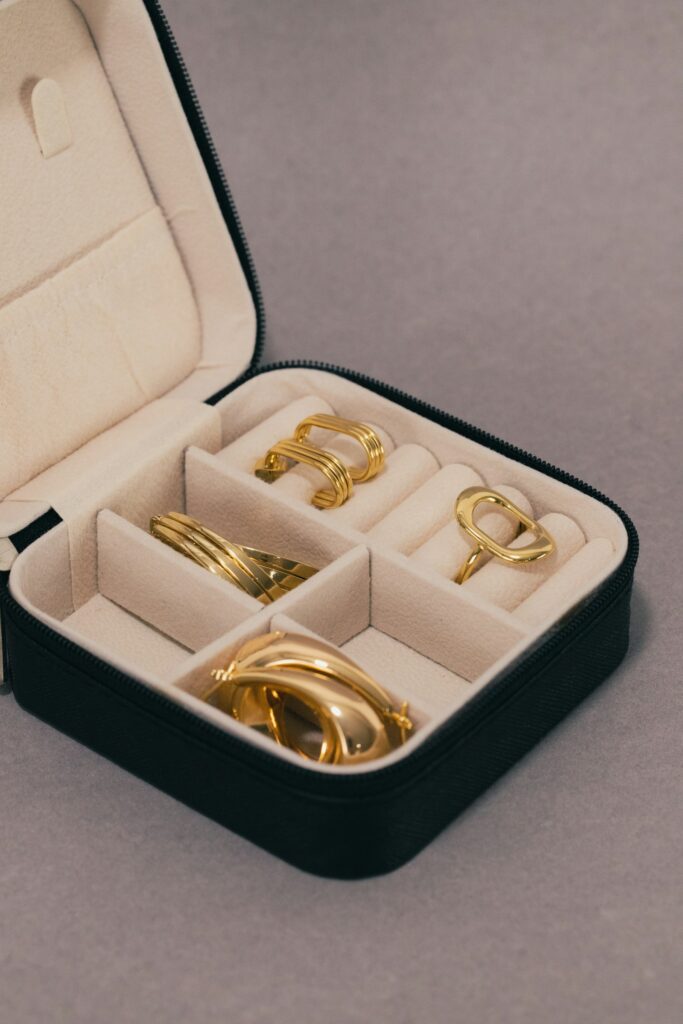
- Drawers: shallow drawers keep rings, earrings and bracelets visible and separate. Guardall makes plush-lined insert drawers for its BFG safes with ball-bearing runners, starting from around $518 for the BFG400 size. The safe is sold separately.
- Lined shelves: some safes come with a cloth-lined interior. The Platinum Safes Director series, for example, has adjustable shelves and a soft cloth-lined interior.
- Adjustable shelving: lets you fit jewellery boxes, watch boxes and document wallets without wasted space.
- Your own trays and pouches: soft pouches and compartment trays work inside any safe and make it easier to move pieces if you ever upgrade.
Silver and some costume pieces can tarnish in a closed space. Anti-tarnish pouches and a moisture absorber in the safe help, and you should check them from time to time.
Watches: consider a watch winder safe
Automatic watches stop when they are not worn. A watch winder safe combines storage with built-in winders that keep them running. In our range of safes with built-in watch winders, the Stronghold Watch Winder Safe WLS1 starts from around $2,799 and sits in the $100,001 to $200,000 approximate cash rating band, with larger WLS3 and WLS5 models for bigger collections.
If your watches are mostly quartz, or you are happy to wind them yourself, a standard rated safe with lined drawers is usually better value.
Get the size right
Jewellery takes little space, but boxes, papers and watches add up quickly. Measure what you have, allow for drawers or trays, and plan for growth. Our practical guide to choosing a safe size shows how to convert internal dimensions to litres and compare real models. If the safe will also hold passports, certificates and backups, our list of items worth locking away at home helps you plan the space.
Pick a lock you will actually use
Jewellery safes are opened often, sometimes every day. A lock that is easy to use means you will actually put pieces back.
- Digital keypad: quick, and codes can be changed. Replace batteries on a schedule.
- Key lock: reliable, but the key must be hidden well away from the safe.
- Combination dial: no batteries, but slower to open.
- Fingerprint: very fast for daily access. Our article on whether fingerprint safes are secure covers reliability and backup access.
Whatever you choose, the lock type matters less than the safe’s construction and rating.
Location and anchoring
Put the safe somewhere convenient for you but not obvious to a stranger, and fix it to the floor. A safe that is not anchored can be taken away and opened elsewhere at leisure. Our article on the best and worst places to put a home safe covers the options room by room.
Anchoring is a job worth getting right, particularly on timber floors or in apartments. Our technicians provide safe installation in Melbourne and nationally, including bolting into concrete and fitting safes into robes and cupboards.
One safe or two?
Some customers keep everyday pieces in a smaller safe in the bedroom and higher-value pieces in a larger, higher-rated safe elsewhere. That limits how much is exposed if the everyday safe is found, and it means the main safe is opened less often.
Frequently Asked Questions
What cash rating do I need for a jewellery safe?
Start with the total replacement value of the jewellery and choose a safe whose approximate cash rating sits comfortably above it. Insurers set their own rules for jewellery, which can differ from cash limits, so confirm with your insurer before you buy. They may also require anchoring, an alarm or specified-item listings for valuable pieces.
Is a fire-resistant safe necessary for jewellery?
Theft is usually the bigger risk for jewellery, so the burglary rating comes first. Fire resistance is still worthwhile because most jewellery safes also hold valuations, receipts, passports and watch papers, which are far more vulnerable to heat. Many safes in our range combine a cash rating with 30 to 60 minutes of fire resistance.
Where is the best place to put a jewellery safe?
Choose a spot that is convenient for daily use but not obvious, such as inside a robe or cupboard rather than in plain view, and anchor it to the floor, preferably concrete. Avoid places that flood or get damp. Keep any key or written code well away from the safe.
Are watch winder safes worth it?
They suit collectors with several automatic watches who want them kept running and secure. A watch winder safe combines a rated safe with built-in winders. If your watches are quartz, or you only own one or two automatics, a standard rated safe with lined drawers is usually better value.
See Jewellery Safes in Our Tullamarine Showroom
Seeing drawers, linings and door weights in person makes the choice much easier. Visit us at 38 Barrie Rd, Tullamarine, where over 350 new and used safes are on display, or call 0409 860 011 (Monday to Friday, 9am to 5pm). You can also use our contact form to ask about a specific model.